Do your customers complain about knee sleeves sliding during intense movement? Knee compression sleeve rolling down can turn a simple workout or workday into nonstop adjusting. It wastes time, hurts focus, and can even rub your skin. This common defect ruins brand loyalty and increases your return rates. In this article, we’ll look at why knee sleeves roll down or slide, and what factories, brands, and end-users can each do to reduce this problem.
If you are new, for a broader perspective (types, when to use sleeves vs braces, and buying tips), see our complete knee sleeve/brace guide.
What Causes a Knee Sleeve to Slide Down?
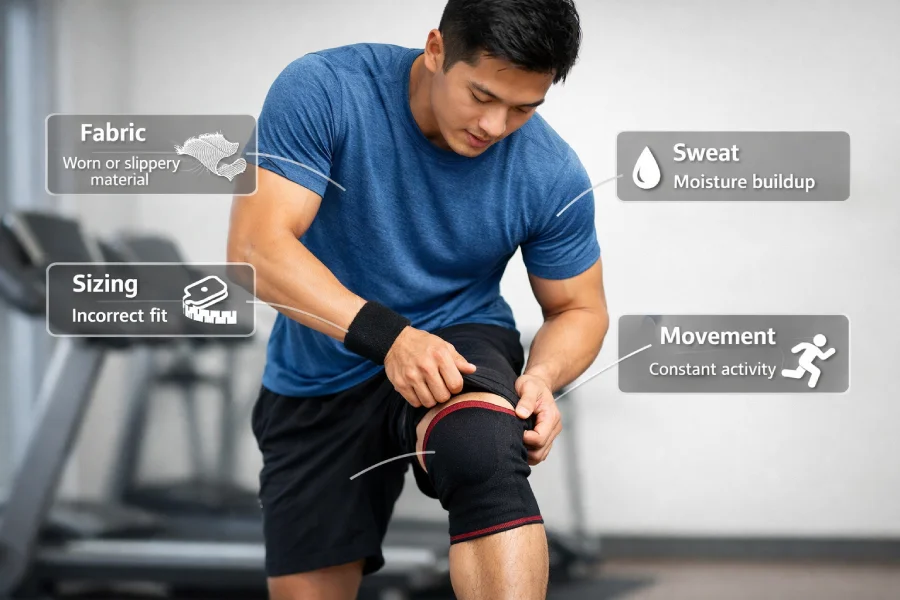
Most knee compression sleeves roll down or slide because of fabric fatigue, poor top-band design, wrong sizing for the user’s body shape, and sweat during movement. When these combine, even a new sleeve can creep down the thigh.
Fabric, elasticity and friction
A knee compression sleeve stays in place by three key factors:
- Elastic recovery of the fabric
- Friction between the sleeve and the skin (or base layer)
- Fit around the thigh and calf
Such as high cotton content sleeves. Cotton feels soft and familiar, but it has some natural limitations for this type of product: It absorbs sweat and becomes heavier over time. Also the fibers tend to relax and lose recovery after repeated stretching and washing. In real use, this often shows up as: the sleeve feels snug when it is new, but after some time walking or running, the top opening becomes looser and starts to creep down the thigh.
From a manufacturing perspective, low-quality yarns, loose knitting density, or over-stretch in use all accelerate this sliding effect. We usually recommend limiting cotton content in the top band and using high-recovery yarns and tighter knit structures in that area to reduce the risk of rolling and sliding.
Pattern, length and panel design
Even with good materials, the pattern can cause rolling:
- Top band too narrow → the pressure concentrates on a small line and tends to curl or roll.
- Sleeve too short on the thigh side → not enough contact area to “anchor” the sleeve, so it slides downward.
- No anatomical shaping → a straight tube on a tapered leg (thigh > calf) will naturally move.
A well-designed knee sleeve normally has:
- A wider top band to distribute pressure
- More length and coverage on the thigh side
- Slightly different compression zones for thigh, knee, and calf
Sizing and body shape
The same size chart will not fit every body shape:
- If the thigh circumference is larger than the size range, users may choose “one size up” and end up with a sleeve that is comfortable but too loose → sliding.
- If the calf is much slimmer than the thigh, a straight tube pattern will leave extra space behind the knee and lower leg → movement and folding.
From what we see in OEM production, incorrect size choice is one of the main real-world reasons for rolling, even when the product itself is designed well.
Sweat, movement type and usage time
- Sweat and heat: during running, basketball or HIIT, sweat can reduce friction and make the inner surface slippery.
- High-impact or multi-directional movement: jumping, fast change of direction and deep squats all put the fabric under dynamic load.
- Long wearing times: after 1–2 hours of continuous use, the fabric can slightly “creep” and settle lower on the leg.
When rolling becomes a real problem
A knee sleeve that keeps rolling down or sliding:
- Stops giving stable compression around the joint
- Distracts the athlete – they keep stopping to pull it up
- Creates pressure points where the top edge rolls into a tight band
- Leads to negative reviews, returns, and customer service load for brands
From a factory side, we treat “sliding complaints” as a design defect, not just a user problem.
Why Does This Matter?
Slippage is not just a minor inconvenience; it significantly impacts the effectiveness of the knee sleeve. Knee compression sleeves are designed to provide consistent compression and support for the knee joint. When the sleeve slides down, it compromises its ability to provide the intended support, potentially leading to discomfort, reduced performance, and even injury. Additionally, slippage can cause skin irritation and discomfort, especially if the sleeve is constantly shifting.
How Manufacturers Can Improve Knee Sleeve Designs
If you are a brand owner or buyer, you can treat “anti-sliding” as a design feature, not a slogan. Small changes in yarn, pattern, and testing can cut sliding complaints in a real way.
To keep a knee compression sleeve from rolling down, manufacturers can control yarn recovery, top-band structure, silicone grip, pattern shape, and testing. Together, these elements create a sleeve that follows the leg instead of drifting down it.
Yarn and knitting strategy
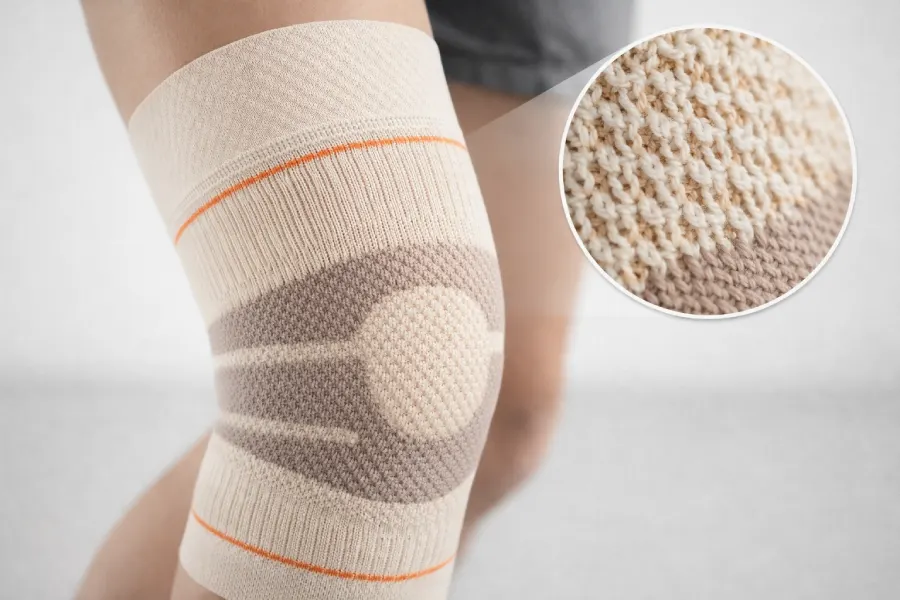
A knee sleeve stays up only if the fabric can keep its shape. That means good elastic recovery and enough friction on the skin side. In real use, sleeves made with high cotton content and loose knitting tend to relax faster and slide more. Users often describe this as “snug on day one, but starts creeping down after a run.”
By contrast, neoprene-style sleeves usually show a lower sliding rate in both user feedback and our own wear tests. The material has strong recovery and a slightly grippy surface, so the top band can “hold” the thigh better than a soft cotton-rich knit, as long as the size is correct.
Nylon and spandex density determine the “modulus” of the fabric, which is its resistance to stretching. High-quality sleeves use a high-density nylon yarn combined with high-percentage spandex to ensure the sleeve returns to its original shape after every movement.
- Use high-recovery elastic yarns in the top cuff
- Increase stitch density at the top band to create a stronger grip
- Add zonal compression knitting (tighter at thigh and calf, slightly softer over the patella)
This combination creates a more stable “anchor” without making the sleeve feel painfully tight.
Silicone and anti-slip technology
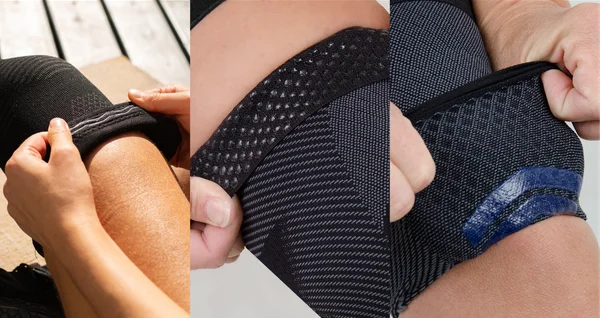
The most direct way to keep a knee sleeve from rolling down is to add a silicone grip on the inside of the top band. In feedback from runners and team sports, sleeves with a well-designed silicone pattern usually get fewer “sliding” comments than those without, especially when people sweat a lot.
Silicone grip technology is the most reliable way to stop a knee sleeve from sliding. Applying skin-safe silicone in a “wave” or “double-row” pattern increases surface friction against the skin while allowing the fabric to remain breathable and flexible during high-impact sports.
For example, “Hexagonal Dots” provide excellent grip for powerlifting sleeves where vertical movement is minimal. However, for running or basketball, “Continuous Waves” are better because they allow the fabric to expand horizontally while maintaining vertical friction. Also can use hypoallergenic silicone. This is vital for brands and buyers because it reduces the risk of skin irritation complaints from your customers. By selecting the right pattern and grade, you can significantly reduce the “my sleeve is sliding” feedback in your Amazon or retail reviews.
Pattern engineering and grading
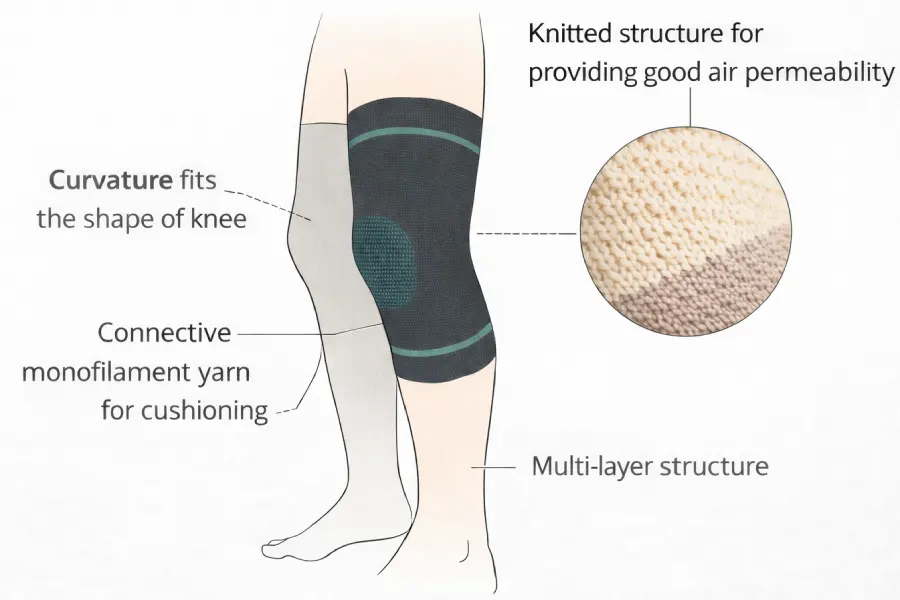
The mechanics of the knit are just as important as the materials. If the sleeve doesn’t follow the leg’s shape, it will eventually fail and bunch up.
3D anatomical knitting creates a sleeve that mimics the natural curve of the human knee and thigh. This specialized manufacturing process produces “tension zones” that provide higher compression at the top and bottom bands, creating a mechanical lock that prevents rolling.
3D circular knitting machines allow us to vary the stitch density throughout the sleeve. For instance, make the area behind the knee (the popliteal fossa) thinner to prevent bunching when the leg bends. At the same time, increase the stitch count at the top cuff to create a “ribbed” effect that resists rolling. It means the sleeve is just as secure when the user is sitting as it is when they are sprinting.
When brands share real customer measurement data, we can fine-tune the pattern so the “problem sizes” stop sliding, without making other sizes too tight.
What brands can do to prevent

You might be wondering… if the factory does all this work, why do some sleeves still slide? The answer is simple: poor sizing advice, weak education, and unclear product positioning.
Brands can reduce “how to keep a knee sleeve from rolling down” complaints by giving clear sizing guidance, teaching users how to wear sleeves, and setting honest expectations about which models are for daily use and which are for hard sports.
Clear sizing guidance
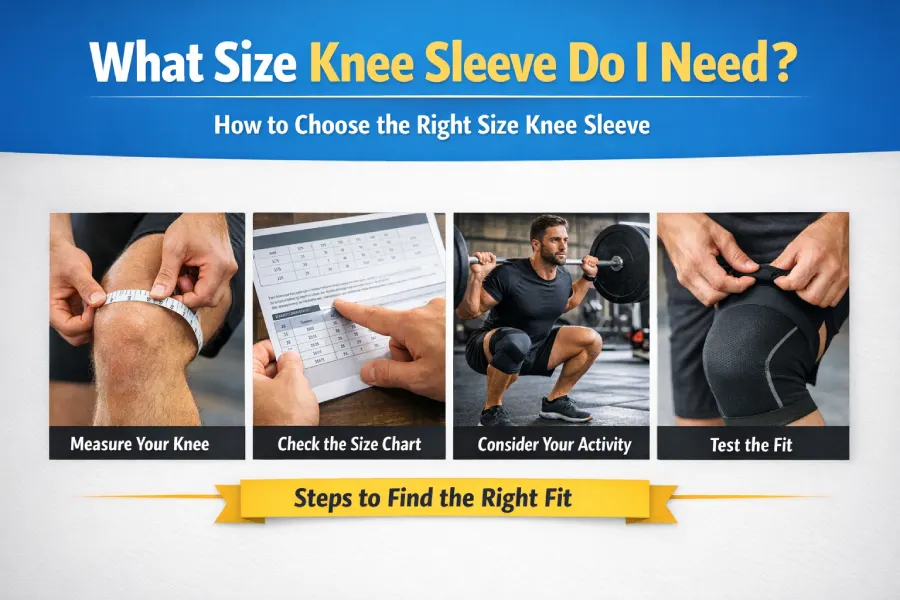
Many sliding complaints start from the wrong size choice. Brands can:
- Provide measurement diagrams (thigh, mid-knee, calf) on the product page and packaging
- Emphasise: “If you are between sizes and your priority is staying in place, choose the smaller size” (when appropriate for that specific pattern)
- Offer real examples, e.g. “Model: 170 cm / 70 kg, thigh 48 cm, wears size M” – but in your own style and markets
| Problem / Cause | Factory-side solution | Brand/seller action | End-user tip |
|---|---|---|---|
| Sleeve slides down after a few minutes | Increase top-band compression; use better elastic yarns | Highlight correct size selection on product page | Re-measure thigh and choose tighter size if safe |
| Sleeve rolls into a tight band at the top | Wider cuff, double-layer construction, adjust taper pattern | Add warning if user’s thigh is outside size range | Avoid folding the top edge; smooth it flat over the thigh |
| Sleeve slips on top of leggings | Add silicone dots / waves for anti-slip | Explain that sleeve performs best on bare skin | Wear sleeve under leggings, next to skin |
| Sleeve slides after months of use | Control fabric quality and recovery rates | Communicate expected lifespan and care instructions | Replace worn sleeves; avoid over-stretch and hot drying |
Education through packaging and content
A short “how to wear” guide can significantly reduce sliding issues:
- Step-by-step diagrams on packaging
- Short video clips on product pages
- FAQ explaining when a sleeve is too loose vs too tight
This is where brands can naturally integrate search terms like “how to keep a knee sleeve from rolling down” in headings and FAQs, while also genuinely helping users.
Product positioning and expectations
Not every knee sleeve is designed for the same scenario:
- Lightweight daily sleeves – softer, more comfortable, but more likely to move during high-impact sports
- High-compression sports sleeves – stronger grip but may feel tighter
If product descriptions are honest about the intended use, people pick the right product and complaints go down.
How to keep knee sleeve from sliding down (end-user checklist)
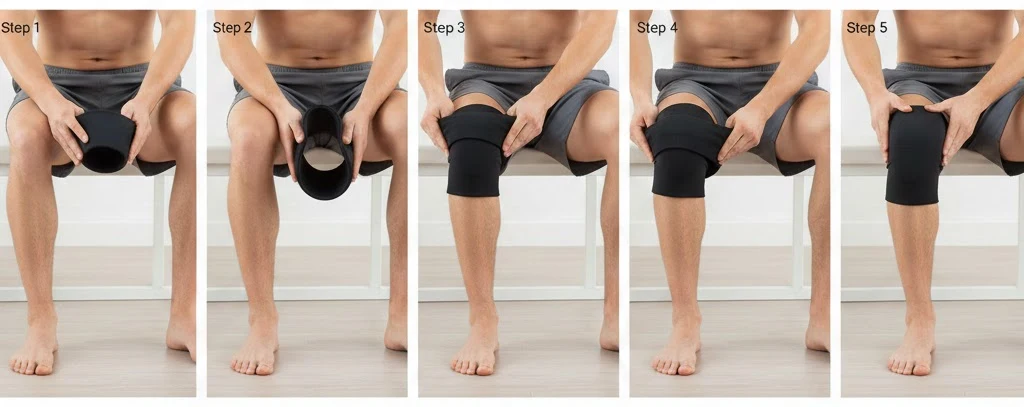
End users search “how to keep a knee compression sleeve from rolling down or sliding” because they feel lost. With a few simple checks, you can give them a clear checklist that they can follow.
Users can keep a knee sleeve from sliding down by picking the right size, wearing it on bare skin, placing the top band high enough on the thigh, keeping the inner surface clean, and replacing worn sleeves.
Measure correctly and choose the right size
To keep a knee sleeve from sliding down, end users should:
- Measure the thigh circumference at a point a few centimeters above the center of the kneecap.
- Measure the mid-knee and calf if the brand provides a full chart.
- Compare with the size chart and avoid “sizing up” just for comfort if the main goal is stability.
Brands can encourage customers to re-check their measurements if they feel frequent sliding. For a complete guide, see our article on how to choose the right size knee sleeve.
Wear the sleeve next to the skin
Layering is critical:
- For maximum grip, the sleeve should be in direct contact with the skin.
- Wearing it over very smooth leggings increases the chance of sliding.
Brands can include a simple line in instructions:
“For best anti-slip performance, wear the knee sleeve directly on the skin, with your training pants or leggings on top if needed.”
For a complete guide, see our article on how to wear a knee sleeve correctly.
Keep the inner surface clean
Sweat, skin oil, and dust can reduce friction. Users should:
- Wash the sleeve regularly according to care instructions
- Avoid fabric softeners that can coat fibers and reduce grip
- Air-dry and keep away from high heat that may damage elastic fibers
This helps maintain both compression and anti-slip ability.
Replace worn-out sleeves
Elastic textiles are consumables. Over time, even high-quality sleeves lose their recovery properties. If a sleeve that used to stay in place starts sliding even during walking, it is often a sign that it is time to replace it, not just pull it tighter.
Conclusion
To keep a knee compression sleeve from rolling down or sliding, match good fabric and pattern with clear sizing and wearing guidance, so the sleeve moves with the leg instead of against it.
Are you ready to upgrade your product line with anti-slip technology that actually works? Contact our ZZSUPPORTS professional team for a free design draft or a sample of our high-grip silicone sleeves.
FAQs
How do I stop my knee sleeve from rolling down at the top?
To stop a knee sleeve from rolling, ensure the silicone grip is against bare skin. Manufacturers use 3D anatomical knitting to create a conical shape that fits the thigh’s natural curve, preventing the fabric from flipping over during heavy movement.
Does the shape of the knee sleeve affect rolling?
Yes, straight-cut sleeves ignore the leg’s natural cone shape, causing them to slide down. Professional manufacturers use anatomical tapering, making the top wider than the bottom. This specialized design matches the quad’s contour, keeping the sleeve perfectly in place.
Why does my knee compression sleeve slide when I sweat?
Moisture reduces friction, causing generic fabrics to slip. High-grade factories use moisture-wicking yarns and heat-bonded silicone waves. These maintain a secure grip against skin during intense workouts, preventing the “sweat-slip” effect that compromises support and user comfort during sports.
How tight should a knee sleeve be to stay in place?
A sleeve should be snug but not painful. If the cuff creates a deep “lip,” it’s too tight and will roll. Professional factories engineer specific tension zones to balance “clamping force” with comfort, keeping the sleeve anchored without restricting circulation.
What is the best anti-slip feature for heavy sports?
Multi-row silicone waves combined with adjustable straps offer the most stability. While 3D knitting provides a base grip, mechanical straps allow users to customize the tension. This prevents sliding during high-impact jumps or sprints, making it a favorite for sports brands.