Many people buy arm sleeves, pull them on once, feel weird pressure or slipping, then push them into a drawer. The real problem is rarely the product itself, but wrong fit and wrong method.
If you want arm sleeves to feel supportive rather than tight and annoying, you need two things: a clear method for measuring arm sleeves before you buy and a simple way to wear arm sleeves correctly. This guide walks you through both, step by step.
If you’re still deciding what type of arm sleeve is best for your sport or daily routine, you can also check our complete guide to what arm sleeves do, the main types, and who they’re best for before you finalize your size.
How should arm sleeves fit on your arm?
Most people start with one core question: “Is this size right for me?” Without a clear standard for good fit, every sleeve feels either too tight or too loose, and it is hard to trust the size chart.
Arm sleeves should feel snug but not painful. You should move your elbow freely, slide one finger under the fabric, keep normal skin color, and almost forget you’re wearing them after a few minutes.
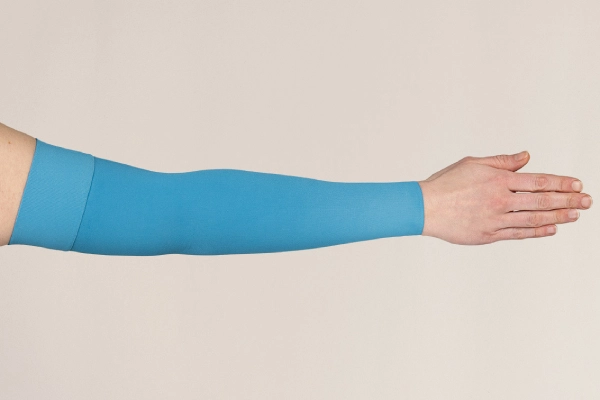
You might be wondering how to wear arm sleeves so they feel like support, not a rubber band. The answer starts with fit. Compression sleeves are designed to give gentle pressure along the forearm and upper arm, not to choke the limb.
A simple home test helps:
- Put on the arm sleeve in the correct direction (more on that soon).
- Bend and straighten your elbow 15–20 times.
- Make a fist and open your hand 15–20 times.
- Keep the sleeve on for at least 10 minutes.
During this time, the sleeve should feel like a steady hug on the muscles. Your fingers should stay warm. You should not feel pins and needles, burning, or sharp pressure at the edges. If that happens, the sleeve is too small or positioned badly.
On the other hand, if you can pull the fabric away from your skin by more than 1–2 cm easily, or the upper band keeps sliding down, the sleeve is too loose. That kind of fit will not give real compression, no matter how you wear arm sleeves.
How to measure for arm sleeves at home?
A common mistake is choosing size only by height or body weight. Two people with the same height can have very different arm shape and muscle mass, so the same size can feel totally different on them.
To measure for arm sleeves correctly, use a soft tape, measure upper arm and forearm circumference, then measure arm length from wrist to upper arm. These three numbers matter more than height or weight.
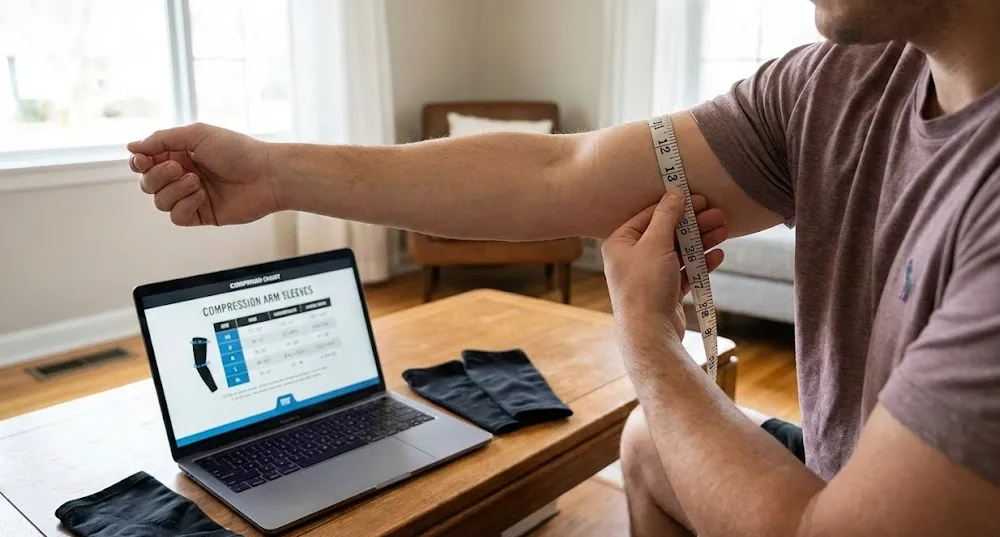
If you want a repeatable method for how to measure for arm sleeves, treat it like measuring for a custom shirt sleeve. You focus on the parts that carry most of the pressure.
What you need
Use a soft measuring tape used for clothing. If you don’t have one, wrap a string around the arm and then measure the string with a ruler.
Point A – Upper arm circumference
Relax your arm by your side. Find the thickest point between the shoulder and the elbow, usually at the mid-upper arm. Wrap the tape around this point. Keep it snug, not loose, but do not pull so tightly that the skin bulges. Record this number.
Point B – Forearm circumference
Bend your elbow slightly as if you are holding a small ball. Find the thickest part of your forearm, normally a few centimeters below the elbow. Wrap the tape and record the measurement.
Point C – Arm length
Measure from the wrist bone on the outside of your wrist up to Point A (the spot where you measured the upper arm). This gives you the length that the arm sleeve should cover.
Here’s what most people miss: once you know how to measure for arm sleeves with these three points, you can pick sizes far more accurately, even across different brands. That means fewer returns, less guesswork, and better comfort for everyone who wears your products.
How to wear arm sleeves step by step?
Many users pull arm sleeves on like socks in one fast motion. This stretches the fabric in the wrong direction, twists the knit, and creates wrinkles that rub the skin or make the sleeve slip.
To wear arm sleeves properly, start from the wrist, roll the sleeve, slide it over the hand, set the lower edge at the wrist, then unroll it slowly to the upper arm while smoothing wrinkles as you go.
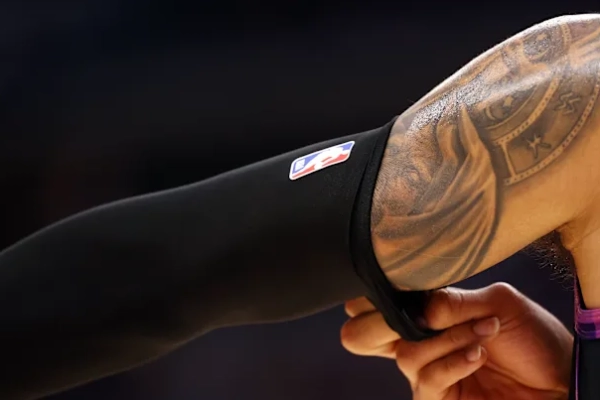
If you care about how to wear arm sleeves for real support, three things matter: direction, tension, and final position. A small mistake in any of these often leads to complaints that the sleeve “doesn’t work”.
Step 1 – Check the direction
Most arm sleeves have a “top” and “bottom”. The upper opening is usually wider and may have a silicone band inside. Logos tend to sit on the outside of the forearm. Some sleeves also have a seam that is meant to sit slightly to the inside or outside of the arm, not directly over the elbow tip. Make sure the sleeve isn’t upside down, inside out, or twisted before you start.
Step 2 – Roll first, then slide
Place your hand inside the sleeve and roll the fabric down from the top until only the wrist section is left, like a donut. Slide your hand through until the lower edge stops at your wrist bone. Use steady, controlled movements rather than pulling hard in one big stretch, so you don’t overstretch the knit.
Step 3 – Unroll along the arm
Hold the lower edge at the wrist with one hand. With the other hand, gently pull and unroll the sleeve toward the elbow and upper arm. Move in small steps, not one big yank, and smooth any wrinkles or folds with your palm as you go. The fabric should lie flat against the skin with no big creases, which can create pressure points.
Step 4 – Position the top edge
The upper band should sit on the thickest part of your upper arm, not in the armpit. If it goes too high, it will roll or dig into the skin. If it sits too low, the sleeve may slide down during sports. Do not fold the top band over into a cuff, because that can act like a tight rubber ring around the arm and leave deep marks.
Step 5 – Final checks
Now repeat the movement test from the previous section. Bend the elbow, rotate the forearm, and spread your fingers. The sleeve should stay in place, feel snug but not painful, and your hand should keep a normal colour and warmth after several minutes of wear. If it does, this is how to wear arm sleeves the right way.
How do you know if arm sleeves are too tight or too loose?
Even with good measurements and a decent size chart, some users will still sit between sizes or have special circulation issues. If you don’t give them simple checks, they will blame the product instead of the fit.
Arm sleeves are too tight if they cause numbness, tingling, sharp marks, or cold fingers. They are too loose if they slide down, wrinkle heavily, or feel like a normal shirt sleeve with no support.
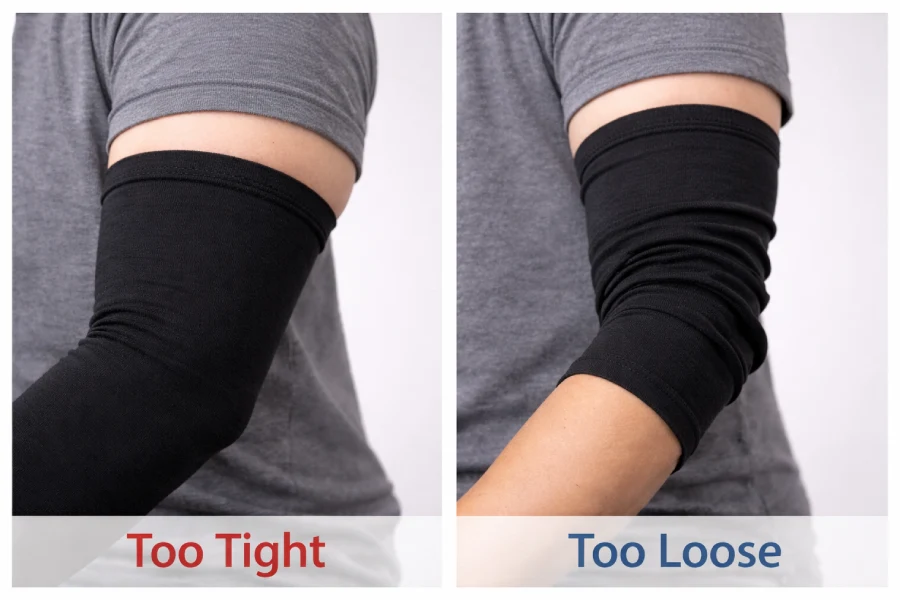
Here’s the deal: once you know how to wear arm sleeves and how to measure for arm sleeves, the last step is to teach your body to “judge” the fit. A few clear signs make this easy to explain in product pages or packaging.
Signs your arm sleeves are too tight
- Fingers turn pale, blue, or feel cold after 10–15 minutes.
- You feel pins and needles, burning, or strong pressure along the forearm.
- Deep red marks stay on the skin for a long time after taking the sleeves off.
- You feel a strong pulse under the fabric, like the sleeve is squeezing the blood flow.
In these cases, suggest users:
- Check if the upper band is sitting too close to the armpit.
- Make sure they are wearing the sleeve straight, not twisted.
- Move up one size and repeat the test.
Signs your arm sleeves are too loose
- The upper band slides down during normal movement.
- Large wrinkles form around the elbow or wrist.
- The sleeve feels like a thin fashion layer, not a compression product.
How to wear arm sleeves for sports and daily use?
Different sports stress different parts of the arm. A marathon runner needs stable upper arm coverage, while a tennis player bends and rotates the elbow again and again. If everyone wears arm sleeves the same way, some of that performance is wasted.
For running and field sports, focus on a stable upper band on the thickest part of the upper arm. For ball sports and racquet sports, center the elbow in the flexible zone. For desk work or gaming, focus more on forearm comfort.
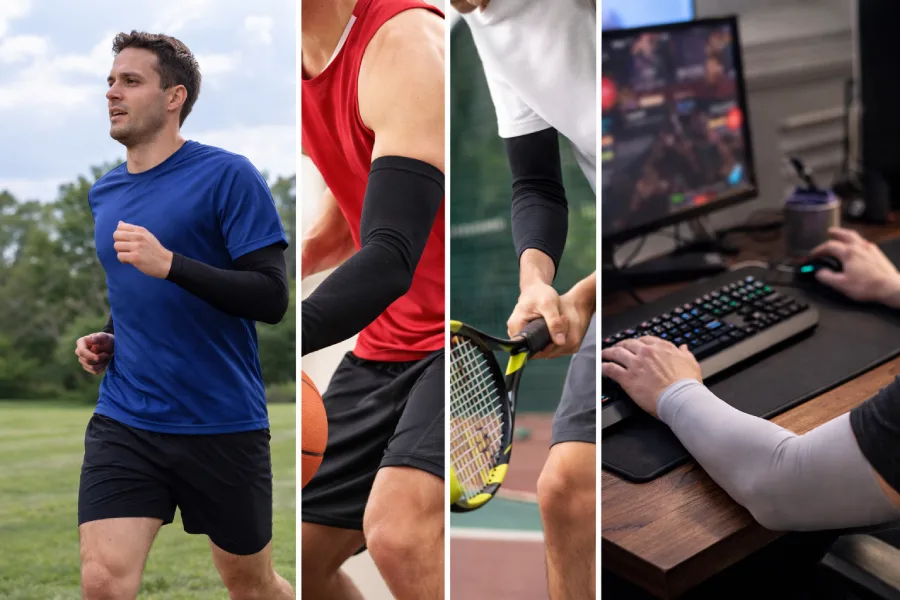
This is where method and context connect. You already know how to wear arm sleeves step by step. Now you tweak the position slightly based on the activity so the sleeve supports the right area.
Running, cycling, and field sports
Set the upper band firmly on the thickest part of the upper arm. If it sits too low, swinging arms may pull the sleeve down. If it sits too high, it can rub near the armpit. Keep the elbow section smooth so the fabric doesn’t rub the skin with every stride.
Basketball, volleyball, and racket sports
These players bend and extend the elbow at high speed. Place the center of the elbow in the most flexible part of the sleeve, usually away from any seam lines. If the sleeve has a visible seam, rotate it slightly so the seam runs along the outside or back of the arm, not right over the bone.
Weight training and gym work
Some users prefer more coverage around the elbow joint for support and warmth. They can pull the sleeve a bit lower so the denser knit crosses the joint. Encourage them to repeat the circulation tests to ensure it still feels safe and stable.
Desk work, gaming, and driving
In these cases, pressure can be lighter. How to wear arm sleeves here is more about sweat control and skin comfort. Users can choose a softer size and keep the upper band slightly lower, as long as the sleeve stays in place during normal use.
If sport performance is the main goal, it also helps to understand why athletes in basketball, running, football and other sports rely on arm sleeves in the first place, from blood flow to impact protection.
Conclusion
If you measure correctly, choose the right size, and wear arm sleeves with a bit of care, they stop feeling like tight tubes of fabric and start acting like real support for your arms.
Once the fit and wearing method are clear, the next step for brands is to get sizing curves and samples right on the production side. If a private-label line is on the roadmap, you can explore our custom arm sleeve manufacturing programs and OEM/ODM sports support manufacturing guide to match your target users more precisely.
FAQ
How tight should arm sleeves feel?
Arm sleeves should feel snug, like a gentle hug around the muscles, but never painful. You should bend your elbow freely, keep normal skin color, and have no numbness or tingling. If fingers feel cold or tingly, they’re too tight.
How long can compression arm sleeves be worn in a day?
For healthy users, compression arm sleeves are usually fine for several hours at a time during activity or recovery. If you’re treating a medical condition, follow your therapist’s schedule. Always remove them if you notice pain, tingling, or unusual swelling.
Can arm sleeves help with elbow or forearm pain?
Yes, compression arm sleeves can reduce muscle vibration, support soft tissue, and improve circulation, which may ease mild tendonitis or overuse discomfort. They are not a cure, though, and shouldn’t replace medical diagnosis, rehab exercises, or professional treatment for persistent pain.
What happens if arm sleeve measurements fall between two sizes?
If you’re between sizes and want stronger support for training or recovery, choose the smaller size within the chart range. If you have sensitive skin, circulation concerns, or mainly want light everyday support, choose the larger size and test comfort first.
Is it safe to sleep in compression arm sleeves?
Most people don’t need to sleep in compression arm sleeves for sports recovery. Night use is mainly for specific medical conditions under professional guidance. If you ever feel numbness, pins and needles, or throbbing at night, remove the sleeve immediately.
Why do arm sleeves keep slipping down?
Arm sleeves usually slip because the size is too large, the upper arm band sits too high near the armpit, or sweat and sunscreen reduce grip. Re-check your measurements, reposition the top band on the thickest upper arm point, and keep skin dry.
Can arm sleeves be worn on either arm?
Most arm sleeves are reversible left to right, so you can wear one sleeve on either arm or use a pair on both arms. Just follow the logo and seam orientation, and make sure any silicone band sits at the upper edge.
How should arm sleeves be washed to last longer?
Wash arm sleeves in cool water with mild detergent, ideally by hand or on a gentle cycle, then air-dry flat away from direct heat. Avoid bleach, fabric softener, tumble drying, and ironing, which can damage elastic fibers and weaken compression over time.