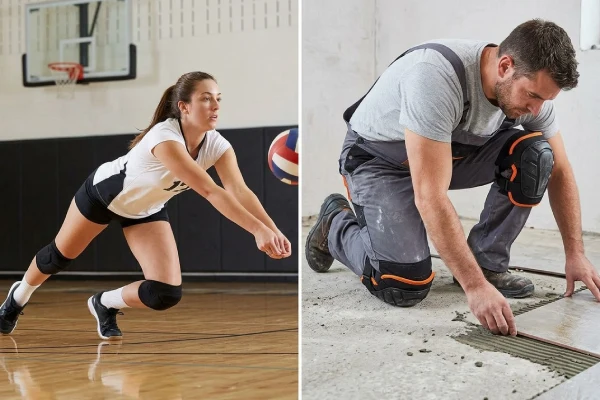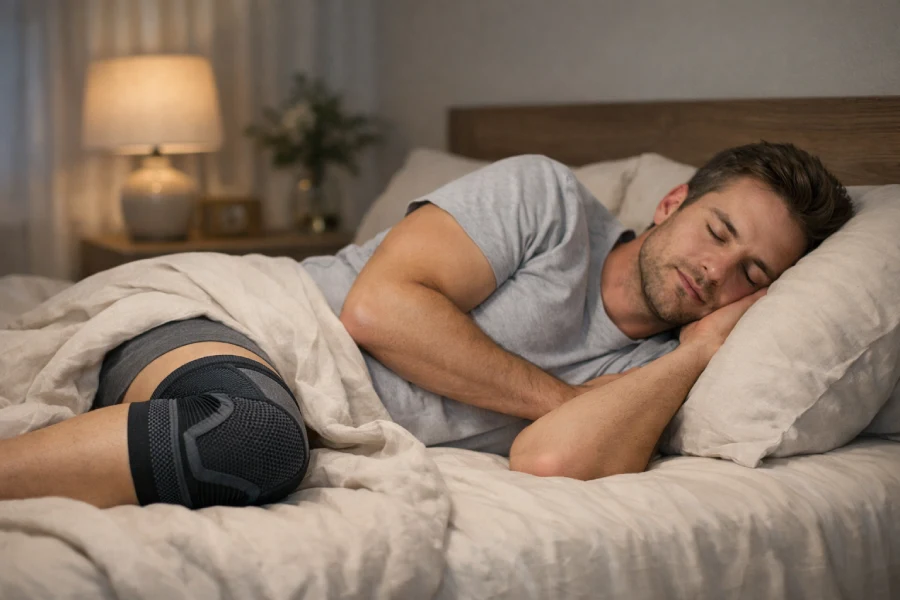
Elbow pain makes work, sport, and even simple tasks harder than they should be. Painkillers only mask symptoms. A good arm sleeve gives gentle, external support while you still move and use your arm.
So, do arm sleeves help elbow pain? For many mild-to-moderate cases, yes. A well-fitted compression sleeve can support the elbow joint, improve blood flow, reduce swelling, and improve joint control. It will not replace medical care, but it can be a useful part of your pain management plan.
From what we see across sports users, workers, and rehab buyers, results depend on three points: the right sleeve type, the right size, and the right way to use it.
Do arm sleeves help with elbow pain or is it just a feeling?
Elbow sleeves often “feel good” the moment you put them on. That leads to a fair question: is it real support, or just a placebo?
Do arm sleeves help with elbow pain? In many cases, they do, because compression, warmth, and joint feedback all work together. They can reduce swelling, calm pain signals, and make the joint feel more stable during daily tasks or sports.
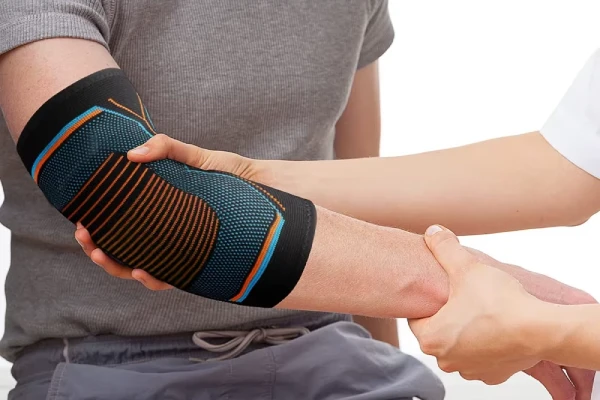
Here is what happens in simple terms:
- Light compression supports the soft tissue around your elbow and helps veins return blood to the heart.
- Better circulation means waste products clear faster and more oxygen reaches the sore area.
- Warmth around the joint relaxes tight muscles and stiff connective tissue.
- The sleeve gives your skin and nerves more feedback, so your brain “tracks” elbow position more clearly.
You might be wondering how this compares with a rigid brace. A sleeve does not lock the joint in place. It gives gentle guidance and support while you still keep your range of motion. That is why many people can type, lift light loads, or play with kids while wearing a sleeve.
If you are new to this topic and want a broader overview of sleeve types, you can also check our arm sleeves guide for a full look at materials, designs, and use cases beyond elbow pain.
Which elbow problems can arm sleeves help?
Elbow pain has many causes. A sleeve is not a magic fix for all of them, but it can support several very common problems.
Arm sleeves can help with elbow pain from overuse tendon problems, mild arthritis, some swelling issues, and “work-related” or sport-related soreness. They are less suitable for fresh trauma, fractures, or serious ligament tears.
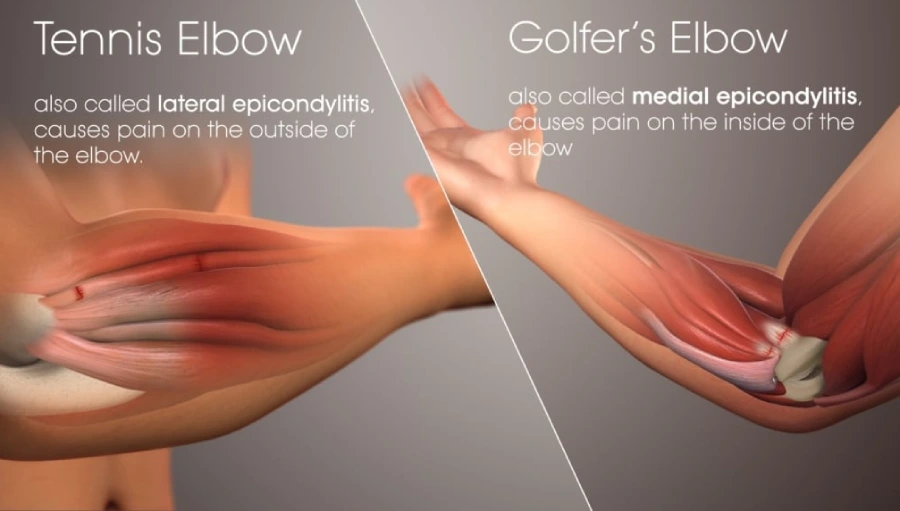
Typical cases where sleeves often help:
- Tennis elbow (outside of the elbow)
Pain on the outer side of the elbow from gripping, mouse use, or backhand strokes. A sleeve supports the forearm muscles that pull on the tendon, so each grip places less stress on the sore spot. - Golfer’s elbow (inside of the elbow)
Pain on the inner side from repeated wrist flexion and strong grip. Compression and warmth around the inner forearm and elbow can reduce tension and morning stiffness. - Mild arthritis or “old injury” stiffness
For earlier-stage joint wear or past injuries, warmth and light pressure can make movement smoother and less sharp, especially in cold environments. - Bursitis and swelling around the elbow
In some cases of mild bursitis or post-activity swelling, controlled compression helps manage fluid and gives a sense of support. This must be done with the correct pressure to avoid blocking circulation. - Overuse from work, gym, or manual jobs
People who lift, push, carry, or use tools all day often report less end-of-day soreness with a sleeve. It can reduce soft tissue vibration and help muscles “feel” more stable during repeated tasks.
For sports users, there is also a mental part. The sleeve acts as a reminder to use better form and avoid extreme positions. If you want to see how this plays out at higher levels of play, you can read more in our article on why athletes wear arm sleeves.
The truth is, the same sleeve will not work for everyone. A thin nylon sleeve may be perfect in an office but too weak under heavy weights. A thick neoprene design may support a barbell well but feel too hot at a desk. Matching design to your pain pattern and activity is just as important as the general idea of “compression.”
How do arm sleeves actually work on elbow pain?
Once you accept that a sleeve can help, the next step is understanding how it works. That helps set clear expectations and makes product choice easier.
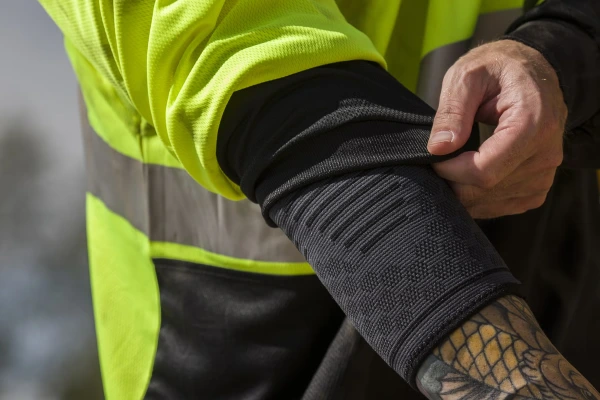
Arm sleeves help with elbow pain mainly through three effects: compression, warmth, and proprioception (joint awareness). Together, they create a safer, more comfortable environment for movement and recovery.
Compression and circulation
Gentle, even pressure around the elbow supports soft tissues and narrows superficial veins. Blood flow often becomes more efficient. That can mean:
- less swelling after activity
- fewer “heavy” and tired feelings in the forearm
- faster removal of metabolic waste
Warmth and comfort
The fabric traps a layer of warmth around the joint. Warmer muscles and connective tissue move more smoothly and are less likely to feel stiff or “rusty.” Many people notice this effect first thing in the morning or in air-conditioned rooms.
Proprioception and joint control
The sleeve gives your skin and nerves more contact feedback. Your brain builds a clearer picture of where the elbow is in space. Better joint awareness can reduce small, repeated mis-alignments that keep aggravating tendons and ligaments.
But here’s the kicker: compression has to stay in a healthy range.
If the sleeve is too loose, you lose most of these benefits. If it is too tight, you risk tingling, numbness, or extra pain. Good results depend on the right size, pattern, and fabric stretch, not just putting “strong compression” on the package.
How to wear arm sleeves for elbow pain the right way
Even a well-made sleeve will not help if you wear it in the wrong way. The goal is simple: support the elbow without blocking blood flow.
For elbow pain, your arm sleeve should sit from mid-forearm to mid-bicep, feel snug but not numb, and place the main compression zone over the area that hurts while you move and work.
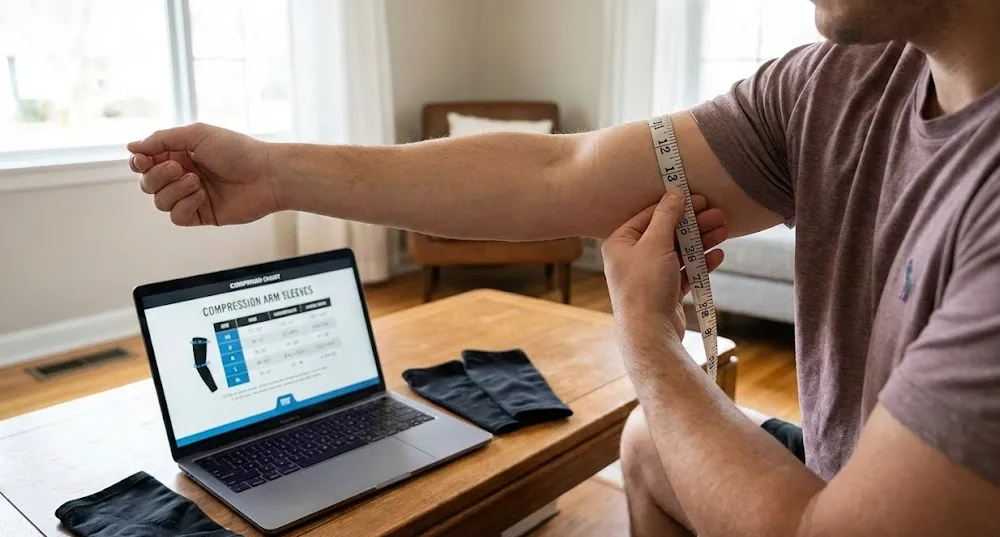
In short, choose a size based on your forearm and bicep measurements, not just your T-shirt size. Make sure your fingers do not tingle, your skin does not change color, and the sleeve does not keep sliding down. Most people only need to wear it during active hours (sport, lifting, work), not all day and night.
This is only a quick overview. If you want step-by-step instructions, you can follow our detailed guide on how to wear arm sleeves and measure for the right fit, including examples and sizing tips.
When should you NOT rely on arm sleeves for elbow pain?
Every tool has limits. The question is not only “do arm sleeves help elbow pain” but also “when is a sleeve not enough?”
Do not rely only on an arm sleeve if your elbow pain started after a fall or direct impact, comes with severe swelling or deformity, or is paired with strong numbness or weakness in the hand.
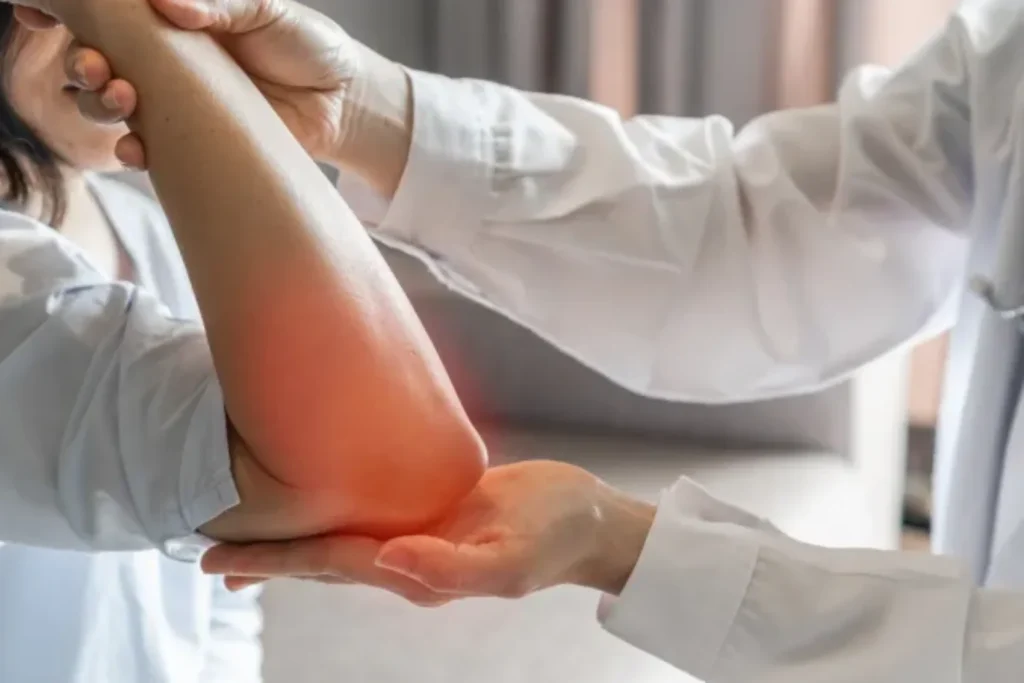
See a medical professional promptly if you notice:
- a clear injury event (fall, twist, or blow to the elbow)
- a sharp “pop” when the pain started
- strong swelling, redness, or heat around the joint
- loss of motion (you cannot fully bend or straighten the elbow)
- numbness, tingling, or weakness in fingers or hand
- pain that keeps getting worse even with rest and basic support
In these situations, a sleeve might reduce symptoms for a short time, but it will not repair torn tissue or set broken bone. Using it as the only solution can delay proper treatment and slow recovery.
Also be careful if you already have serious circulation or nerve problems. People with advanced vascular disease or severe diabetic neuropathy, for example, should ask a doctor before using compression around the limb.
The bottom line? Arm sleeves are very helpful for overuse problems and mild issues. They should support medical advice, not replace it.
How to choose arm sleeves for elbow pain for sport, work, and daily use
Once you know a sleeve might help, you still need to pick the right model. Sport users, office workers, and rehab patients often need different designs.
For elbow pain, choose lighter, breathable sleeves for long daily wear; medium to stronger compression with stable fabric for sport and lifting; and purpose-built designs when you need medical or post-injury support.

Key points to look at:
- Compression level
Light compression works well for office and daily wear. Medium compression is better for sport and strength training. Very strong compression should be used under guidance, not just guessed. - Fabric mix
- Nylon / spandex: thin, smooth, easy to wear under clothing.
- Neoprene blends: thicker, warmer, popular for lifting and cold gyms.
- Cotton or bamboo blends: softer touch, nice for sensitive skin.
- Length and coverage
For elbow pain, choose a sleeve that covers above and below the joint. Designs that reach mid-bicep and mid-forearm spread the pressure more evenly and stay in place better. - User goal: pain, shape, or both
Some buyers care more about pain relief, others about arm shape and “flabby arms.” If your main focus is shape and upper arm contour, you can read our article on do arm compression sleeves work for flabby arms for a clear view of what sleeves can and cannot do in that area. - Extra functions: hot and cold therapy
Some situations, such as post-game swelling or chronic stiffness, respond well to both compression and temperature control. For those use cases, a product like a hot and cold elbow compression sleeve with built-in ice pack can combine support and cold or heat therapy in one wrap.
If you are not just buying for yourself but planning a full product line for customers, we can also help you match fabrics, compression levels, and size ranges by user group through our custom arm sleeve solutions for your brand. This makes it easier to cover office users, athletes, and rehab cases with one coherent range.
Care tips: how to wash and replace arm sleeves used for elbow pain
Good care keeps the sleeve safe on skin and keeps compression close to the original design. Poor care can turn a good product into a loose and itchy tube in a short time.
Wash arm sleeves in cool water with mild detergent, air-dry them away from heat, avoid bleach and fabric softener, and replace them once they lose stretch or feel loose around the elbow.
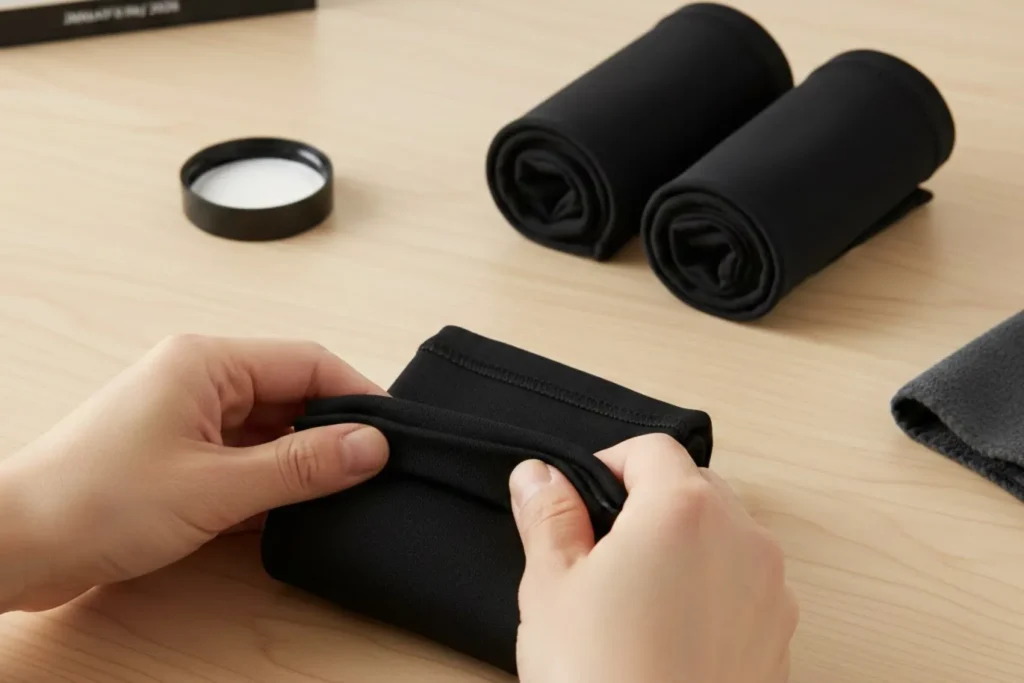
Practical care steps:
- Turn the sleeve inside out after use and let it air-dry.
- Wash every 1–2 wears for daily users, and after each heavy sweat session.
- Use hand wash or a gentle machine cycle in a mesh bag.
- Do not use bleach or fabric softener, which can damage elastic fibers.
- Lay flat or hang to dry at room temperature; skip the high-heat dryer.
- Expect to replace heavily used sleeves about every 3–6 months, or sooner if they feel loose, show pilling, or slide down more than before.
Care will not change the basic function of a sleeve, but it controls how long you keep the same support level and comfort.
Conclusion
Do arm sleeves help elbow pain? For many people with overuse, tendon irritation, and mild joint issues, the answer is yes. With the right design, fit, and wear plan, a sleeve is a simple, low-risk way to support comfort and recovery.
If you’re planning or upgrading your own line of elbow and sports supports, you can see how we handle materials, structures and branding options in our complete OEM/ODM sports support manufacturing guide so your products perform well and get better reviews.
FAQs
Do arm sleeves really help elbow pain or just hide it?
Arm sleeves don’t cure elbow pain, but they can genuinely help. Compression, warmth and joint feedback reduce swelling and make movement feel more controlled. Most people get the best results when sleeves are combined with load management, better technique and simple rehab exercises.
How long should I wear an elbow compression sleeve each day?
For most people, 2 to 6 hours of wear during higher-stress activities is enough. Use the sleeve for sport, lifting, work or long mouse use, then take it off to let your skin and circulation recover unless your clinician suggests otherwise.
Can I wear an elbow sleeve all day or at night?
Occasional full-day or night use is usually safe if the sleeve is comfortable and your circulation is normal. But if you notice numbness, tingling, color change or extra pain, remove it and switch to shorter wear periods or ask a healthcare professional.
Are elbow compression sleeves good for tendonitis or tennis elbow?
Yes. Elbow compression sleeves are widely used for tendonitis, including tennis and golfer’s elbow. They help by offloading irritated tendons, improving blood flow and keeping the joint warm, but they work best alongside technique changes, rest and progressive strengthening exercises.
Can a compression sleeve make elbow pain worse?
A sleeve that’s too tight, worn nonstop or used instead of proper treatment can make elbow pain worse. Watch for numbness, swelling or sharp pain. If symptoms increase, stop using the sleeve and get a professional assessment of the underlying problem.
Should I use an arm sleeve or a rigid elbow brace?
Sleeves are ideal for mild to moderate pain when you still need good mobility. A rigid brace is better after significant injury or surgery, when movement must be limited. Many people use sleeves daily and reserve braces for short, higher-risk periods.
How do I know what size elbow sleeve to buy?
Measure around your forearm and mid-bicep, then follow the brand’s size chart. If you sit between two sizes, most people with elbow pain do better in the snugger option, as long as there’s no tingling, color change or deep pressure marks.
How long does it take for an arm sleeve to relieve elbow pain?
Some people feel immediate relief from warmth and support. For tendonitis and overuse injuries, expect gradual improvement over several weeks as you combine the sleeve with smarter loading, stretching and strengthening. If pain keeps worsening despite these steps, seek a medical evaluation.