Cheap arm sleeves pill, slide, or lose compression fast. That turns into returns and bad reviews. The right material plan prevents most of it.
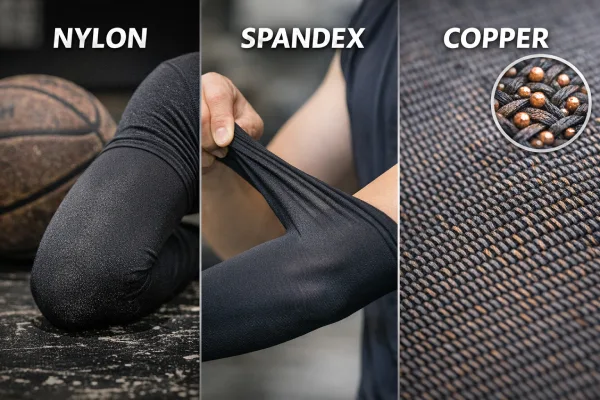
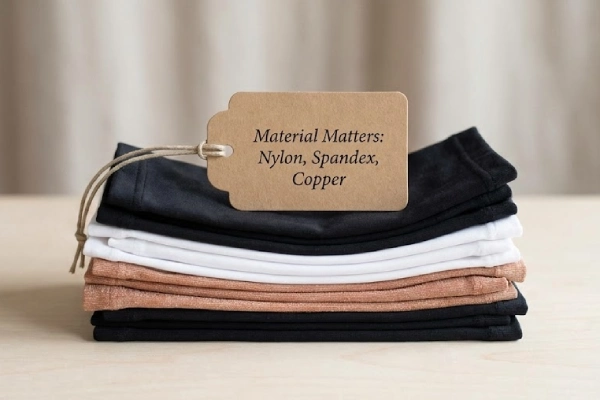
Nylon supports wear life and a smooth feel. Spandex supports stretch and recovery so compression lasts. “Copper” is a treatment or additive for odor-control positioning when it’s durable and tested.
This article is part of the broader arm sleeve topic. If you want the full overview of types, uses, and how to choose, start with our Arm Sleeves: Types, Uses, Comparisons & Buying Guide.
What do arm sleeve materials actually change in real use?
Most sleeves fail in predictable ways: the elbow area turns fuzzy, the cuff relaxes, or the sleeve slides down during sweat and movement. People blame sizing. Often, the material system is the real reason.
Arm sleeve materials control feel on skin, how fast the surface pills, how well the sleeve holds its shape after washing, and how consistent the compression feels over time. Fiber names matter, but yarn type, knitting structure, and finishing control decide the result.
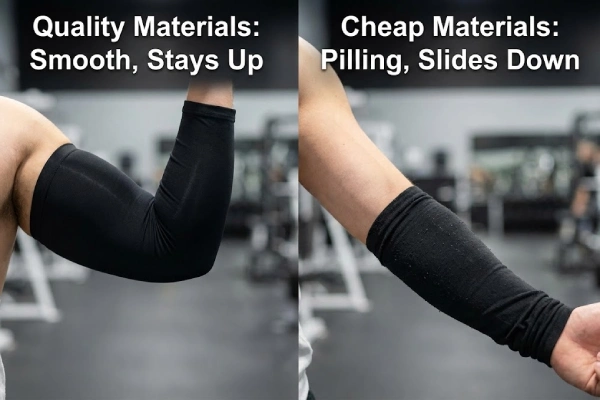
Here’s what most people miss: two sleeves can both say “85% nylon / 15% spandex” and still perform very differently. One stays smooth and supportive. The other gets loose and starts sliding in a few weeks.
Why? Because “materials” means more than fiber names:
- Yarn choice: filament vs textured, denier, multi-filament vs mono, covered spandex vs bare spandex
- Knit build: needle gauge, density, zoned support, cuff construction, edge finishing
- Finishing control: heat-setting window, tension control, dyeing, drying, silicone or grip finishes
Here’s the deal… the label is an ingredient list. The recipe decides whether the sleeve stays consistent.
If you’re buying or developing arm sleeves, your material decisions should match what customers do most:
- Long wear at a desk or on a court means abrasion and comfort matter.
- Repeated stretching and washing means recovery matters.
- Odor-control positioning means durable treatment + test reports matter.
Many shoppers also need help with fit and wear habits, especially if they complain about sliding or tightness. It helps to pair this with practical guides like how to measure for the right arm sleeve fit and how tight an arm sleeve should be.
Why is nylon used in arm sleeves?
Nylon is often what keeps a sleeve looking “new” after weeks of friction. People notice wear at the elbow and cuff first, so nylon is usually the workhorse fiber in performance sleeves.
Nylon supports abrasion resistance, wear life, and a smooth handfeel. It helps reduce pilling and roughness in high-friction zones like the elbow and cuff. Nylon supports structure, but compression mainly comes from knit density and spandex recovery.
Nylon performs well in places where sleeves get rubbed and dragged:
- Elbows on courts, desks, and benches
- Forearms against jerseys, pads, and gloves
- Cuffs against watches, straps, and tape edges
But here’s the kicker… nylon doesn’t “create compression” by itself. If you want a sleeve that feels supportive and stays supportive, nylon needs the right knit build and spandex system beside it.
What nylon helps you control (the buyer-friendly version)
- Surface durability: fewer complaints like “it fuzzed up fast”
- Comfort glide: smoother contact for long wear and sweaty conditions
- Look stability: matte/gloss consistency and less visible surface damage
What nylon won’t fix on its own
- A cuff that’s too loose
- A sleeve that slides down after sweating
- Compression that fades after repeated stretching
Those are usually recovery and cuff engineering problems. If your customers keep asking why sleeves slip, this guide helps: Why do arm sleeves slide down? Causes & fixes.
What does spandex (elastane) do in an arm sleeve?
Many sleeves feel supportive on day one, then feel weak after several washes. That’s rarely “normal.” It’s usually recovery loss.
Spandex provides stretch and recovery. It helps the sleeve return to shape after movement and washing, which keeps fit and compression stable. If recovery drops, the sleeve feels loose, slides down, and stops fitting like it did at the start.
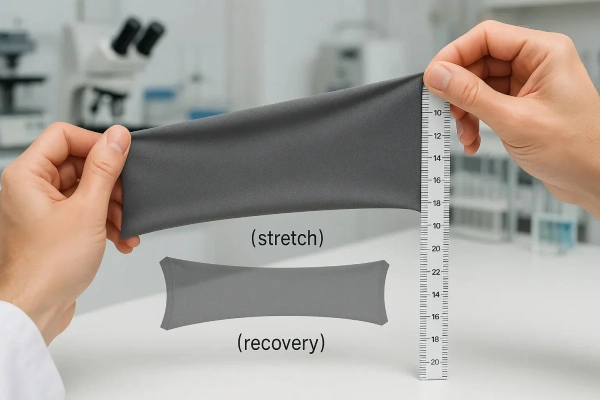
You might be wondering if the fix is simple: “Just increase spandex percent.” Sometimes that helps. Sometimes it creates a sleeve that feels too tight, traps heat, and becomes harder to size across different arm shapes.
The truth is… spandex performance depends on process as much as percentage:
- How the spandex is used (covered yarn vs bare)
- How it’s laid into the knit (plating, tension, stitch type)
- Heat-setting and tension control during finishing
- Washing and drying exposure (high heat and harsh chemicals reduce life)
What spandex helps you control
- Fit retention: sleeve keeps its shape after repeated wear
- Support feel: stable compression sensation across time
- Sliding risk: better recovery often reduces slip complaints
What to watch out for
- High heat during finishing can reduce elasticity
- Harsh care habits can shorten life
- Weak cuff builds fail faster than the body fabric
If you want fewer “too tight vs too loose” complaints, it helps to educate customers on fit expectations. This works well with How tight should an arm sleeve be? A simple fit test and How to wear arm sleeves and measure for the right fit.
How do nylon + spandex blends change comfort and compression?
Most commercial arm sleeves are blends. That’s because nylon and spandex solve different problems, and the blend lets you tune the balance between comfort, durability, and support.
Nylon-spandex blends let you balance smooth feel, durability, and shape retention. Nylon handles wear and surface feel. Spandex handles recovery and compression life. The knit structure decides pressure zones and how consistent the sleeve feels across the arm.
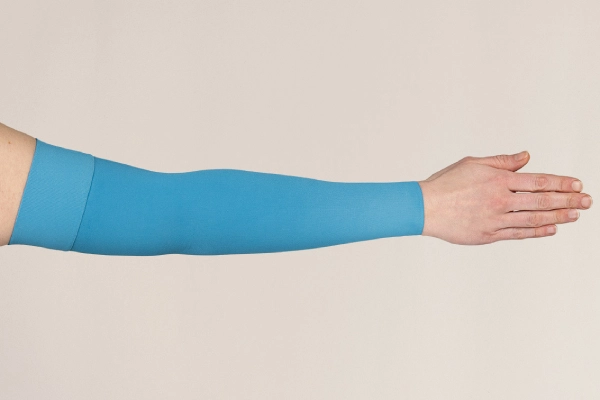
Here’s a practical way to think about blends:
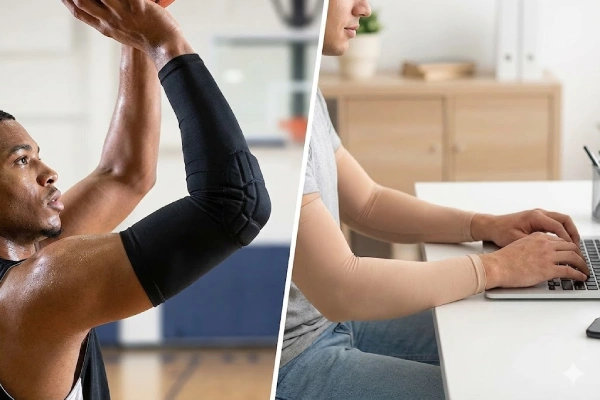
- If you sell into sports and training, you want sleeves that stay supportive during sweat, stretching, and washing.
- If you sell into work or daily wear, you want sleeves that feel soft and don’t pill at the elbow.
Here’s what most people miss… the same “nylon/spandex ratio” can feel totally different because knit structure changes pressure more than fiber names do.
Three blend styles you see in the market
1) Comfort-first performance sleeves
- Softer feel, lighter support
- Built for long wear and less “squeeze”
- Works well for daily use, warm climates, and casual athletes
2) Support-first compression sleeves
- Higher density knit, firmer feel
- Better at holding shape and staying in place
- Good for sports use, recovery routines, and customers who want a “held” feel
3) Zoned sleeves
- Different knit densities across the arm
- Reinforced elbow area, stronger cuff zone
- Helps match support where friction and movement are highest
If your buyers are choosing sleeves for sports, context matters more than fiber labels. If your goal is a sports-ready SKU, look at the sport first—abrasion zones, sweat load, and laundering frequency. These quick reads can help you match materials to the right scenario: why athletes wear arm sleeves, arm sleeves for basketball, and what arm sleeves MLB players wear.
What is a copper arm sleeve, and what does “copper” really mean?
“Copper arm sleeve” is a label that can describe very different products. Some use copper in a meaningful textile treatment. Others use the word mainly for marketing.
A copper arm sleeve usually means a copper-based additive or finish aimed at odor-control or antimicrobial positioning. Results depend on the copper form, how it’s bonded, and whether performance lasts after washing. Claims should stay tied to testable textile outcomes.
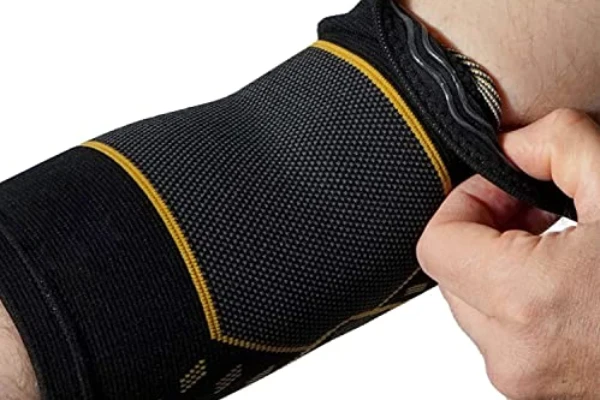
The bottom line? “Copper” is not one material choice. It’s a method. Copper programs usually fall into two technical routes:
Copper embedded into yarn/fiber systems
This can mean copper-based masterbatch or copper dispersed within the fiber during production. The goal is wash durability.
- Often more stable than surface coatings
- Higher development and sourcing complexity
- Better fit for long-term claims when you can document wash cycles
Copper applied as a finish or coating
This can mean copper ions, copper oxide, or copper composite finishes applied during textile processing.
- Faster to develop
- Wash durability varies a lot
- Needs clear test conditions to avoid customer disappointment
So what does this mean for you? If you want to sell “copper arm sleeves,” you should be ready to answer three buyer questions:
- What form is the copper? (embedded vs coating vs composite yarn)
- What happens after washing? (defined wash count + defined method)
- What test report supports the claim? (test name, lab scope, conditions)
If your customers also care about support and fit, copper alone won’t solve sliding or compression fade. It still needs the same recovery and cuff build rules as any other sleeve.
What specs and tests should you use for B2B sourcing?
Specs that can’t be measured usually turn into debates. Specs that can be measured turn into repeatable quality.
For B2B arm sleeve sourcing, focus on three measurable risk areas: abrasion for wear life, stretch-and-recovery for fit retention, and antibacterial performance only if you sell copper positioning. Standard test language makes factory comparisons easier.
The writing rules for this site also prefer using concrete spec language to support trust and clarity.
Abrasion and surface wear (nylon benefit)
ASTM D4966 / ISO 12947 (Martindale)
Use this when elbow fuzzing and cuff wear create returns. Test elbow zone and cuff zone separately when possible.
Stretch, recovery, and growth (spandex benefit)
ASTM D2594
This helps track recovery and “growth” after stretch. It’s more useful than asking only for spandex percentage.
Antibacterial performance (only for copper positioning)
- ISO 20743 or AATCC 100 for quantitative results
- ISO 20645 as a plate method that can support a technical file
If you’re building a copper program, define wash durability in writing. “Pass” without wash conditions doesn’t help you.
A simple spec table you can reuse
| What you want to control | What customers complain about | What to specify | Common test language |
|---|---|---|---|
| Elbow/cuff durability | “It pills fast” / “It looks worn” | abrasion target by zone | ASTM D4966 / ISO 12947 |
| Compression life | “It got loose” / “It slides now” | recovery and growth target | ASTM D2594 |
| Odor-control positioning | “I don’t notice a difference” | copper form + wash durability + report | ISO 20743 / AATCC 100 |
If you’re building a custom program, clear specs also make sampling faster. For private label and bulk options, see Custom arm sleeves (design, MOQ, and use cases) and our OEM/ODM sports support manufacturing guide.
How do you choose the right material setup for your market?
The “best” materials depend on what you sell, who you sell to, and how people actually use the sleeve.
Choose nylon-led builds when durability and comfort feel drive reviews. Choose stronger spandex systems and denser knits when fit retention and support drive reviews. Choose copper positioning only when you can support it with wash-durable construction and clear test reports.
Here are common use-case matches that work well in the market:
Sports and training (high movement, high sweat)
- Nylon-led surface durability helps reduce elbow fuzzing
- Strong recovery reduces sliding and “loose after wash” complaints
- Zoned knits help reinforce friction areas
Basketball and baseball sleeves often have different friction and contact patterns, so it helps to align the build with the sport’s routine. If you want examples of how sleeves are used in real sports settings, see arm sleeves in basketball and what arm sleeves MLB players wear.
Daily wear and work (long wear, comfort first)
- Soft handfeel and smooth seams matter
- Moderate compression is often preferred
- Cuff comfort matters as much as body fabric
When buyers complain about slipping, it’s often a mix of recovery plus cuff design plus friction. This breakdown helps: Why do arm sleeves slide down? Causes & fixes.
Retail differentiation (story-led SKUs)
- Copper positioning can work when it’s real and documented
- “Copper” should not replace comfort and fit engineering
- Clear claim boundaries prevent backlash and returns
Here’s the truth is… the fastest way to improve customer satisfaction is not a new buzzword material. It’s consistent fit, stable recovery, and durable wear zones.
If you want to reduce sizing confusion, point customers to how to measure for the right arm sleeve fit and how tight an arm sleeve should be.
Conclusion
Nylon supports durability and feel. Spandex supports recovery so compression lasts. Copper can support odor-control positioning when it’s wash-durable and tested. Choose materials by use case, then lock results with clear specs.
FAQs
What’s the best arm sleeve material for hot weather?
Look for a lightweight nylon–spandex knit with a smooth filament nylon face and enough spandex to keep it stable. Prioritize breathability and sweat glide over “thicker compression.” A dense, heavy knit often feels hotter even if it’s “performance.”
Nylon vs polyester for arm sleeves — which is better?
Nylon is commonly chosen for a smoother feel and strong wear resistance, which helps the sleeve stay comfortable where friction is high (elbow/cuff). Polyester can be cost-effective and quick-drying, but surface feel and pilling depend heavily on yarn and knit density.
How much spandex should an arm sleeve have?
Many sleeves land around 10–20% spandex, but percentage alone doesn’t guarantee lasting compression. Recovery depends on yarn construction, knitting tension, and heat-setting. Ask whether the sleeve keeps its shape after repeated stretch-and-wash cycles, not just the blend ratio.
Why do my arm sleeves slide down even when the size seems right?
Sliding usually means the sleeve is effectively too large after movement: weak cuff structure, low friction on skin, sweat buildup, or elastic recovery loss. If the fabric feels “baggy” at the wrist/upper arm, sizing is often the real culprit.
Why does a nylon/spandex sleeve cause itchiness or redness?
Irritation is often from heat, sweat salt, dye/finish residue, or a rough edge seam—not the fiber name alone. Try smoother filament nylon, cleaner finishing, and a softer cuff. Forum users commonly report irritation even with “80/20 nylon-spandex” sleeves.
Do copper arm sleeves actually reduce odor?
They can help with odor-control if the copper is truly bonded/embedded and still active after washing. Copper’s role in these garments is typically antimicrobial/odor support—not “better circulation.” Without wash-durability testing, “copper” may fade into a marketing label.
Do copper arm sleeves help pain or inflammation?
Evidence for copper-infused fabric worn on the body reducing pain better than normal compression is weak; many discussions conclude the compression/fit matters more than copper. Not medical advice—if pain persists, consider professional guidance and product choices focused on fit and support.
How do I tell if an arm sleeve will pill or wear out fast?
Check the elbow and cuff zones: low-density knits pill sooner under friction. Nylon-led faces often resist surface wear better, but structure still matters. For bulk sourcing, ask for Martindale abrasion results (ASTM D4966/ISO 12947) on wear zones.
Will washing and drying ruin compression?
It can. High heat and harsh chemicals accelerate elastic recovery loss, making sleeves feel looser and slide more. Air-drying or low-heat drying helps maintain recovery longer. If a sleeve loses “snap” quickly, it’s usually recovery degradation rather than “nylon wearing out.”