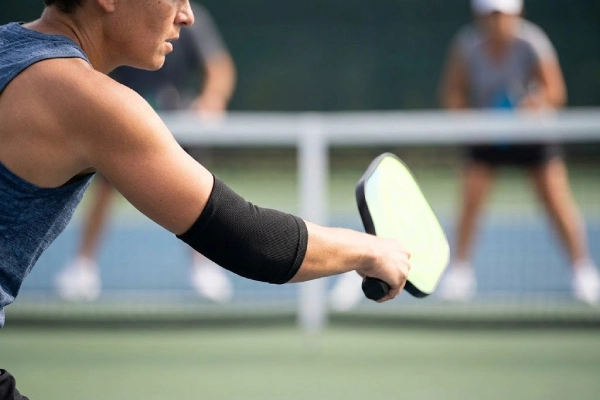
Elbow pain can change your game fast. A small ache can turn into weaker shots, less control, and more hesitation if you keep playing through it.
Pickleball elbow support can help reduce repeated tendon strain, improve comfort during play, and make your swing feel steadier. This article is for general information, not medical advice. If pain is severe or comes with swelling, numbness, or weakness, get medical help.
If your elbow has started bothering you after longer sessions, repeated backhands, or fast exchanges at the kitchen, support may help you manage the load more effectively. For a broader view of how protective gear fits into the sport, pickleball support gear and injury prevention gives a wider picture.
What causes elbow pain in pickleball?
Elbow pain in pickleball usually comes from repetition. You grip the paddle. You reset hard shots. You block fast balls. You repeat the same forearm motion again and again.
Most pickleball elbow pain comes from overuse. Repeated gripping, wrist extension, and swing stress can irritate the tendons around the outer elbow over time, especially when playing volume goes up.
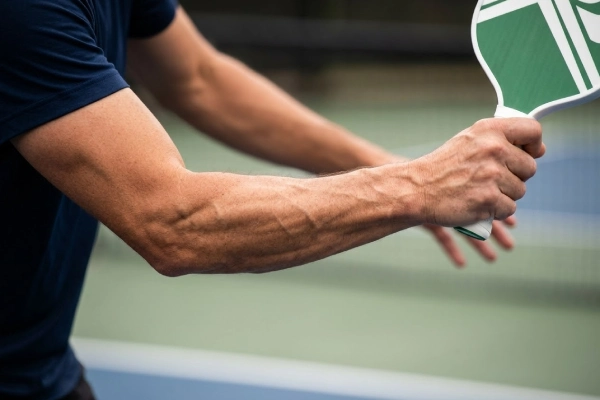
That is why many players use “pickleball elbow” and “tennis elbow” to describe a similar problem. The pain often shows up on the outside of the elbow. At first, it may feel like a light pull after play. Later, it may start showing up during backhands, firm volleys, or long sessions.
Not every sore elbow feels the same, though.
Some players only notice tenderness after a long match. Some feel pain during play. Some notice weaker grip strength. Others have sharper symptoms that do not feel like normal overuse. That difference matters because the right support depends on the kind of stress your elbow is taking.
Pickleball adds its own pattern here. Quick reactions, repeated contact, and tension in the paddle hand can all raise load on the forearm and elbow. So even if two players both say, “my elbow hurts,” they may not need the same type of support.
If you are comparing broader arm coverage with more focused elbow support, arm sleeve vs elbow brace for elbow pain can help you sort out the difference.
When should you use pickleball elbow support?
You do not need a brace every time your elbow feels a little tired. You may need one when the same pain keeps returning and starts affecting how you play.
You may want pickleball elbow support when outer elbow pain keeps coming back, repeated shots make your forearm feel strained, or your grip starts feeling less steady. If pain is sharp or comes with swelling, bruising, numbness, or weakness, stop and get checked.
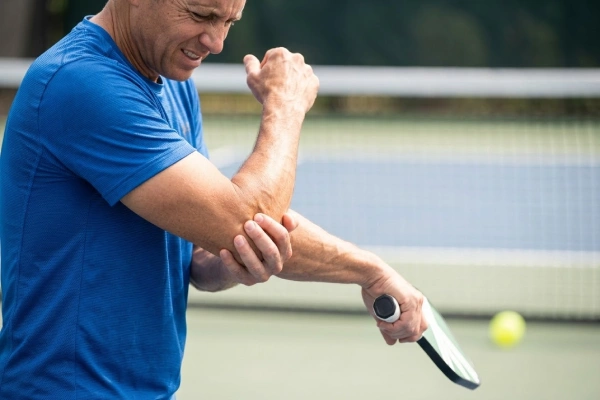
A simple way to judge it is by pattern.
If your elbow feels sore only after a long session and settles with rest, you may be in the early stage of overload. If the same discomfort starts showing up during games or stays into the next day, support becomes more useful. If daily tasks start to bother you too, the issue is no longer just match fatigue.
Support often works better when you use it early enough to control repeated strain. Waiting too long can make a small problem harder to manage. Long sessions, too many play days in a row, and too much grip tension can all make the elbow work harder than it should.
At the same time, some symptoms should push you away from self-selection. If the elbow is swollen, bruised, numb, weak, or hard to rotate, do not treat it like a normal support-gear decision.
If your elbow discomfort feels like part of a bigger injury pattern, how to prevent pickleball injuries gives a broader look at where support gear fits.
Which type of pickleball elbow support should you choose?
Not all elbow support products do the same job. Some give light compression. Some apply focused pressure below the elbow. Some give a firmer and more controlled feel.
Choose a sleeve for light compression and comfort, a strap for more targeted tendon support, and a firmer brace when you want stronger control. The best option depends on how your elbow feels during real play.
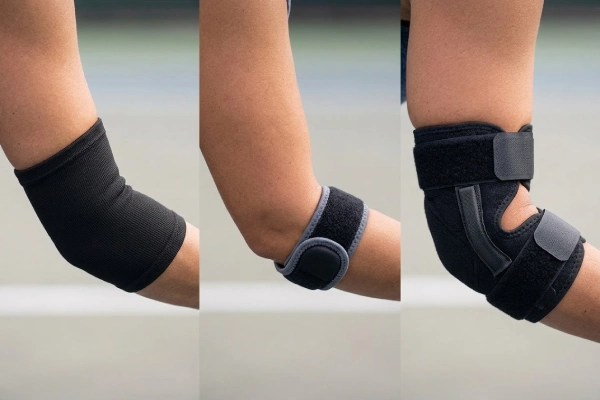
Elastic elbow sleeve
An elastic sleeve gives broad compression around the elbow area. It usually feels light, simple, and easy to wear during play. This type often works best when the elbow feels mildly irritated but still stable.
A sleeve may suit you if you want:
- light support
- warmth around the elbow
- less bulk
- a smoother feel under clothing
For many players, this is the easiest starting point. It supports without changing swing feel too much.
Elbow strap or wrap
A strap-style brace usually sits just below the elbow on the forearm. Instead of covering the whole area, it applies more focused pressure where repeated tendon pull often becomes a problem.
This style often fits players who want:
- more targeted support
- less pulling during backhands
- help during firm volleys or blocks
- a smaller brace with a clear purpose
If you are deciding between lighter compression and more focused support, elbow strap vs elbow sleeve: when to use each makes that comparison easier.
More structured elbow brace
A firmer brace can give a more controlled feel. Some designs use wider wraps, reinforced sections, or a shape that holds the arm more firmly during motion.
This type may suit players who want:
- a stronger sense of control
- more hold during repeated swings
- extra support during return-to-play periods
Still, more support is not always better. A brace that feels too bulky, too hot, or too stiff can get in the way during fast kitchen exchanges. If you are comparing elbow support from a product angle, elbow brace support manufacturer gives a more focused view.
How do you choose the right support for your pain level and playing style?
A brace works best when it matches both your symptoms and your game. Two players can have elbow pain in the same area and still prefer very different support.
Choose lighter support for mild soreness, more focused support for repeated tendon irritation, and firmer support only when you want more control. Playing style, grip habits, and session length all affect what feels right.
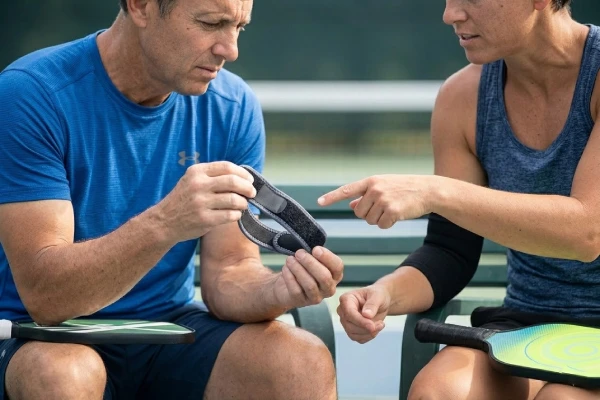
If your elbow only feels sore after play, a light sleeve is often enough. You want comfort and mild support, not a heavy brace.
If the same pain keeps returning during backhands, blocks, or quick exchanges, a strap-style pickleball tendonitis brace may feel more useful. That focused pressure often does a better job than broad compression when the issue is repeated tendon pull.
If your main complaint is that your arm feels less reliable during swings, a firmer brace may help. But it still has to stay comfortable. A brace that slips, overheats, or pinches will not help much no matter how supportive it looks.
Fit can matter as much as support level.
If a brace slips when you sweat, the pressure changes. If the seam hits the wrong spot, you will feel it on every swing. If the strap is too narrow, it may feel harsh instead of helpful. If the material traps too much heat, you may stop wearing it.
That is why small design details can make a big difference once you start playing:
- fabric stretch and rebound
- breathability
- strap width
- pressure pad shape
- edge comfort
- anti-slip hold
- repeat fit after long wear
If your elbow pain has you comparing arm coverage with more focused support, arm sleeves for tennis elbow and golfer’s elbow gives another useful angle.
Can elbow support improve swing stability in pickleball?
Yes, it can. A brace will not fix technique by itself, but it can help your arm feel calmer and more controlled during repeated shots.
A good elbow support can improve swing stability by reducing tendon pull, lowering the urge to over-grip, and helping repeated shots feel more controlled. It works best when the support matches the way your elbow is being stressed.
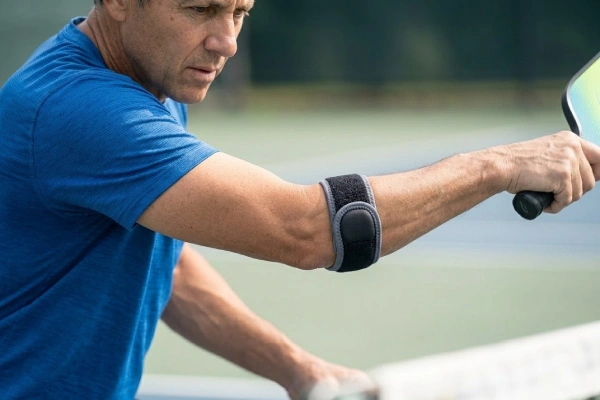
When your elbow hurts, your body often reacts before you even think about it. You grip harder. You shorten the swing. You guide the paddle instead of letting the shot move naturally. That can make your control worse and your elbow more tired.
If your support helps the elbow feel calmer, your hand may stop squeezing the paddle so hard. If you stop over-gripping, your swing may feel smoother. If your swing feels smoother, repeated shots may feel more stable.
That matters most during:
- backhand counters
- blocked returns
- firm volleys
- repeated drives
- fast kitchen exchanges late in a session
Players usually do not describe this in technical terms. They say, “my elbow did not pull as much,” or “my shots felt steadier.” That is the benefit they notice on the court.
How does support structure reduce tendon strain?
Support helps by changing how force is felt around the forearm and elbow. It does not remove all load. It helps make repeated load easier to manage.
Elbow support can reduce tendon strain by spreading pressure more evenly, adding targeted counterforce below the elbow, and helping the arm handle repeated stress more comfortably.
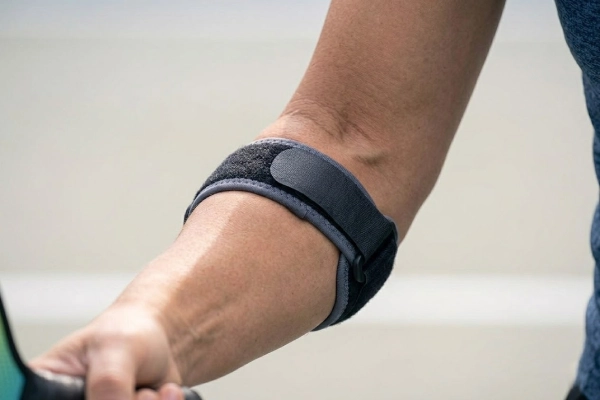
In pickleball, the stress path often starts in the hand. You grip the paddle. Your wrist helps set the face. Your forearm muscles control extension and rotation. Those muscles pull through the tendon attachment near the elbow. Repeat that enough times, and the area becomes irritated.
A support product can help in a few main ways.
Broad compression
A sleeve spreads light pressure around the elbow area. That can improve comfort and create a more supported feel during lighter symptoms.
Targeted counterforce
A strap places more focused pressure into the upper forearm. That can help shift some of the load away from the sore tendon area during repeated motion.
More controlled motion
A firmer brace can help some players feel more stable during play, especially when the arm feels less reliable under repeated load.
A brace may look supportive in product photos but still perform poorly if it starts to slide during real play, traps too much heat, presses too hard in one spot, changes grip feel, or loses hold after repeated wear.
That is why material and construction matter so much in support products. You want pressure that stays consistent, a fit that holds under sweat, and a build that does not distract you every time you swing.
If you are weighing elbow support from a broader sourcing angle, OEM/ODM and complete OEM/ODM sports support manufacture guide add more context on how these product differences show up in real development and manufacturing decisions.
Conclusion
The right pickleball elbow support works best when it matches your pain pattern, playing style, and fit needs. The better the fit between support type and real use, the more likely it is to feel helpful on court.
FAQs
Most players use elbow support during the activities that trigger symptoms, such as matches, drilling, or long practice sessions. Wearing it all day is not always necessary. If pain continues during daily tasks, the issue may need more than a brace.
No. A brace that feels too tight can create pressure points, feel harsh during swings, and become uncomfortable once you start sweating. Good support should feel secure and stable without cutting in, slipping, or changing your grip during play.
Yes, support can help when backhands repeatedly irritate the outer elbow. A strap-style brace is often chosen when pain is tied to gripping and repeated tendon pull. It works best as load support, not as a complete fix by itself.
Often, yes. Forum discussions repeatedly mention that elbow pain can ease when support is combined with a less tense grip, a thicker grip size, or a lower-stress setup. A brace helps more when the rest of your setup is not adding extra strain.
It can, especially if the brace is bulky, slips during play, or presses too hard in one spot. The best designs support the forearm without distracting you, so your paddle feel stays natural during blocks, counters, and quick exchanges.
A sleeve is usually better for light compression and general comfort. A strap is often preferred when you want more focused pressure below the elbow because repeated gripping, backhands, or firm contact are triggering more specific tendon strain.
Not always. Mild soreness after an unusually long session may settle with rest and lower volume. But if the same pain keeps returning during play, support can be a practical early step before the irritation becomes harder to manage.
Buyers should focus on pressure placement, strap width, anti-slip hold, heat management, seam comfort, and repeat fit. A product may look strong in photos but still perform poorly if it shifts during play or feels distracting after extended wear.