A patella knee strap can feel simple at first. Still, small placement mistakes often make it slide, pinch, or feel useless.
To wear a patella knee strap correctly, place it just below the kneecap over the patellar tendon, fasten it snugly, and test the fit during movement. Correct placement matters more than many users expect.
If you are trying to figure out how to wear a patella knee strap, the good news is that the process is usually straightforward. The challenge is not complexity. The challenge is accuracy. When the strap sits too high, it may press the kneecap. When it drops too low, the support may feel weak or off-target. If the fit is too tight, it can become distracting quickly. If it is too loose, it may start shifting as soon as you walk. This guide focuses only on the wearing process, including where to place the strap, how tight it should feel, common fit mistakes, whether it should be worn all day, and when to adjust it or stop using it. If you also need a broader view of knee strap uses, fit, support, and comparisons, that page gives the wider context without changing the focus of this wear guide.
Where should a patella knee strap go?
The most important part of wearing a patella knee strap is placement. If the position is wrong, the fit usually feels wrong too.
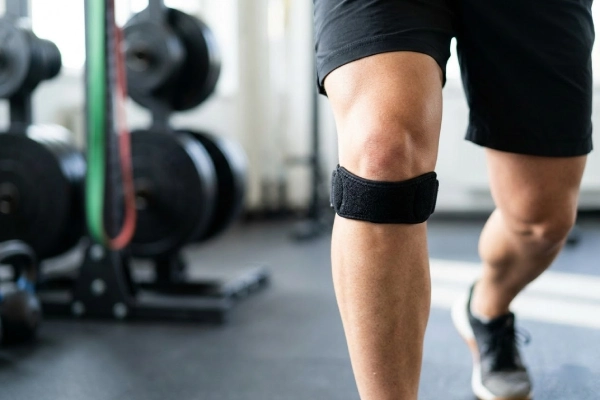
A patella knee strap should usually sit just below the kneecap over the patellar tendon, not on top of the kneecap and not too far down the upper shin. It should not rest on top of the kneecap, and it should not sit too far down the upper shin.
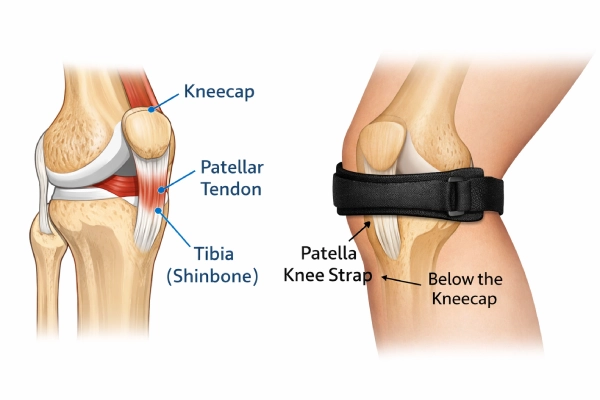
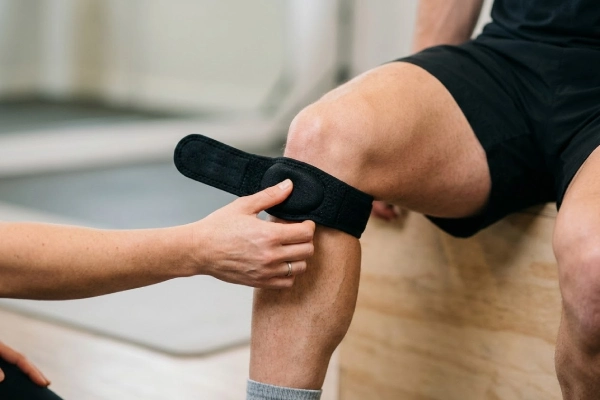
Start by sitting down with the knee relaxed or slightly bent. Use your fingers to feel the lower edge of the kneecap. Then move just below that point, which is the same general area where pain is often felt between the kneecap and where the tendon joins the shinbone. In most cases, this is the area where the strap should sit. Many users find that one to two finger widths below the kneecap is a good starting position. If the strap includes a gel pad, silicone tube, or raised pressure section, that part should sit against the tendon area below the kneecap. If the design is flat, center the band so the pressure feels even across the same area.
Here’s what most people miss. The strap should feel targeted, not random. When you stand up, bend the knee, and take a few steps, the pressure should feel focused below the kneecap rather than directly on it. If the strap presses the kneecap itself, it is usually too high. If the support feels vague or too low on the leg, move it slightly upward and test again.
Placement also needs to stay level. If one side sits higher than the other, the fit may become uneven once activity starts. A strap that looks centered while sitting may shift during walking or stairs. That is why the first fit is only the starting point. You still need to check the position during movement.
How to wear a patella knee strap step by step
Once the position is clear, the next step is to apply the strap evenly and test it the right way. A simple routine makes the fit easier to repeat.
To wear a patella knee strap, place it below the kneecap, center it over the patellar tendon, fasten it with even tension, and test the fit while moving. Most users need one or two small adjustments before it feels right.
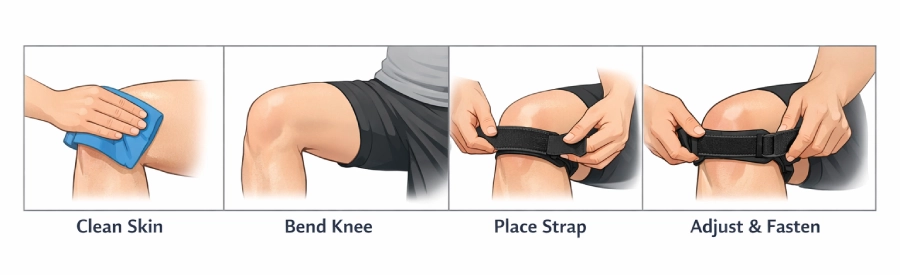
You can follow these steps:
- Start with clean, dry skin
Damp skin, sweat, or lotion can make the strap move more during activity. - Relax the knee
Sit down and keep the knee relaxed or slightly bent so the lower edge of the kneecap is easier to find. - Find the tendon area
Move your fingers just below the kneecap to locate the area where the strap should sit. - Wrap the strap below the kneecap
Keep it level across the leg. Do not place it over the kneecap. - Fasten it evenly
Pull both sides with balanced tension so the pressure feels centered. - Stand up and test the fit
Walk a few steps, bend the knee, and try movements that matter in daily use, such as stairs or short squats. That kind of movement check is practical because repeated knee-bending activities like jogging, squatting, and climbing stairs are common situations where front-knee discomfort shows up. - Adjust and retest
If the strap slides, pinches, rotates, or presses the kneecap, shift it slightly and test again.
The truth is that many first-time users expect the best fit to happen immediately. In real use, the fit often improves after one or two small corrections. The goal is not just to make the strap look right. The goal is to make it stay stable and feel properly placed during movement. A strap that seems fine while sitting still may feel very different after a few minutes of walking, stairs, or training. That is why movement testing is part of wearing it correctly, not an optional extra step.
How tight should a patella knee strap be?
Tension affects comfort and stability at the same time. If the fit is too loose or too tight, the strap usually becomes harder to trust.
A patella knee strap should feel snug, stable, and supportive during movement. It should not feel harsh, overly restrictive, or tight enough to cause numbness, throbbing, or strong pressure marks.
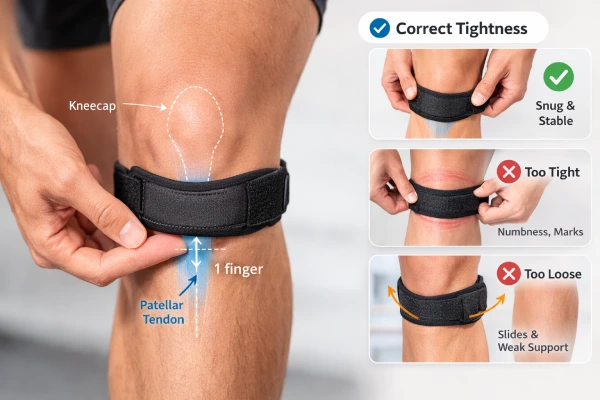
A useful starting point is a firm fit that still feels manageable during activity. Some users like the one-finger check. That means you can still slide one finger under the strap, but it takes a little effort. This is not an exact rule for every product, because strap width, padding, leg shape, and activity level can all change the feel. Still, it gives a practical starting point.
So what does this mean for you? The right tightness is the point where the strap stays in place and gives clear support without creating a second problem, especially if the knee is already bothered by activities linked with pain with jumping, running, or walking. If the strap leaves deep marks quickly, causes tingling, makes the lower leg feel cold, or becomes distracting within minutes, it is probably too tight. If it slips during walking, rotates to one side, or feels too weak to notice, it may be too loose.
The best way to judge tension is not while sitting still. It is while moving. A strap that feels fine in a chair can shift once you start walking, climbing stairs, or training. That is why fit should always be tested in the context where the strap will actually be used.
What are the most common mistakes when wearing a knee strap?
Most fit problems are simple, but they matter. A small mistake in placement or tension can make the product feel much less useful.
The most common knee strap mistakes are wearing it over the kneecap, placing it too low, fastening it too tightly, leaving it too loose, or failing to test the fit during movement.
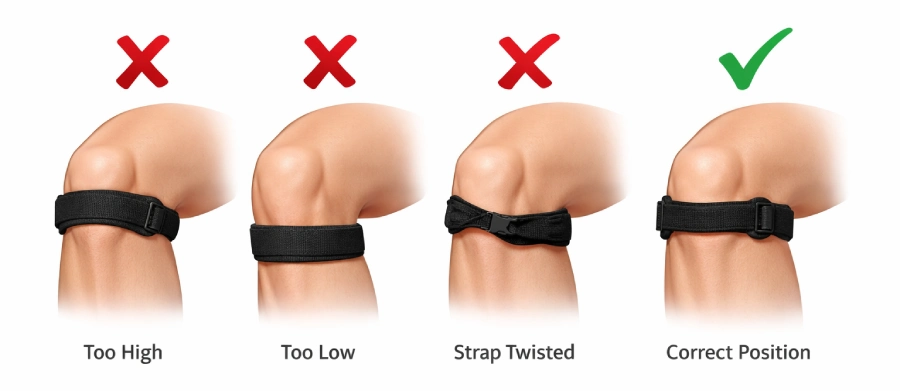
The first common mistake is wearing the strap too high. This usually puts pressure on the kneecap instead of the area below it. Another frequent problem is placing the strap too low on the upper shin, which often makes the support feel weak or unfocused. Uneven tightening is another issue. If one side is pulled harder than the other, the strap may twist, rub, or shift once you begin moving.
But here’s the kicker. Many users only test the strap while sitting down. That is not enough. A fit that seems acceptable in a still position may start sliding or pinching after a few minutes of real movement. Walking, stairs, repeated bending, and light exercise reveal more than a seated check ever will.
Another common problem is assuming tighter always means better. In practice, extra tightness often just creates discomfort. It may lead to numbness, irritation, or a strong pressure feeling that makes the strap difficult to wear. On the other hand, a very loose fit may not stay in place long enough to be useful. The best result usually comes from a balanced fit that feels secure without becoming aggressive.
Can you wear a patella strap all day?
This question comes up often because a strap may feel helpful during walking, work, or exercise. Still, longer wear needs a comfort check.
Many people wear a patella strap during activity instead of all day. If your product line also needs broader custom knee supports for different support levels, it helps to separate targeted strap use from wider-coverage knee support options. It may be used for walking, exercise, sport, work tasks, or stairs, then removed when that activity ends.
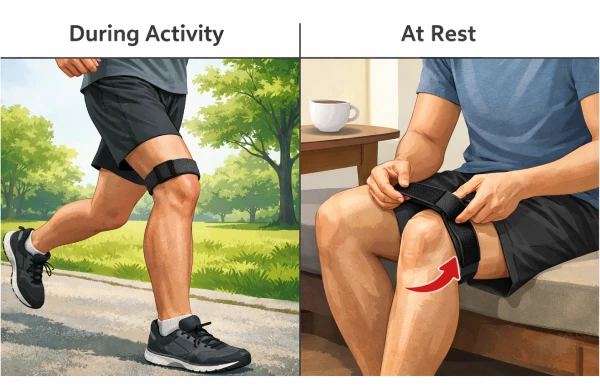
In daily use, many people choose activity-based wear rather than constant wear. That means putting the strap on when the knee is under more repeated load and removing it when the activity is over. This pattern is common because the strap is usually there to support movement, not simply to stay on for no reason.
Extended wear should still feel comfortable. If the strap starts rubbing, pinching, causing skin marks, or feeling distracting, take it off and check the fit.
Longer wear may be reasonable for some routines, but comfort should guide the decision. If the strap becomes more annoying as the day goes on, check the fit or take it off.
When should you reposition the strap or stop using it?
Even a good fit may need adjustment once movement begins. A strap should feel manageable, stable, and correctly placed during real use.
Reposition the strap if it slides, twists, shifts upward, drops too low, or stops feeling targeted below the kneecap. Stop using it if symptoms worsen or if the strap causes numbness, strong irritation, or unusual discomfort.
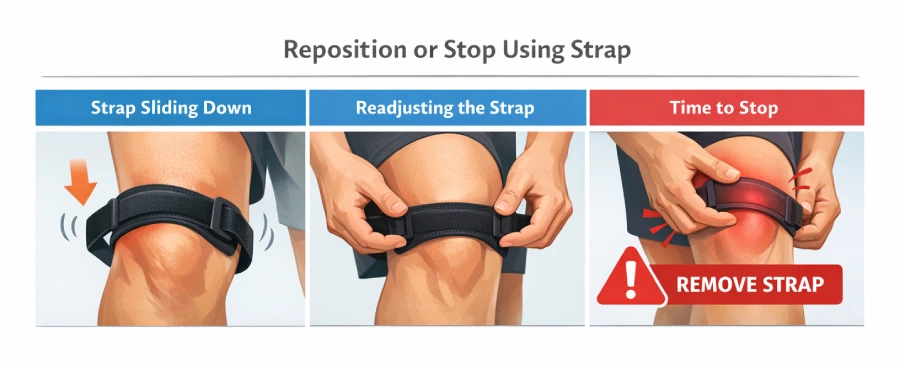
You may need to reposition the strap after walking, stairs, training, or repeated bending. If the pressure drifts onto the kneecap, becomes uneven, or no longer feels centered, a small reset often helps. This does not mean the strap has failed. It simply means the fit needs correction.
You should also stop and reassess if the strap starts causing rubbing, strong pressure, or skin irritation. If the strap itself becomes the main source of discomfort, the fit is no longer working well.
Stop using the strap and seek proper medical advice if pain gets worse, swelling increases, the joint locks, the knee feels unstable, numbness appears, or the lower leg feels unusually cold.
Conclusion
Wear the strap below the kneecap, keep the fit snug, and test it during movement. Correct placement and small adjustments usually make the biggest difference. For brands building a wider knee category beyond strap-based support, custom knee brace options can sit alongside strap and sleeve programs without changing the purpose of this wear guide.
FAQ
A patella knee strap should usually sit just below the kneecap across the patellar tendon area, not directly on the kneecap and not too far down the upper shin, which matches the general below-the-kneecap placement used for patellar tendon straps.
It should feel snug enough to stay in place during movement, but not so tight that it causes numbness, tingling, strong marks, or skin irritation.
This often happens when it is too loose, placed too low, or worn on damp skin. Reposition it below the kneecap and retest during movement.
Many people wear it during activity instead of all day. If longer wear causes rubbing, pinching, or numbness, remove it and check the fit.
It usually works better on skin or over a thin layer because thick fabric can make it move more and reduce fit stability during activity.
Stop using it if pain gets worse, swelling increases, the knee feels unstable, the joint locks, or the strap causes numbness, tingling, or strong irritation.