Tennis elbow and golfer’s elbow can make simple tasks hurt. If you keep playing or working through it, pain often sticks around. An arm sleeve may help you stay comfortable.
Arm sleeves for tennis elbow and golfer’s elbow can reduce “pull” on sore tendons by adding gentle compression and warmth. They won’t fix the root cause, but many people use them to train, work, and recover with less irritation.
If you’re also comparing sleeve styles, materials, and fit, this page is part of a larger arm sleeve hub. You can review the full overview in our arm sleeves buying guide.
Do arm sleeves help tennis elbow and golfer’s elbow?
Tennis elbow and golfer’s elbow can flare up from gripping, lifting, or repetitive motion. You want support that feels stable but not bulky. That’s why many people try a compression arm sleeve first.
Arm sleeves can help tennis elbow and golfer’s elbow by improving comfort during activity, reducing swelling feelings, and keeping the elbow area warm. They work best for mild-to-moderate symptoms and for people who need support without a rigid brace.
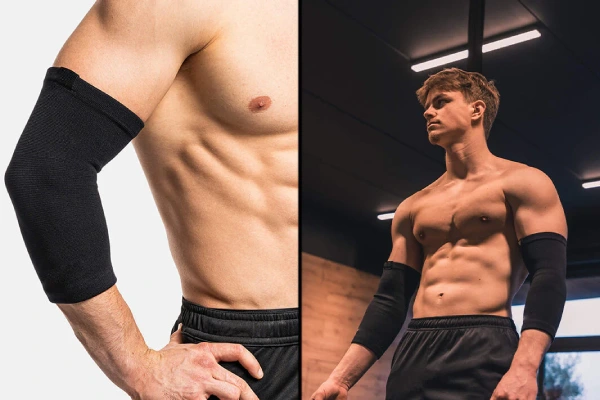
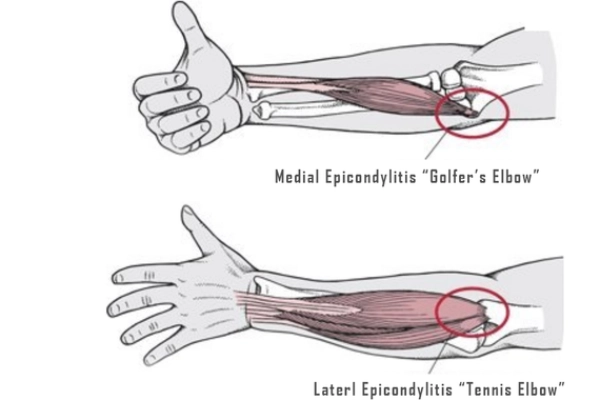
Here’s the deal: tennis elbow and golfer’s elbow are both tendon overload problems.
- Tennis elbow usually involves pain on the outside of the elbow (often tied to wrist extension and gripping).
- Golfer’s elbow usually involves pain on the inside of the elbow (often tied to wrist flexion and forearm pronation).
An arm sleeve won’t “realign” anything. It’s not a medical cure. What it can do is change how the area feels while you move:
- Compression can reduce that “loose” or “angry” feeling in the forearm and elbow area.
- Warmth can make tendons and muscles feel less stiff, especially in cold gyms, early morning runs, or air-conditioned workplaces.
- Skin contact can act like a reminder to avoid end-range snapping motions (hard backhands, aggressive curls, heavy carries).
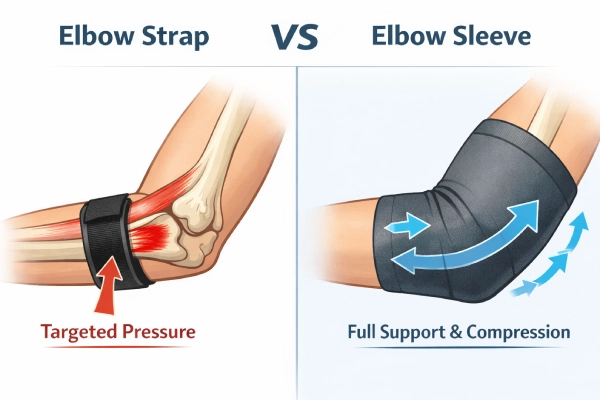
You might be wondering… why not just use a strap? A strap targets a small zone. A sleeve supports a longer section (forearm + elbow area), which some people prefer for all-day comfort.
If you want a broader explanation of elbow discomfort and when sleeves make sense, see: Do Arm Sleeves Help Elbow Pain?
Arm sleeve vs elbow strap vs elbow brace: what’s the difference?
If your pain keeps coming back, you may be switching between a sleeve, a strap, and a brace. Each one “supports” in a different way. Picking the wrong one often leads to slipping, pinching, or no relief.
An arm sleeve gives broad, even compression. An elbow strap gives focused pressure below the elbow tendon. An elbow brace can add more structure and sometimes limits motion, which may help after a flare-up or injury.
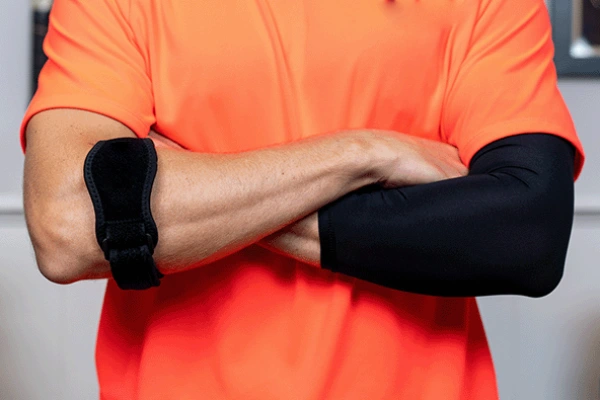
Here’s what most people miss: comfort matters because you’ll only wear what you can tolerate.
| Option | Best for | What it feels like | Common downsides |
|---|---|---|---|
| Arm sleeve (compression) | Mild-to-moderate tendon irritation, all-day wear, sport + work | Even support on forearm and elbow area | Can slide down if sizing is off |
| Elbow strap (counterforce band) | Point pain during gripping, racquet sports, lifting | Localized pressure below elbow | Can feel “too tight” or numb if over-tightened |
| Elbow brace (more structured) | More severe flare-ups, instability, post-injury | More “held” feeling | Bulkier, hotter, may limit movement |
The truth is: many people keep two options.
- Sleeve for daily use (work, light training, warm-up, travel).
- Strap or brace for high-load sessions (heavy lifting, long matches, repetitive job tasks).
If you’re a buyer or brand building a product line, this “two-option” behavior is also why many retailers stock both sleeves and braces in one elbow support collection.
How to choose arm sleeves for tennis elbow and golfer’s elbow
Buying the first sleeve you see can backfire. Too tight can irritate. Too loose can slide. Some fabrics trap heat. Others feel slick and move around.
Choose arm sleeves for tennis elbow and golfer’s elbow based on compression level, sleeve length, edge grip, and fabric feel. The right sleeve should feel snug, stay in place, and not cause tingling or discoloration in your hand.
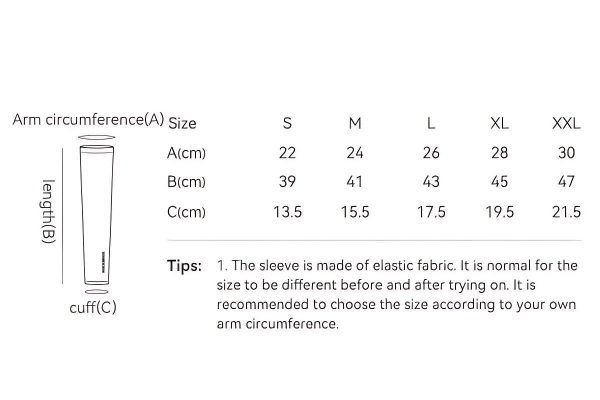
So what does this mean for you? Focus on four things.
1) Compression: snug, not punishing
A good starting point is a sleeve that feels supportive but lets you fully open and close your hand without numbness.
Quick self-check:
- Your fingers should stay warm and normal color.
- You should not feel pins-and-needles in the hand.
- You should be able to wear it for 30–60 minutes without wanting to rip it off.
2) Coverage: where the sleeve sits
For tennis elbow and golfer’s elbow, many people prefer a sleeve that covers:
- part of the forearm (where gripping muscles attach)
- the elbow area (for warmth and comfort)
Longer coverage can feel better for repetitive work, while athletes sometimes like a shorter, lighter sleeve.
3) Anti-slip design: does it stay up?
Slipping is one of the top complaints. Look for:
- a stable top band
- a skin-friendly grip method (not overly sticky)
- the right circumference match to your biceps/upper forearm
If you’ve had sliding issues before, you’ll also want this guide: How to Wear Arm Sleeves & Measure for the Right Fit
4) Fabric feel: smooth vs textured, breathable vs warm
People with elbow tendon pain often wear sleeves longer than athletes do, sometimes for workdays. That makes fabric feel a big deal.
Common preferences:
- Breathable knit for hot climates and all-day wear
- Softer, warmer knit for early training sessions or cold environments
- Smooth surface if you also want it under a uniform, hoodie, or long sleeve
How to wear an arm sleeve for elbow tendon pain
Even a good sleeve can fail if you wear it wrong. If the sleeve bunches at the elbow crease, it can rub and distract you. If it sits too low, it may miss the area you want supported.
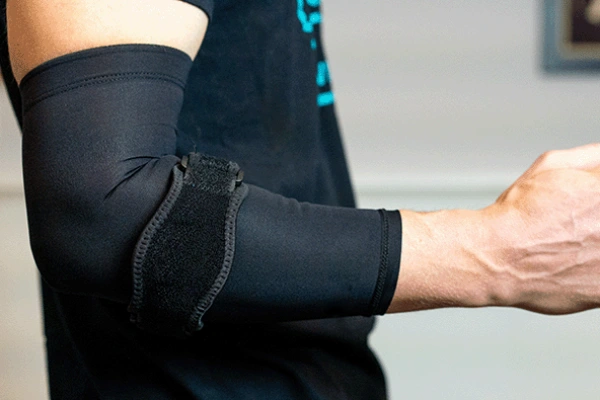
For tennis elbow or golfer’s elbow, wear the arm sleeve so the elbow area stays smooth and the sleeve covers the upper forearm. It should feel evenly snug with no pinching at the top band and no bunching when you bend your elbow.
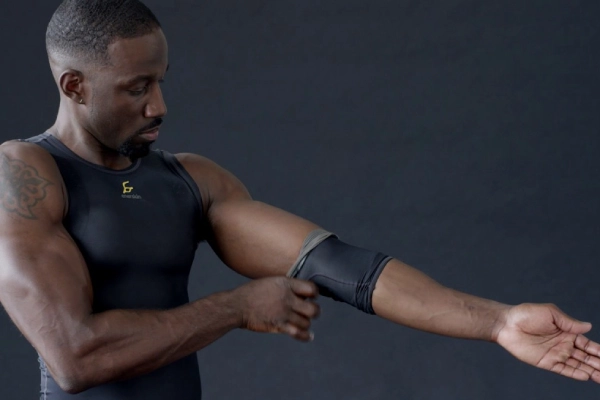
But here’s the kicker… “more tight” doesn’t mean “more help.”
Try this simple setup:
- Pull the sleeve up slowly, don’t yank it.
- Make sure the elbow area fabric is flat.
- Bend and straighten the elbow 10 times.
- Do a grip test: squeeze a ball or make a fist 10 times.
- If you feel tingling or your hand changes color, size up or loosen.
When to wear it
- During light activity: walking, errands, typing, coaching
- During training warm-up: many people like sleeves in the first 10–15 minutes
- After activity: for comfort while symptoms settle down
When to take it off
- If your skin feels numb, cold, or “buzzing”
- If you see deep grooves that don’t fade soon
- If pain increases the longer you wear it
What features matter most for brands and bulk buyers?
If you sell arm sleeves for tennis elbow and golfer’s elbow, customers will judge them fast: do they stay up, do they feel good, do they look clean after washing?
For B2B buyers, the best-selling arm sleeve features are consistent sizing, anti-slip comfort, durable seams, and fabric that stays soft after repeat washing. Custom options like logo placement and color matching also matter for brand identity.
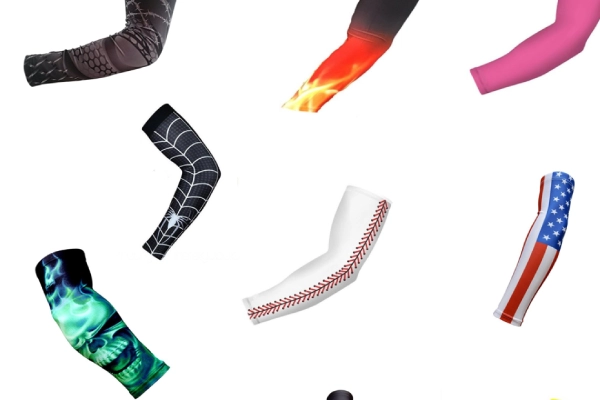
The bottom line? Your return rate often comes from the same three complaints: “it slides,” “it’s itchy,” “it’s too tight.”
If you’re sourcing from a factory partner, here are practical checkpoints:
- Sizing system: clear measuring points (forearm and upper arm) and stable tolerance control.
- Top band comfort: secure but not aggressive. Too much grip can irritate skin.
- Stitching: seams that don’t rub during elbow flexion. Flat seams often help.
- Material stability: fabric that doesn’t bag out after weeks of use.
- Compliance and quality systems: many importers look for medical/quality certifications and audit readiness.
If you need private label or bulk production, our factory model supports customization, fast quotation response, and free design drafts for buyers, plus stable delivery and quality control. We also support compliance expectations like CE, ISO 13485, and BSCI depending on your market needs.
Conclusion
Arm sleeves for tennis elbow and golfer’s elbow can improve comfort, especially for daily wear. Choose the right fit and fabric, and don’t over-tighten. If symptoms persist, scale support up.
FAQs
Do arm sleeves cure tennis elbow?
No. Arm sleeves don’t cure tendon problems. They can improve comfort and reduce irritation during activity by adding warmth and gentle compression around the forearm and elbow.
Are arm sleeves good for golfer’s elbow on the inside of the elbow?
They can be. A sleeve offers broad support and warmth across the forearm and elbow area, which may feel better during gripping, lifting, or long workdays.
Should I wear an arm sleeve when lifting weights with elbow pain?
You can, if pain is mild and the sleeve feels comfortable. Reduce load, avoid painful ranges, and stop if you feel numbness, tingling, or worsening pain.
How tight should an elbow compression sleeve be?
Snug, not squeezing. Your fingers should stay normal color and warm. You should be able to open and close your hand easily without tingling or throbbing.
Can an arm sleeve replace an elbow strap for tennis elbow?
Sometimes. Sleeves give even compression, while straps give targeted pressure. Many people use a sleeve for daily wear and a strap for high-load sessions.
Is it okay to wear an arm sleeve all day at work?
Often yes, if it doesn’t cause numbness, skin color changes, or swelling below the sleeve. Take breaks and remove it if discomfort increases over time.
Why does my arm sleeve slide down during activity?
Usually sizing or top-band grip is off. Measure your upper arm and forearm, choose the right size, and look for a stable top edge that doesn’t pinch.
What’s the best arm sleeve material for sensitive skin?
Many people prefer softer, breathable knits with smooth yarns. Avoid rough seams and overly stiff fabrics. Washing before first use can also reduce skin irritation.