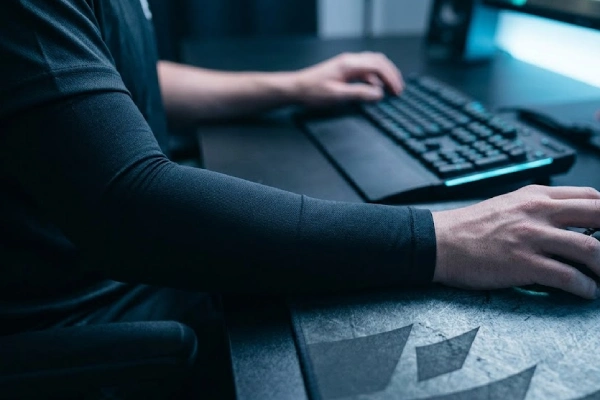
A gaming sleeve can feel smooth in one setup and wrong in another. The fabric is often the reason. This guide shows how to choose the right blend for feel, sweat, fit, and long-term use.
A nylon blend usually feels softer and more skin-friendly. A polyester blend usually stays drier and more stable. Spandex mainly controls stretch and fit, not the whole glide experience. The best answer depends on your surface, sweat level, and product goal.
Most buyers start with the wrong question. They ask which fabric is best in general. A better question is which fabric works best for the way the sleeve will actually be used.
What does each fabric actually do in a gaming sleeve?
If two sleeves look similar but feel very different, the blend is usually why. The base fiber shapes the hand feel and moisture behavior. The stretch fiber decides how closely the sleeve holds the arm.
A gaming sleeve works as a system. Nylon usually adds softness, abrasion resistance, and a more natural skin feel. Polyester usually adds lower moisture uptake, faster drying, and better stability. Spandex adds stretch, rebound, and light compression feel.
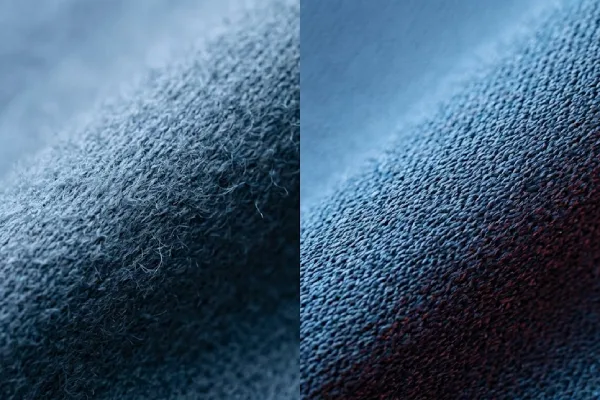
Nylon is often the most comfortable starting point for readers who care about skin feel. The material has high strength and strong abrasion resistance. It also has a smoother, softer hand feel than many polyester fabrics. That is a big reason nylon-heavy sleeves often feel better during long sessions on cloth or control-oriented surfaces. The trade-off is moisture response. Nylon absorbs more moisture than polyester, so its feel can shift more as sweat and humidity build up.
Polyester pushes the blend in another direction. It is much more hydrophobic, dries faster, and usually holds shape better through repeated wear and washing. That makes polyester-heavy sleeves attractive when the goal is a drier and more repeatable experience. The hand feel is often less soft than nylon, but the day-to-day consistency can be better, especially when rooms are warm or sweaty.
Spandex does a different job. It is not there to decide whether the sleeve feels soft or dry. It is there to help the sleeve stretch, recover, and stay close to the arm. That is why most serious gaming sleeve blends include it even though it has low strength on its own.
If you want the broader reason players use these products in the first place, it helps to read why gamers wear arm sleeves.
Is nylon or polyester better for gaming sleeve performance?
This is the main decision point for most readers. The answer is not about one fiber being “premium” and the other being “basic.” It is about what kind of performance you want once the sleeve is on your arm.
Nylon is usually better for softer skin feel and a more natural contact feel. Polyester is usually better for dry feel and repeat stability. Neither one wins every use case.
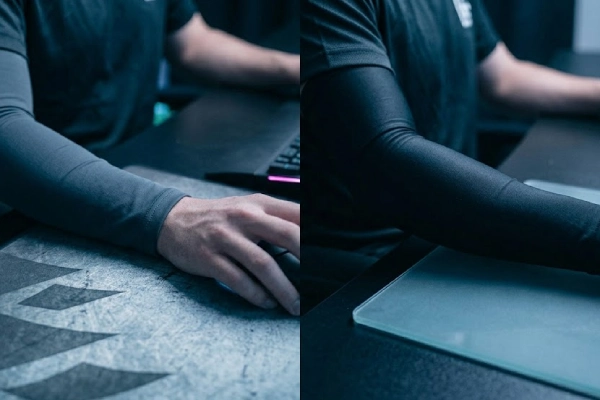
The easiest way to see the difference is to compare what you actually notice in play.
| Material angle | Nylon-heavy blend | Polyester-heavy blend |
|---|---|---|
| Skin feel | Softer, smoother | Drier, more technical |
| Moisture response | Absorbs more moisture | Absorbs less moisture |
| Long-session consistency | Can shift more with sweat | Usually stays steadier |
| Abrasion resistance | Very strong | Strong, but often less than nylon |
| Common product direction | Comfort and controlled feel | Stability and fast dry feel |
That pattern comes from the base properties of the fibers. Nylon has stronger moisture uptake and a softer hand. Polyester stays drier and more dimensionally stable. Both can be made into good gaming sleeves, but they will not feel the same in real use.
Here’s the deal. Many readers confuse softness with performance. Softness can make a sleeve feel better right away, but it does not always mean the sleeve will stay more stable over a long session. If you play in a warm room, sweat more, or want the sleeve to change as little as possible from hour one to hour four, polyester-heavy blends often make more sense. If you want a smoother skin feel and a more natural contact feel, nylon-heavy blends often make more sense.
Surface type can change fabric behavior a lot, especially when you compare a gaming arm sleeve for glass vs cloth mousepads.
What does spandex change, and what does it not change?
Spandex is easy to overread. A sleeve with more stretch can feel more “performance-focused,” but that does not mean the extra stretch is what solved the glide problem.
Spandex changes fit, rebound, and hold. It does not decide the full friction story by itself. The base fabric still shapes most of the surface feel.
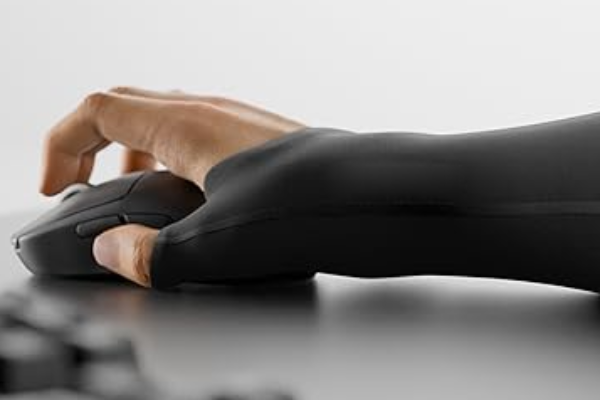
This matters because gaming sleeves need real stretch. They have to fit different arm shapes, hold position during repeated movement, and recover after being pulled on and off. That is where spandex helps most. Its elongation is far higher than nylon or polyester, and its rebound is strong when the material is handled well.
But more spandex is not always better. A sleeve can become tighter, hotter, and more sensitive to care damage if the blend leans too hard on stretch without balancing the rest of the structure. In practice, spandex is often the weakest point in the blend for long-term durability. Heat, harsh washing, bleach exposure, and rough care can all reduce rebound. Once that happens, the sleeve may still look fine but fit worse and perform less consistently.
That is why spandex should be treated as a support fiber, not the full answer. It helps the sleeve stay close and feel stable. It does not replace smart decisions about nylon versus polyester, surface type, sweat response, or product direction.
If your main question is whether a tighter sleeve is actually the better option, it also helps to compare compression vs non-compression gaming sleeve.
Which blend makes more sense for different gaming needs?
There is no universal winner because not every sleeve is solving the same problem. Some buyers want softer feel. Some want dry consistency. Some want an easy private-label product that is durable and cost-aware.
A nylon-spandex blend often fits comfort-first or control-first product ideas. A polyester-spandex blend often fits dry-feel and stability-first product ideas. That difference is why many market examples cluster around nylon-heavy and polyester-heavy 80/20 blends instead of one standard formula.
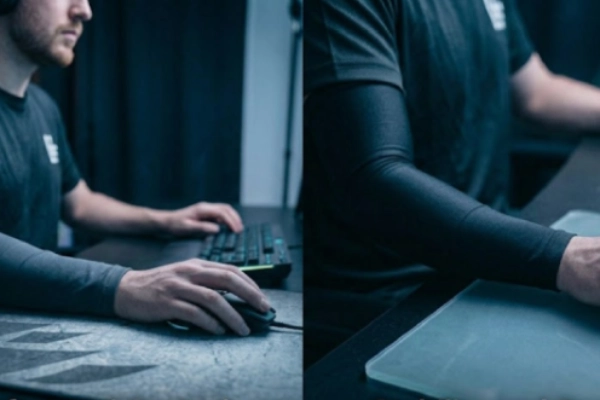
If the main goal is softer contact and a more natural skin feel, nylon-heavy blends usually make more sense. They are a strong match when comfort matters, abrasion matters, and the product is not trying to maximize dry technical feel. This is one reason nylon-heavy products are often associated with cloth or control-oriented use.
If the main goal is a drier and more stable feel, polyester-heavy blends usually make more sense. They are easier to position for sweaty users, warm rooms, and users who want less variation through a long session. This is also why polyester-heavy examples show up so often in glass-pad discussions. The lower static friction and lower moisture sensitivity make them a cleaner fit for that product direction.
The truth is, many good products are not trying to maximize a single trait. They are balancing softness, dry feel, fit, durability, and cost. That is usually the right way to think about gaming sleeve fabric. You are not choosing the “best fiber.” You are choosing the best trade-off.
If a sleeve still feels wrong even after the material seems right, it helps to understand why a gaming sleeve still feels slow on some mousepads.
How much does durability matter when choosing gaming sleeve fabric?
Durability matters more than many buyers expect. A sleeve that feels right on day one but loses fit, rebound, or surface stability too fast is not a strong material choice.
Durability is part of fabric selection. It is not something to think about after the sample already looks good.
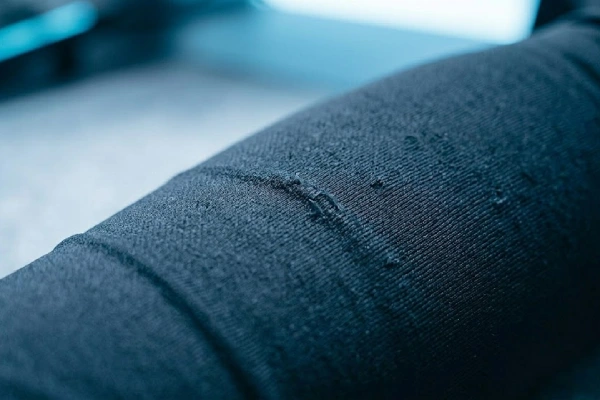
This is where nylon, polyester, and spandex behave very differently. Nylon is highly abrasion resistant. Polyester is also durable, but its value often shows up more in wash stability, dry feel, and light resistance. Spandex is the most sensitive piece of the blend. It can lose performance under heat, harsh chemicals, or repeated rough washing.
That means durability is not just about holes or tears. It is also about rebound loss, shape change, and feel drift. A sleeve may still be wearable after repeated wash cycles, but if the fit becomes loose or the stretch response changes, the useful performance life may already be dropping. This point matters even more in gaming sleeves because small changes in fit can change how stable the sleeve feels on the arm.
Here’s what most people miss. Care habits are part of material choice. A blend that depends heavily on spandex may feel great in a sample, then fall off faster if real-world care is rough. That is one reason B2B buyers should think about wash stability and expected user behavior early, not late.
Fabric is only part of the story. Construction can change the movement feel too, especially when you compare flatlock vs seamless glide.
How should brands choose gaming sleeve fabric for different product directions?
For brands, fabric choice starts with product direction, not with one isolated claim like softness or stretch. A brand should not choose fabric by one headline claim like softness or stretch. The blend should match the product goal, the target user, and the expected price level.
If the product direction is comfort-first, nylon-heavy blends are often the better starting point. If the product direction is dry, stable, repeatable performance, polyester-heavy blends are often the safer starting point. If the product direction is cost-sensitive, polyester-heavy blends with lower spandex content are often easier to manage.
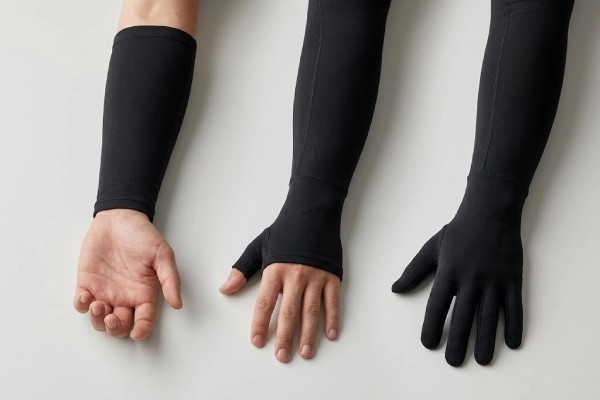
A comfort-first sleeve usually benefits from nylon’s smoother hand feel and strong abrasion resistance. A stability-first sleeve usually benefits from polyester’s lower moisture uptake and better shape stability. A price-sensitive sleeve often needs a tighter balance between base fiber cost, spandex ratio, and finishing cost. Those trade-offs are real. Polyester raw material is generally cheaper than nylon, while spandex is often the most expensive component in the blend.
For OEM and private-label work, that means the “best fabric” is usually the one that matches the market brief. A sleeve built for competitive users, a sleeve built for wider retail, and a sleeve built for lower-cost volume should not all use the same priorities. Performance, comfort, durability, and cost should be evaluated together.
If you want to compare these material ideas with real product options, it helps to review a custom gaming sleeve manufacturer page. For a broader production view, it also helps to read an OEM and ODM sports support manufacture guide.
The best gaming sleeve fabric depends on the kind of feel, stability, fit, and durability the sleeve is meant to deliver.
FAQ
Does fabric type change how hot a gaming sleeve feels?
Yes. Polyester-heavy blends usually stay drier, while nylon-heavy blends often feel softer but can react more to moisture over time. Heat build-up depends on the blend, fabric weight, knit density, and how tightly the sleeve fits during longer sessions.
Yes. A sleeve can feel sticky when the fabric does not match the use environment. Higher sweat levels, humidity, and surface interaction can all change how the sleeve moves. A softer fabric is not always the better choice for stable glide.
Not necessarily. Nylonoften feels softer and more natural on skin, which many users prefer. The question is not whether nylon is “slow,” but whether its feel, moisture response, and consistency match the product direction and playing conditions.
Not always. Polyester usually feels drier and more stable, but that does not automatically mean it feels uncontrolled. The final result depends on fabric construction, surface type, fit, and how much startup resistance the user wants from the sleeve.
No. More stretch can improve fit, but it does not automatically improve friction behavior, comfort, or long-term consistency. If the sleeve depends too much on stretch alone, it may feel tighter at first but lose performance balance faster over time.
A lot. Sweat can change how stable a sleeve feels during longer sessions. That is why moisture behavior matters as much as softness. In hotter or more humid conditions, the wrong fabric can feel less consistent even if it felt fine at first.
Yes. Fabric choice affects abrasion resistance, shape retention, rebound, and wash stability. A sleeve may still look usable after repeated wear, but if fit and feel change too much, its useful performance life may already be shorter than expected.
Brands should compare hand feel, moisture response, fit stability, durability, and cost together. The best blend is usually the one that fits the product brief, target user, and use environment, not the one with the strongest single selling point.