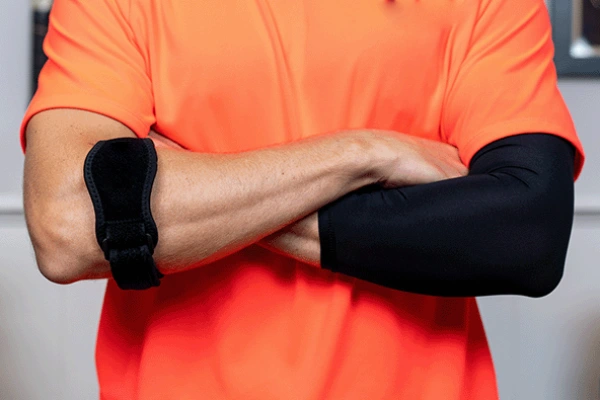
Your arm keeps sticking. Your crosshair keeps skipping. You try a long-sleeve shirt and hope it fixes everything.
A long-sleeve shirt can reduce skin drag, but it’s often less consistent than a gaming sleeve because fabric thickness, wrinkles, cuffs, and seams change how your forearm glides—especially once you sweat or warm up.
So what does this mean for you?
Can a long-sleeve shirt really give you consistent aim?
A long-sleeve shirt can stop skin from grabbing your desk or mousepad, but it can also add random friction from cuffs, folds, and thicker fabric.
Yes, long sleeves can help with “arm sticking,” especially in cooler rooms. But consistency is hit-or-miss because shirts weren’t made for glide: the fabric shifts, bunches, and changes feel as you move.
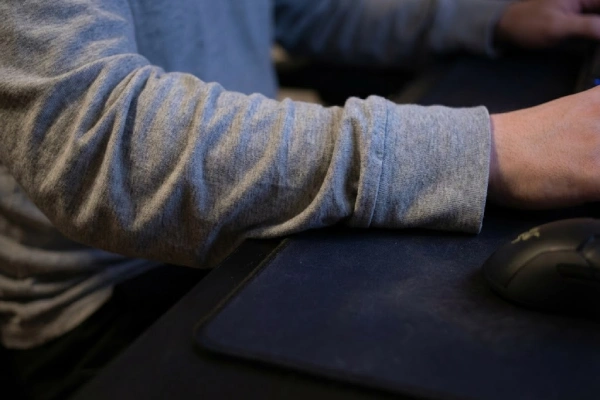
If your only problem is bare skin dragging on the desk, a thin long sleeve can feel like a quick win. That’s why many players say “long sleeves work fine.” And they’re not wrong—sometimes it’s good enough.
But here’s the kicker… aim consistency isn’t just “less drag.” It’s repeatable drag.
Long-sleeve shirts bring a few variables you can’t easily control:
- Fabric thickness changes from shirt to hoodie to jersey. Thicker fabric can feel smooth in one direction and sticky in another.
- Wrinkles and bunching create “speed bumps.” Even small folds can change the friction on your Y-axis.
- Cuffs can catch near the wrist or on the pad edge. If the cuff rubs, you get sudden slowdowns.
- Loose sleeves rotate as you play, so the contact surface changes without you noticing.
- Heat and sweat soak into many everyday fabrics. When they hold moisture, they often feel heavier and “grabby.”
If you play low sens with big arm swings, those small changes show up as micro-stutters. If you play high sens with mostly wrist aim, you might not notice much. This matters most in competitive FPS titles where you live on repeatable flicks and tracking—think VALORANT or Counter-Strike 2—because small friction changes show up immediately in crosshair control. That’s why you’ll see two camps online: “long sleeves are fine” vs “no, sleeves are way better.”
Try this: play 20 minutes, then check your forearm area. If the fabric is twisted, bunched, damp, or riding up, you’ve found the consistency killer.
A lot of that debate comes down to friction + sweat control—our breakdown of why gamers wear arm sleeves covers the typical reasons. And because pad surface changes everything, this guide to gaming arm sleeves for glass vs cloth mousepads can help you avoid the common “it feels sticky on my pad” mismatch.
Why does a gaming sleeve usually feel more consistent?
Gaming sleeves are made to behave the same way every session: thin, close-fitting, and stable against your skin.
A gaming sleeve is usually more consistent because it stays tight to your arm, avoids big folds, and uses smoother edge finishes—so the surface touching your desk or pad doesn’t change every time you move.
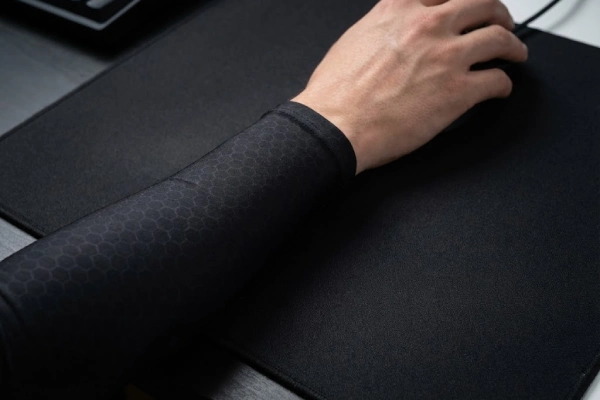
Here’s the deal… “consistent aim” is mostly about reducing randomness.
A purpose-built gaming sleeve tries to lock down the variables that a normal shirt can’t:
- Fit and tension: A sleeve hugs the forearm, so it doesn’t bunch up mid-swipe.
- Controlled coverage: You can cover only the friction zone (forearm) instead of wearing a whole top.
- Stable surface: The same knit face stays against the pad/desk, instead of rotating fabric.
- Edge control: Many designs reduce edge drag (flat seams, smoother transitions, thumb hole options, etc.).
- Sweat behavior: Many sleeves use yarns and finishes chosen to handle moisture better than daily clothing.
You might be wondering… “But I already own long sleeves. Why buy a sleeve?”
Because long sleeves solve one problem (“skin sticking”) but add new ones (“fabric moving”). A gaming sleeve is basically a friction-management tool. If it’s made well and sized right, it can feel like your arm is “on rails” rather than “sometimes fast, sometimes slow.”
This is also why sleeve choice can feel personal. Two sleeves can both be “smooth,” but one may feel stable on cloth pads while another feels better on glass. The goal isn’t maximum speed. The goal is the same feel at 0:05 and at 1:05.
Fit problems are the #1 reason sleeves feel “random.” If you’re unsure about sizing, start with how to wear arm sleeves and measure for the right fit. If your sleeve drifts during play, why arm sleeves slide down (causes & fixes) will walk you through grip bands and real-world fixes. And to avoid the “too tight = hot / too loose = wrinkles” trap, use this quick check on how tight an arm sleeve should be.
What changes when you sweat, warm up, or play on glass?
Sweat and humidity are the big “feel changers.” They can turn a smooth glide into sticky drag fast.
Sweat changes friction because moisture increases skin tackiness and alters how fabric contacts the pad. Gaming sleeves often handle this better than shirts, but the wrong sleeve material can still feel sticky—especially on some glass pads.
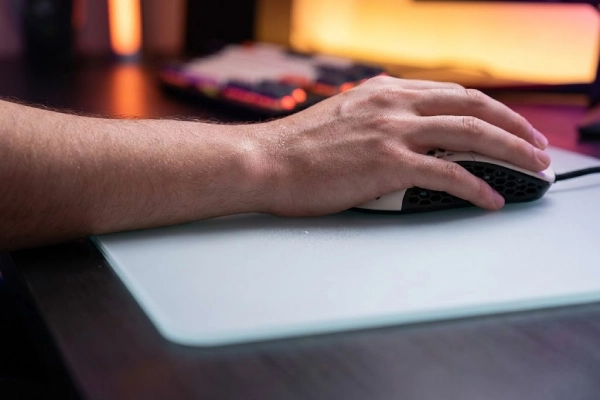
The truth is… most “my aim feels off today” stories are really “my friction changed today.”
When you sweat, a few things happen at once:
- Skin gets tackier, which increases drag when bare skin touches a desk or pad.
- Fabric absorbs moisture, then its surface feel changes (softer, heavier, sometimes grabbier).
- Contact area increases when damp fabric clings closer to the pad, which can raise friction.
- Heat builds up, and some fabrics start to feel “sticky” even if you aren’t dripping sweat.
Glass pads can amplify this because the surface is so uniform that small changes in moisture or finish are easier to feel. That’s why you’ll often see players say “I need a sleeve on glass.” But it’s not magic. It’s just swapping the interface from “skin-to-surface” to “fabric-to-surface,” which is easier to control.
But here’s what most people miss… a sleeve can also get sticky if the fabric face + finish isn’t right for your setup. Some high-stretch yarn blends or certain surface treatments can feel great dry, then feel grabby once damp. That’s why it helps to think in “dry feel” and “wet feel,” not just “smooth vs rough.”
If you want a shortcut decision:
- Sweaty hands/forearms + long sessions + low sens: a gaming sleeve usually wins.
- Cool room + short sessions + higher sens: a thin long sleeve can be “good enough.”
How do seams, cuffs, wrinkles, and coverage mess with your glide?
Your aim can be consistent only if your forearm contact is consistent. Edges and folds break that.
The biggest consistency killers are cuffs that drag, wrinkles that bunch, and seams that rub. Gaming sleeves reduce these issues by keeping the fabric flat and the edge transitions smoother across your motion path.
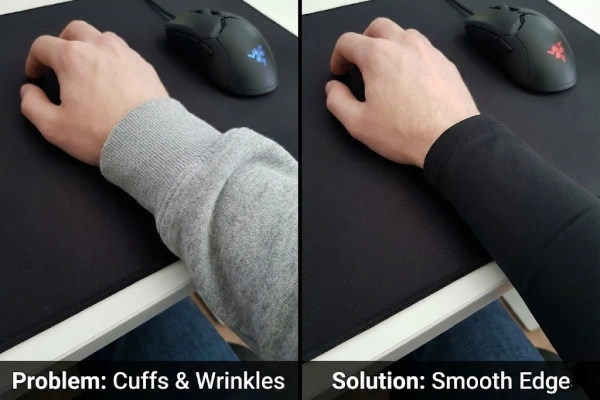
So what does this mean for you? You should stop thinking “shirt vs sleeve” and start thinking contact engineering.
Here’s a practical comparison of what you’re really choosing:
| Factor | Gaming Sleeve | Long-Sleeve Shirt |
|---|---|---|
| Contact surface | Stable (same sleeve face stays on pad) | Changes (fabric rotates/shifts) |
| Edge behavior | Often smoother edges, fewer big cuffs | Cuffs can catch and slow down |
| Wrinkles/folds | Minimal if sized right | Common, changes mid-game |
| Sweat handling | Often designed for quick dry feel | Depends; many fabrics hold moisture |
| Coverage | Only friction zone | Whole upper body (heat + comfort tradeoff) |
| Consistency over time | Designed to stay repeatable | Varies by shirt, temperature, movement |
A long-sleeve shirt often fails in one of two ways:
- The cuff becomes the “brake.”
Even if the forearm is smooth, the cuff hits the pad or desk edge and slows down your movement. - The sleeve folds become the “randomizer.”
The fabric bunches near the elbow or forearm, then the contact patch changes on each swipe.
Gaming sleeves solve these by being shorter, tighter, and flatter. Some designs also add a thumb hole to keep the lower edge from rolling. That can help if your friction zone includes the wrist area or the pad edge.
Still, a sleeve isn’t automatic perfection. If it’s too loose, it can wrinkle the same way a shirt does. If it’s too tight, it can feel hot, leave marks, and make you want to pull it off mid-game—then your feel changes again.
If you want to stop the “edge brake,” prioritize:
- Correct length (covers your real friction zone)
- Stable lower edge (doesn’t roll)
- Smooth seam/edge finish (doesn’t scratch the pad)
Which one should you choose for your setup?
You don’t need the “best” option. You need the option that changes the least across your sessions.
Choose a long sleeve if you just want less skin drag and you play in cooler temps. Choose a gaming sleeve if you want repeatable glide across sweat, long sessions, and big arm swings—especially on glass or large pads.
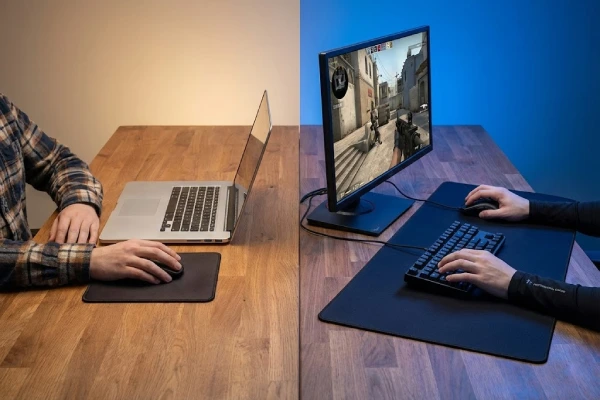
Here’s a simple decision path you can use today:
Use a long-sleeve shirt if…
- You want a zero-cost fix
- Your room is cool and you don’t sweat much
- You don’t do huge low-sens arm swipes
- Your sleeve fabric is thin and doesn’t bunch easily
Quick tip: pick a thin, smooth, low-fuzz shirt. Avoid thick fleece and loose cuffs. Make sure the sleeve doesn’t drop over your wrist and catch.
Use a gaming sleeve if…
- You sweat or your arm warms up fast
- You use a glass pad or feel “sticky drag” often
- You play low sens and need stable Y-axis movement
- You want the same feel every time you sit down
Also: if your friction point is your desk edge or chair armrest (not the mousepad), a sleeve can still help because it controls that contact zone too.
If you already tried a sleeve and it felt worse, don’t assume sleeves “don’t work.” Most issues come from:
- Wrong size (wrinkles or too tight)
- Wrong fabric face for your pad
- Edge finish rubbing a pad seam
- Your contact point isn’t where you think it is
If you’re buying or sourcing gaming sleeves, what specs actually matter?
This is where you can turn “feel” into something you can check and repeat, especially for OEM/ODM projects.
For consistent aim, focus on four things you can control: fabric surface feel (dry and damp), seam/edge finish, fit stability (no wrinkles), and durability (glide doesn’t change after wear and wash). Those can be tested and checked in production.
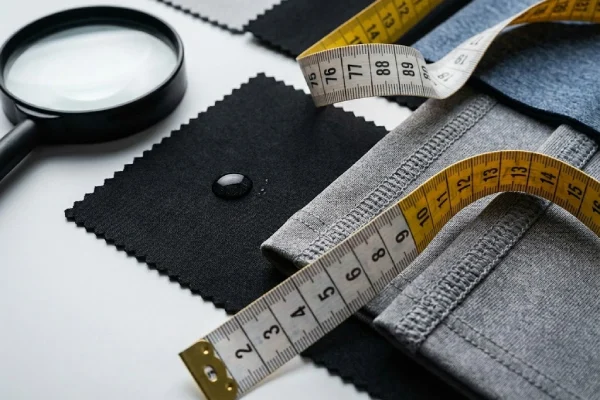
The bottom line? If a sleeve feels great on day one but changes after two weeks, players will notice.
For product teams and buyers, the most useful approach is to build a simple acceptance checklist:
Moisture behavior (damp feel)
You want the sleeve to stay predictable after 20–40 minutes of play. That means it shouldn’t turn sticky as it absorbs sweat.
- Check how fast it starts to feel “grabby”
- Compare dry vs lightly damp glide on the same pad
- Make sure the fabric doesn’t cling and increase drag
The “sticky drag” complaint is especially common among glass-pad users and fast-paced shooters like Apex Legends or Overwatch, where long sessions + heat buildup make friction feel inconsistent.
Surface durability (glide over time)
Glide changes when the surface pills, roughens, or gets micro-snags.
- Look for a knit/finish that resists fuzzing
- Watch for pilling in the forearm contact zone
- Confirm the surface stays smooth after repeated rubbing
Edge and seam control
Edges are a common complaint point.
- Smooth lower edge transition (no sharp seam ridge)
- Seams that don’t scratch or catch pad stitching
- Stable shape that doesn’t roll
Size stability after washing
If the sleeve grows, it wrinkles and slows down. If it shrinks, it can feel tight and hot.
- Confirm size stays stable after common washing
- Keep tolerances tight on key measurements
If you’re sourcing for a team, esports brand, or private label, our custom arm sleeve options cover common requests like sizing ranges, logo placement, and bulk order support. For buyers who need a clearer factory-side process, the OEM/ODM sports support manufacturing guide lays out development steps and quality checkpoints. And if your main concern is “dry feel vs damp feel,” start with arm sleeve materials explained (nylon vs spandex vs copper) to understand what’s happening at the yarn and knit level.
Conclusion
A long-sleeve shirt can reduce skin drag, but a gaming sleeve is usually more consistent because it controls fit, edges, and sweat changes. Pick the option that stays the same across your sessions.
FAQs
Can a long-sleeve shirt replace a gaming sleeve for consistent aim?
Sometimes. A thin long-sleeve can reduce skin drag, especially in cool rooms. But shirts wrinkle, rotate, and cuffs catch, so friction changes mid-session. A gaming sleeve is designed for a stable fit and repeatable glide in sweaty, long sessions.
Why does my aim feel different when I change clothes?
Because friction changes. Long sleeves, hoodies, or bare skin each interact differently with your desk, armrest, or pad. Low-sensitivity arm aim amplifies these differences, so small changes feel like micro-stutters until you standardize your contact surface.
Do gaming sleeves actually improve aim—or just comfort?
They can help indirectly by standardizing glide and reducing sweat-related drag, which makes aiming feel more predictable. They won’t magically add skill, and some players prefer no sleeve. Think of it as removing a variable, not boosting accuracy.
Why does my arm feel “sticky” on a glass mousepad?
Moisture is usually the trigger. Sweat increases tackiness and can make your skin or fabric “grab” a very smooth surface. That’s why glass-pad users often report sticking and look for sleeves—though wrist/finger contact can still stick.
For consistency, what matters more: material or fit?
Both, but fit comes first. If it’s loose, it wrinkles and changes friction every swipe; if it’s too tight, it distracts and heats up. Once fit is stable, choose a material/finish that stays smooth when slightly damp.
Should a gaming sleeve cover the wrist or stop at the forearm?
Cover the area that actually touches your pad or desk. Many players find the forearm-to-wrist edge is where drag starts, so longer sleeves or thumb-hole styles can help. But if your fingers/wrist stick on glass, a sleeve won’t fix that.
My sleeve feels worse than bare skin—what should I check first?
Start by locating the real friction point: desk edge, pad seam, or chair armrest. Then check sizing—wrinkles and rolling edges create random “brakes.” Finally, test wet vs dry feel; some fabrics become grabbier with sweat, especially on glass.
Do sleeves help on cloth pads too, or only on glass?
Yes, if your forearm contacts the pad or desk and you sweat, sleeves can still help on cloth. Cloth is usually more forgiving than glass, but it varies by weave and coating. The goal is consistent glide, not maximum speed.