Knee pain below the kneecap can make simple movement feel unreliable. Jumping hurts. Stairs hurt. Even a short run may feel different from the first few minutes to the last.
A patella strap often looks like a very small product for a very annoying problem. That is why many people ask the same thing first: does it really work, or is it just a piece of pressure around the leg?
A patella strap can help when pain is closely linked to the patellar tendon. It does not fix every type of knee pain, and it is better understood as a support tool than a cure.
That distinction matters. Some users get useful relief. Others feel almost no change. The difference usually comes from the pain source, the fit, and the expectation.
If you want the broader context first, this knee strap guide for uses, fit, support, and comparisons gives the full picture before you narrow down whether this specific support is the right match.
What does a patella strap actually do?
A patella strap is small, but its purpose is specific.
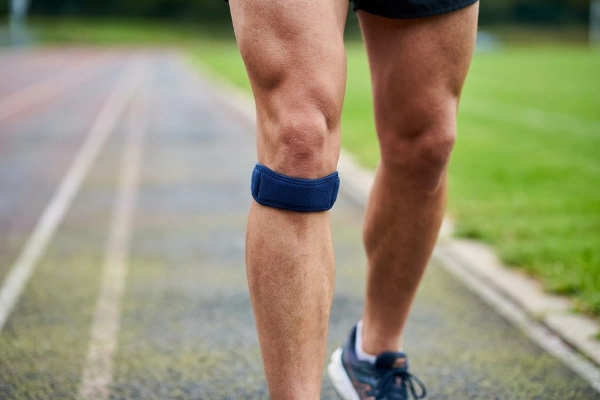
It sits below the kneecap and applies targeted pressure over the patellar tendon area. That may help change how stress is felt at the irritated spot during movement.
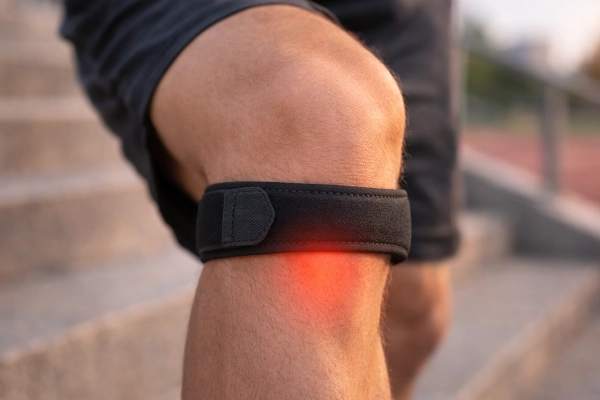
This is not the same as full-knee support. A strap does not wrap the whole joint like a sleeve. It also does not control the knee like a larger brace.
Its role is much narrower than that. It is mainly there to support the tendon area below the kneecap, which is why it is often associated with patellar tendon pain, jumper’s knee, and similar front-of-knee loading problems.
For some users, the effect feels immediate during stairs, jumping, or running. The movement may feel less sharp or less irritating. For others, the change is smaller but still useful.
That does not mean the strap is repairing tissue on its own. It means the product may reduce symptoms enough to make movement easier to tolerate.
If your main concern is placement, tightness, or whether the strap sits too high or too low, it helps to look at how to wear a patella knee strap correctly, because fit problems are often mistaken for product failure.
Do patella straps work best for patellar tendon pain?
Yes, that is usually the clearest match.
Patella straps tend to work best when pain is centered around the patellar tendon, especially pain below the kneecap that gets worse with jumping, landing, stairs, or repeated knee loading.

This is why they are commonly linked with jumper’s knee or patellar tendinopathy. The pain pattern usually matters more than the product label.
If discomfort is focused below the kneecap and loading makes it worse, a strap has a more logical job to do. It may reduce how harsh movement feels during sport or daily activity.
If the pain is vague, spread out, or not clearly tendon-related, the results are often less predictable.
That is also why some users say a strap helped right away, while others say it did almost nothing. In many cases, both reactions are real. They just come from different pain sources.
A good patella strap is usually chosen for focused tendon-area support, while broader products are chosen when users want more compression or a different support feel. The difference is simple: a tendon strap targets one small area, while broader supports are designed for fuller coverage.
When do patella straps help less than people expect?
This is where confusion starts.
A patella strap may help less when the pain is not mainly coming from the patellar tendon. If the real problem is instability, swelling, locking, or another knee structure, relief may be limited.
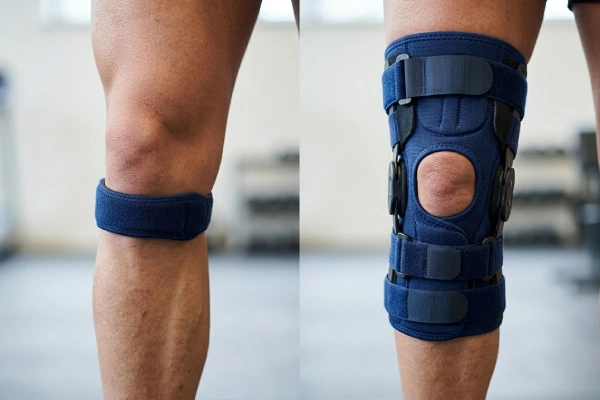
A strap is a focused tool. Focused tools work well when the problem matches the tool.
They tend to work less well when the issue is more related to joint instability, ligament involvement, widespread irritation, or kneecap mechanics that need another kind of support.
That is one reason why bigger knee supports still exist. Some users need more coverage, more compression, or more structural guidance than a strap can offer.
If the goal is broader support around the kneecap or more control for patellofemoral problems, a patella knee brace belongs to a different support category from a simple tendon strap.
Poor fit is another common reason for disappointing results. A strap that is too loose may slide. One that is too tight may feel distracting. One that sits in the wrong place may feel like it is doing nothing useful.
That is why wearing method matters more than many first-time users expect. A strap that is badly positioned can feel ineffective even when the support type itself is reasonable.
How fast can a patella strap work?
For many users, the answer is simple: quite fast.
A patella strap can sometimes change how movement feels right away, especially during the same activity that usually triggers pain. But quick relief is not the same as full recovery.
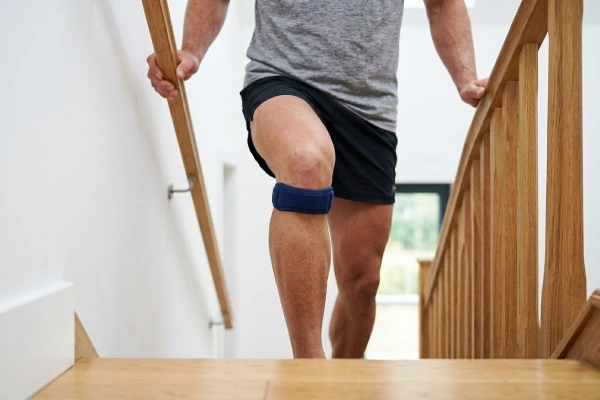
This is part of why the product remains popular. It is easy to test. You put it on, walk, squat, go up stairs, or move through training drills and notice whether symptoms feel different.
That quick feedback is useful. It helps people judge whether the support is doing something meaningful in real movement, not just in theory.
Still, the limit is important. A strap may lower symptoms during use, but it does not replace load management, strength work, or a more complete recovery plan when the tendon has been irritated for a while.
A better expectation is this: the strap may help you move with less irritation. It may help reduce symptom intensity during activity. It may help you tolerate sport or daily tasks better.
That is already valuable. It just should not be confused with a full fix. This is part of why the product remains popular. It is easy to test during real movement. You put it on, walk, squat, go up stairs, or move through training drills and notice whether symptoms feel different.
How do you know if a patella strap is the right option?
The best clue is still the pain pattern.
A patella strap is more likely to be the right option when pain is below the kneecap, activity-related, and clearly aggravated by tendon loading. It is less likely to be enough when the knee feels unstable, swollen, or mechanically restricted.
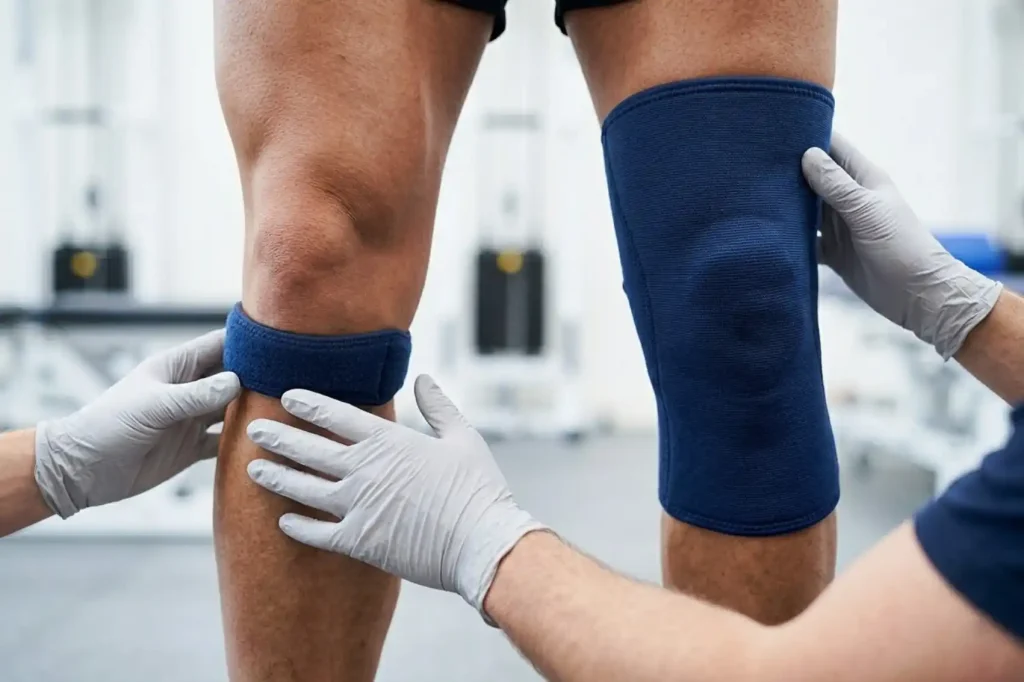
Users who want a small, low-profile support often like straps because they are simple, portable, and less bulky than larger braces.
They also make sense when the goal is targeted relief rather than full-knee coverage.
That said, not every user wants such a narrow solution. Some prefer more wraparound compression. Some need a product category that gives broader support through sleeves or brace-style structures.
That is why a patella strap should be judged against the actual problem, not just against popularity or ratings.
If your knee pain is tendon-focused, a strap may be a smart first support to try. Or, if the symptoms point toward something broader, another support category may be more appropriate.
If you are still deciding between a tendon strap and a larger support, it helps to compare what each product is actually designed to do, because the right choice depends on whether you need focused tendon support or broader knee coverage.
Conclusion
Patella straps do work for some kinds of knee pain, but they are not built for every knee problem.
They are usually most useful when pain is centered around the patellar tendon and gets worse with jumping, landing, stairs, or repeated loading. In that setting, a strap may reduce discomfort enough to make movement feel more manageable.
The key is using the right expectation. A patella strap is a support tool. It may help with symptom control during activity. It should not be treated as a cure for every source of knee pain.
When the fit is correct and the pain pattern matches the product, the result is often much better than people expect from such a small support.
FAQ
Do patella straps work immediately?
Some people feel less discomfort during stairs, squats, or jumping as soon as the strap is positioned correctly. That quick change usually means movement feels easier, not that the tendon problem is fully resolved or no longer needs load control.
Why does a patella strap help during sports but not at rest?
A patella strap is mainly designed to change how pressure is felt during movement. If pain shows up during jumping, running, or climbing stairs, support may feel more noticeable. At rest, the difference is often smaller or less obvious.
Can a patella strap help with stairs?
It may help if stair pain is linked to patellar tendon loading below the kneecap. If the pain comes from another structure inside or around the knee, the effect may be limited, inconsistent, or not noticeable at all.
Do patella straps work for squats and jumping?
They often help most during activities that repeatedly load the tendon, such as squats, jumping, and landing. Still, the strap works as a symptom support tool. It should not be treated as a substitute for progressive training and recovery planning.
Why does my patella strap feel useless?
The most common reasons are poor positioning, incorrect tightness, or a mismatch between the strap and the actual pain source. A strap built for tendon-area support will usually do much less if the problem is instability or swelling.
Are patella straps supposed to reduce pain or improve support?
Usually both, but in a limited way. The main goal is to make tendon-related movement feel more manageable. Any support effect is local and targeted, not the same as the broader control or coverage of a larger brace.
Can a patella strap make knee pain worse?
Yes, if it is too tight, placed poorly, or used for the wrong problem. Extra pressure in the wrong spot can feel distracting or irritating. If symptoms increase instead of settling, the fit or support choice should be reassessed.
How do you know when a patella strap is not the right option?
If the knee locks, gives way, swells a lot, or shows no benefit even with correct use, a strap may not match the problem well. In that situation, a different support type or a broader assessment usually makes more sense.