Choosing knee pads sounds simple until you start comparing them. Some are made for court sports. Some are built for repeated kneeling at work. Some feel light and flexible. Others focus on thicker front protection and longer wear.
Knee pads are not one single product category. The right option depends on where they will be used, how much front-knee protection is needed, how they should fit, and how easy they are to maintain. A good choice starts with the real use, not with color or price alone. If you are reviewing options from a manufacturing and sourcing angle, it also helps to look at a dedicated knee pad manufacturer page before comparing construction details.
This guide gives you a clear overview of the basics. You will see the main knee pad types, how they should fit, where they are commonly used, how to care for them, and what to check before buying.
What types of knee pads are there?
Knee pads usually fall into a few practical groups. The main split is between sports knee pads and work knee pads. After that, the structure becomes more specific.
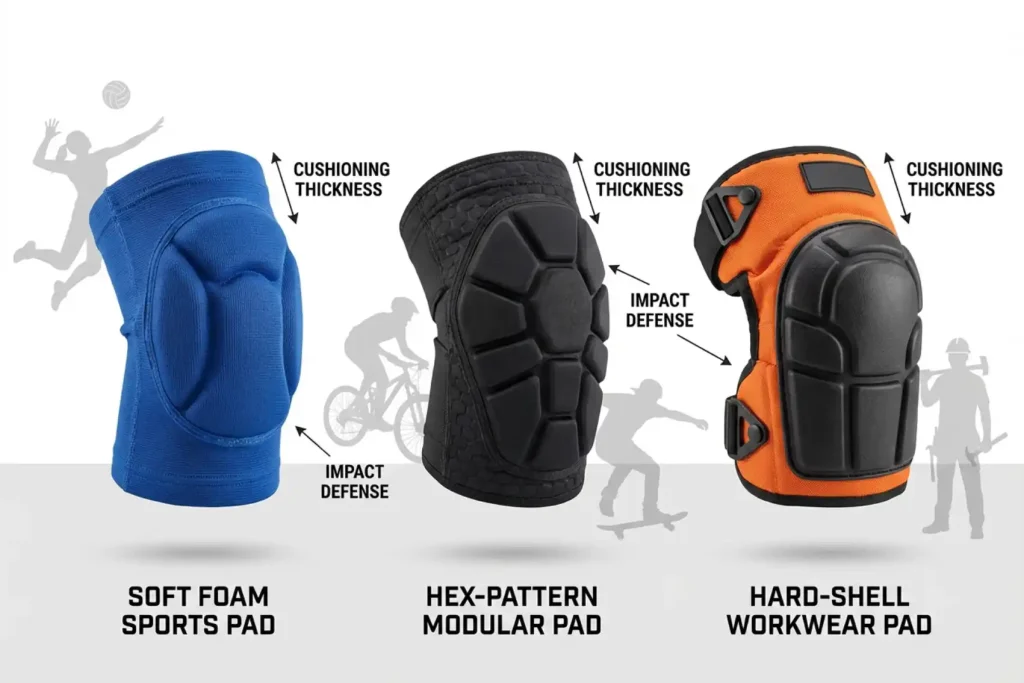
Most knee pads can be grouped by how they protect the knee. Common types include sleeve-style sports knee pads, pad-insert designs, honeycomb impact styles, soft cushioned kneeling pads, and hard-shell work knee pads. Each type solves a different problem, so type selection should always come before color, logo, or price.
Here’s the simple breakdown.
Sleeve-style knee pads are common in volleyball, dance, training, and some youth sports. They usually combine a stretch body with foam padding over the front of the knee. Buyers choose them when they want a close fit, lighter weight, and easy movement.
Honeycomb or segmented impact pads are common in basketball, training, and contact sports. These use a compression sleeve base with raised impact cells. They are popular because they look more technical, feel flexible, and stand out well in online product listings.
Soft kneeling pads are more common in gardening, home use, and light-duty work. These usually focus on comfort during repeated kneeling rather than fast movement. The structure is simpler, and the selling point is often softness, thickness, and ease of wear.
Heavy-duty work knee pads are built for construction, flooring, roofing, mechanics, and industrial use. These may use thick foam, gel, or a hard outer shell. They need to stay in place during long work periods and hold up against rough surfaces.
Pad-insert football styles are different again. These are built around placement inside football pants rather than stand-alone sleeve wear. The buyer thinks about shape, rules, pad size, and positioning more than comfort alone.
The key point is that knee pads should not all be judged the same way. A volleyball user and a flooring worker do not need the same structure. Once the product type matches the use, the rest of the decision becomes much easier.
How should knee pads fit?
Fit is one of the biggest reasons people keep or return a pair. A knee pad that looks good in photos can still fail if it slips, pinches, twists, or feels bulky once worn.
A good knee pad should stay in place, cover the area that needs protection, and feel secure without cutting into the leg. It should not roll down, bunch behind the knee, or create strong pressure marks after normal wear. Good fit is stable, balanced, and comfortable enough for the real task.
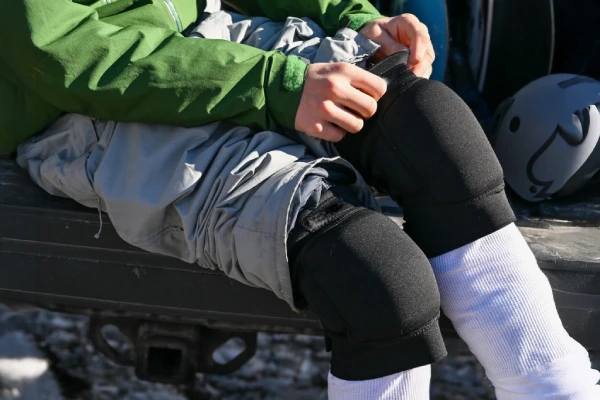
The first thing to check is position. The padding should sit where contact or pressure is most likely to happen. If the coverage sits too high or too low, the product may feel wrong even if the size looks correct.
The second thing is hold. A knee pad should stay stable during the activity it was bought for. For sports, that may mean jumping, landing, or fast movement. For work, that may mean repeated kneeling, standing, and shifting on rough surfaces.
The third thing is comfort at the openings and around the bend of the knee. A pad can fail even when the front cushioning looks good. If the top or bottom opening feels too tight, or if the back feels bulky during bending, the wearer may stop using it.
Good fit does not always mean very tight fit. In many cases, the better standard is simple: secure, stable, and wearable for the real task. For B2B buyers, this is also where factory sampling, fit testing, and revision speed matter, especially in OEM and ODM development.
What are knee pads used for in real life?
Knee pads are used in many settings, but the reason for using them changes by activity. Some protect against direct impact. Some reduce pressure from repeated kneeling. Some help create more confidence during movement.
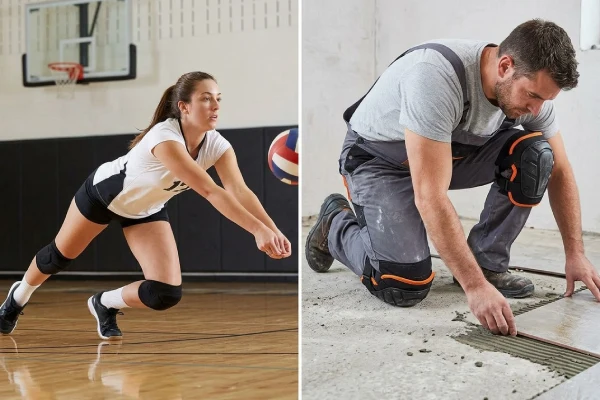
Knee pads are used to reduce impact, cushion pressure, protect the front of the knee, and make repeated contact with the ground or floor more manageable. Sports users usually want movement and shock absorption. Work users usually want kneeling comfort, grip, and wear resistance.
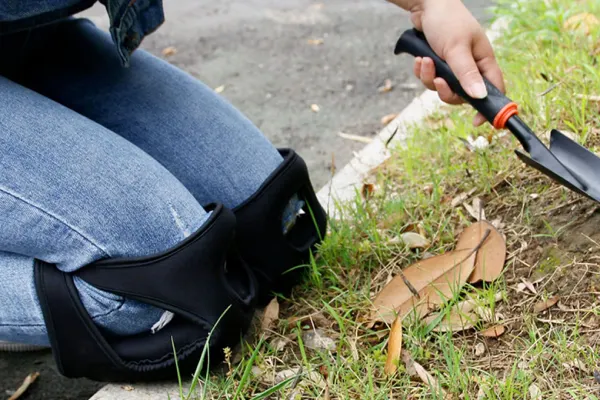
Different activities put very different demands on knee pads. Court sports such as volleyball often involve dives and repeated floor contact. Basketball, training, and wrestling usually need protection that stays flexible during movement. Football-related use is more structured, while work settings are more about kneeling pressure on hard surfaces. In lighter home or garden use, basic cushioning may be all that is needed. In construction and trade work, knee pads are used for repeated kneeling on hard surfaces.
One important point is that one knee pad style does not always work well across all of these settings. A lighter sports pad may not last in rough job-site use. A thick work pad may feel too bulky for fast movement. That is why the application should guide the product choice from the start. If you want to compare ready-made sourcing direction and category positioning, the current knee pad product collection is the most relevant next stop.
How do you wash, dry, and care for knee pads?
Care is easy to ignore at first, but it matters a lot after purchase. Poor care leads to smell, shape loss, damaged padding, and early replacement. It also affects repeat orders and review quality.
Most knee pads last longer when they are washed gently, air dried, and stored fully dry. Harsh machine cycles, high heat, and poor drying can damage elastic fabric, foam structure, grip parts, and overall shape. Good care protects both comfort and product life.
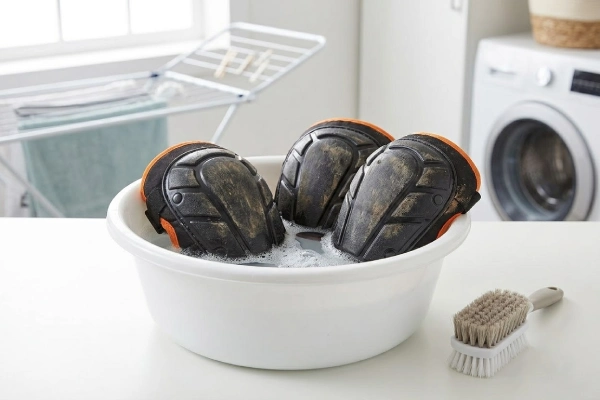
The safest first step is to check whether the product has a care label or washing guidance. Different materials can respond differently, especially when the structure includes foam, coated surfaces, printed areas, or reinforced parts.
In general, gentler washing is safer than harsh cleaning. High heat can be a problem for many knee pad materials, especially when the product depends on stretch and pad shape to work properly.
Drying also matters. Knee pads should be fully dry before storage or reuse. This helps reduce odor buildup and helps the product keep a more consistent feel.
Care may look like a small issue at first, but it affects product life, repeat use, and customer satisfaction more than many buyers expect. For buyers building a private-label line, clear wash guidance, testing records, and material specs can also be organized through a proper download center.
What should you check before buying knee pads?
Buying advice is where broad traffic starts to turn into product comparison traffic. At this stage, the reader is no longer asking only what knee pads are. They are trying to avoid buying the wrong one.
Before buying knee pads, check the use case, padding type, fit method, coverage area, breathability, fastening system, wash care, and durability level. The best option is not the thickest or cheapest one. It is the one that matches how the pad will actually be used.
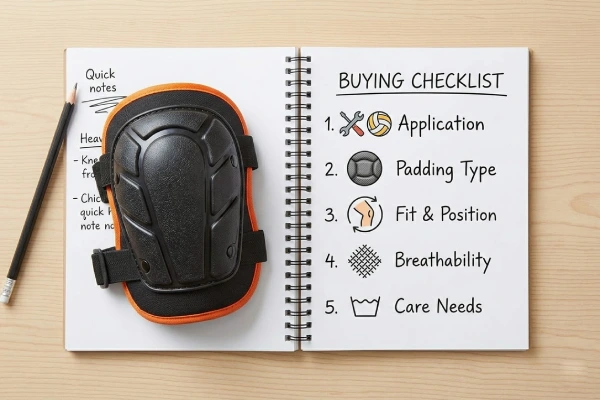
Before buying knee pads, it helps to think about the real task first. A product used for court sports is usually judged very differently from one used for repeated kneeling at work or lighter home use. That first distinction matters because it affects almost everything else, including pad shape, front cushioning, overall bulk, and how much freedom of movement the user expects.
Padding style comes next. Some knee pads are built for softer front comfort, while others are designed for more visible impact absorption or thicker kneeling protection. The better choice depends less on appearance and more on what the knee will actually go through during use.
Fit is just as important. Even a well-made knee pad can become a problem if it shifts too easily, feels unstable, or fails to stay in place once the user starts moving or kneeling. After that, durability and care needs become easier to judge. Some buyers need a lighter, easy-to-wash option for regular sports use, while others need a tougher product that can handle rougher surfaces and more demanding wear.
In most cases, the better buying decision comes from matching the knee pad to the actual use instead of choosing only by thickness, price, or first visual impression.
Conclusion
Knee pads work best when the product type matches the real activity. The main things to check are type, fit, use, care, and durability. Once those basics are clear, it becomes much easier to choose a knee pad that feels right and performs well in daily use.
For brands, importers, and sourcing teams that need custom development, the most practical next step is usually to review the current knee pad manufacturer offering, check the broader OEM/ODM support manufacturing guide, and then contact the team for sampling or project discussion.
FAQ
What are knee pads used for?
Knee pads are used to protect the front of the knee from impact, pressure, and repeated contact. They are common in sports, work tasks, and other activities that involve frequent kneeling or floor contact.
How should knee pads fit?
Knee pads should feel secure and stay in place without digging into the leg. They should cover the area that needs protection and move naturally with the knee during use.
Are all knee pads the same?
No. Some knee pads are made for sports and flexible movement, while others are made for kneeling comfort and rougher surfaces. The structure changes with the application.
Can you wash knee pads?
Many knee pads can be washed, but gentle cleaning is usually safer than harsh washing. Drying them fully and avoiding high heat can help protect fit and padding shape.
Why do knee pads slide down?
Knee pads usually slide when the size, opening tension, or overall structure does not match the user or the activity. A stable fit depends on both size and product design.
Are thicker knee pads always better?
No. Thicker knee pads can add more cushioning, but they can also feel bulkier and hotter. The better choice depends on how the product will actually be used.
What should you check before buying knee pads?
The main things to check are use case, padding style, fit stability, and durability needs. Those four points usually matter more than color or general marketing claims.
Do knee pads wear out over time?
Yes. Padding can flatten, the fit can loosen, and the outer surface can wear down with repeated use. Once the protection or stability drops too much, replacement usually makes sense.