Knee pain during movement can make a simple product feel confusing. Many people see “knee strap” online, but they still don’t know what it does or when it makes sense.
A knee strap is a small support band worn below the kneecap. It gives focused pressure around the patellar tendon area and may help some users feel more comfortable during running, jumping, stairs, and other repeated movements.
Many people use “knee strap” as a broad search term. In real product discussions, though, it usually points back to the same core product family: patella straps or patellar tendon straps. That matters because readers often compare a strap with a sleeve or a brace, even though these products do different jobs. A strap is smaller. It feels lighter. It focuses on one area instead of covering the whole joint. That makes it useful for users who want more freedom during movement and less bulk around the knee. It also makes product education more important. If you explain the product too broadly, people expect whole-knee stability from something designed for targeted support. Understanding that difference makes it easier to choose the right level of support.
What Is a Knee Strap?
A lot of people think any support with straps counts as a knee strap. That creates mixed expectations and poor product choice.
In most product searches, a knee strap means a small band worn just below the kneecap. It is usually used for focused support around the patellar tendon area, not for full-joint control like a brace.
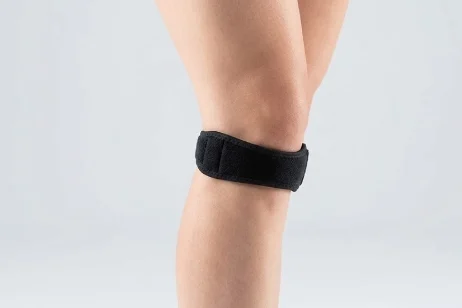
A knee strap is usually the most compact option in a knee support range. It does not wrap the whole joint like a sleeve. It does not use hinges or larger side stabilizers like a brace. In most cases, it sits just below the kneecap and applies pressure to the tendon area. That simple structure is why it appears so often in sports, rehab, and daily support categories.
You will often see different names for the same product family. Some people call it a knee strap and some call it a patella strap. Some call it a patellar tendon strap or jumper’s knee strap. In real buying situations, those terms often overlap. The main difference is not the product itself. The difference is usually the user’s problem, activity, or search wording. A runner may search one phrase. A volleyball player may search another. A parent looking for front-knee support for a young athlete may use a third.
For buyers, this category works best when the product role stays clear. A strap is a targeted support tool. It is not meant to do everything. If your catalog includes straps, sleeves, and braces together, it becomes easier to match different users to different support levels instead of forcing one product to cover every need. Here’s the deal… the clearer the role, the easier the product is to explain, sell, and use correctly.
What Does a Knee Strap Do?
A small support product can create big promises. That is where confusion starts.
A knee strap applies local pressure below the kneecap. That pressure may help reduce strain around the patellar tendon during activity and make repeated movement feel more manageable for some users.
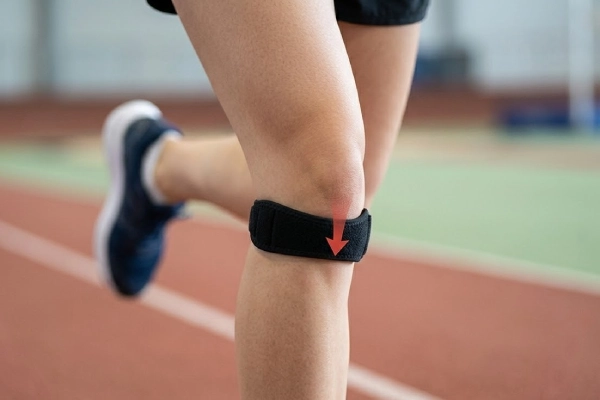
The main job of a knee strap is to provide focused support. It does not rebuild tissue, replace rehab, nor solve every kind of knee pain. What it may do is make activity feel better when discomfort is centered around the front of the knee, especially near the patellar tendon. That is why this product is often connected with repeated jumping, fast stops, stairs, and sports that load the knee again and again.
That focused role is one reason many users prefer a strap over a larger support. It feels lighter, easier to carry, and usually fits under sportswear without much trouble. It also allows more freedom than a bulky brace. That said, the lighter feel comes with limits. A knee strap gives less broad control than a sleeve and much less structure than a brace. So the best results usually come when the product matches the right support need from the start.
This is also where many readers start asking more specific questions. Someone reading this section may still want to know do knee straps really work, or may want a closer look at what a patella strap does during exercise. The truth is… readers trust a product more when you explain both what it can do and what it cannot do.
How Does a Knee Strap Work?
A knee strap looks simple, so many people assume it cannot do much.
A knee strap works by pressing on the area below the kneecap. That pressure may change how force is felt around the patellar tendon during movement and help some users feel less pain during activity.
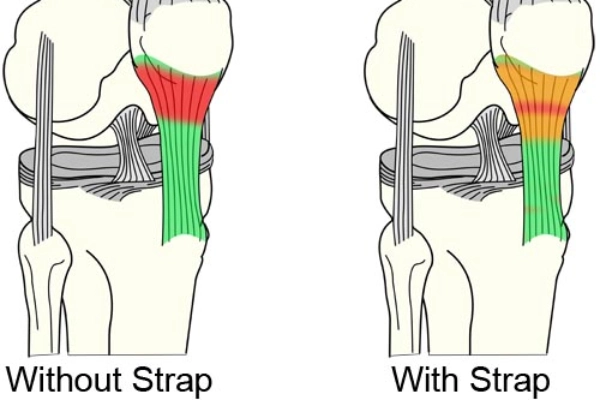
The simple answer is pressure and force control. The strap sits under the kneecap and presses against the tendon area. That contact may shift how load is felt during movement such as jumping, landing, squatting, or running. For some users, that makes the painful area feel less irritated. It does not remove force from the knee. It changes how that force is managed in one small zone.
This is why a strap often works best during activity, not as a magic fix. If pain comes from repeated loading around the patellar tendon, a strap may help make movement more tolerable. If the problem sits elsewhere in the joint, the effect may be limited. That is also why readers often search how a knee strap works and compare that answer with knee strap vs knee brace or knee strap vs knee sleeve before they buy.
Construction details matter more than many people expect. Strap width, pad shape, closure design, lining feel, and anti-slip control all change the real experience. A poor design may slide, twist, pinch, or feel uneven. A better design feels stable without being harsh. An adjustable patella knee strap gives you a better chance of finding useful pressure without too much bulk. Here’s what most people miss… the product idea is simple, but comfort depends a lot on design and fit.
When Should You Wear a Knee Strap?
People often wear support at the wrong time or for the wrong reason.
A knee strap is usually worn during activities that trigger front-knee discomfort, such as running, jumping, stairs, training, or other repeated movements that load the patellar tendon area.
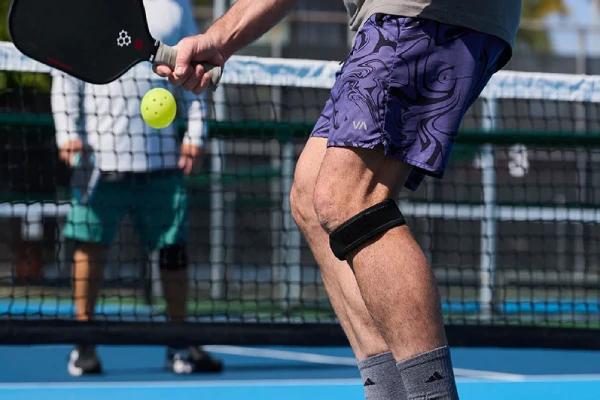
A knee strap usually makes the most sense during the activity that creates the problem. That may mean sports practice, running, long walks, gym work, climbing stairs, or active job tasks. The goal is not to wear it all day just because you have it. The goal is to use it when the knee needs focused help during load-heavy movement.
This is also where different use cases start to separate. Some people want a knee strap for running because they feel pain during mileage or downhill movement. Some want a knee strap for jumper’s knee because repeated takeoff and landing make the tendon area sore. Some search knee strap for Osgood-Schlatter because they are looking for a lighter support option for a younger athlete with front-knee tenderness. These use cases can overlap, but the explanation should stay honest. A strap may help with targeted front-knee discomfort linked to tendon load. It is less likely to be the right answer when the need is broad, unstable, or clearly outside the tendon area.
How Do You Wear a Knee Strap Correctly?
Even a good product can disappoint if it is worn badly.
To wear a knee strap correctly, place it below the kneecap over the patellar tendon area, tighten it until it feels firm but comfortable, and check that it stays stable during light movement.
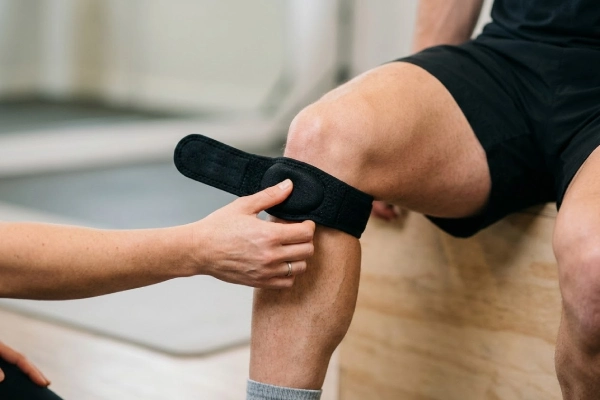
The first step is to find the kneecap. Then move just below it to the tendon area. That is where most knee straps are designed to sit. Once the strap is wrapped around the leg, tighten it enough to feel support, but not so much that it causes numbness, sharp discomfort, or skin trouble. After that, test it with a few squats, steps, or light movements. If it slips or feels awkward, adjust it before full activity.
A lot of users think tighter always means better. That is not true. Too much pressure can make a strap harder to tolerate and may create a new comfort problem. A second mistake is wearing the strap too high so it sits against the kneecap itself. A third mistake is setting it too low on the upper shin, where it loses its targeted effect.
Some people need more detail on how to wear a knee strap correctly, while others mainly want to know how tight it should feel during sport or daily movement. Those are real follow-up questions, and they deserve separate answers later. For product development, this is where fit range and closure design matter. An adjustable hook-and-loop knee strap usually makes pressure changes easier during activity, which is one reason many buyers look for an adjustable patella knee strap instead of a fixed design.
Where Should a Knee Strap Sit?
A few centimeters can change the whole experience.
A knee strap should usually sit just below the kneecap, over the patellar tendon area. If it sits too high, too low, or at an odd angle, the support may feel weaker or less comfortable.
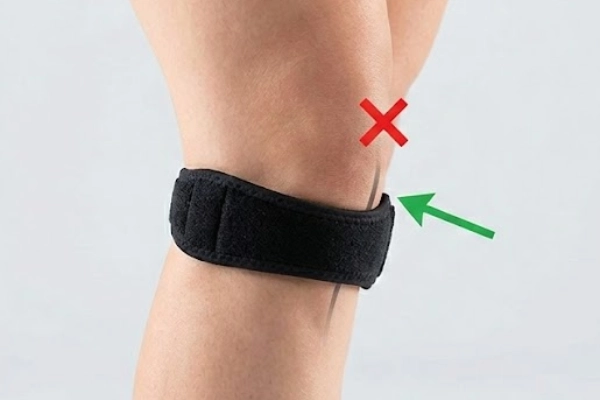
Placement is one of the biggest reasons people say a strap “didn’t work.” In many cases, the issue is not the product idea. The issue is position. A strap is not meant to cover the kneecap like a band around the joint. It is usually meant to sit under the kneecap and apply pressure where the tendon can be supported during movement.
Even when the placement is close, small adjustments can still matter. Some users need it slightly higher. Some need it centered more carefully around the sore area. The strap should sit flat. It should not twist, not tilt, and not slide down after a few steps. If that happens, the fit, tension, or material grip may need work.
For buyers, placement education is part of the product, not a side detail. Better box copy, clearer diagrams, and simpler product-page visuals can improve user results without changing the strap itself. So what does this mean for you? The more clearly you explain fit, the fewer complaints you get from users who simply wore the product wrong.
Knee Strap vs Knee Brace vs Knee Sleeve: What’s the Difference?
These products often appear together, but they are not interchangeable.
A knee strap gives focused support below the kneecap. A sleeve gives broad compression and coverage. A brace usually gives more structure and control. The right choice depends on the problem and the level of support needed.
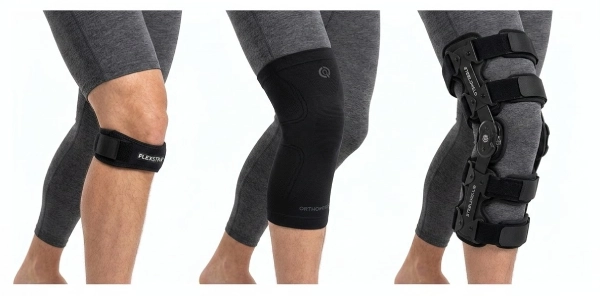
This comparison matters because many buyers and end users look at these products side by side. A knee strap is the smallest and most focused option. It is built for localized support. A sleeve covers more of the knee and often feels better for mild compression, warmth, and broad support. A brace sits at the higher-support end with more structure and more control.
That means the best product depends on the real use case. If the problem centers on patellar tendon load and the user wants something low profile, a strap may fit well. If the goal is mild support with compression feel, a sleeve may be the better choice. If the knee needs stronger control or the problem involves more than one area, a brace often makes more sense.
Those are comparison searches with strong intent, and they fit naturally after a broad explanation like this one. For commercial readers, the point is simple: a stronger support range gives you clearer product roles. That is why many buyers prefer to work with a sports braces and supports manufacturer that can build a complete support category instead of offering one isolated item.
When May a Knee Strap Not Be Enough?
A knee strap works best when the need is focused. Some knees need more than that.
A knee strap may not be enough if the knee is unstable, swollen, locking, giving way, or painful after injury. In those cases, a different support type or medical review may be a better next step.
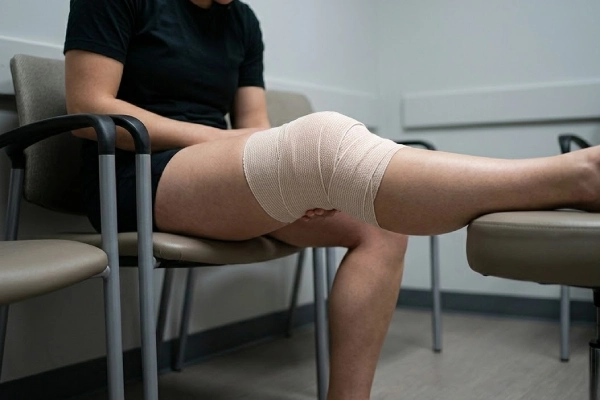
A strap is not meant to solve every knee problem. If the knee feels unstable, catches during motion, swells heavily, or becomes painful after a fresh injury, a small band below the kneecap may not match the real issue. The same is true when the pain does not seem centered around the tendon area at all.
That does not reduce the value of the product. It just keeps the role honest. A targeted strap can be a good fit for the right user and a poor fit for the wrong one. Product education should make that distinction early, not after a bad review.
If you sell a strap as a full answer for every kind of knee pain, returns go up. If you explain the limits clearly and also offer sleeves or braces, the category becomes much easier to understand and much easier to sell.
How Can Buyers Plan a Better Knee Support Line?
Traffic matters, but product logic matters more.
A better knee support line gives each product a clear role. Knee straps, sleeves, and braces should solve different support needs, not compete with each other through vague or repeated claims.

For brands, distributors, and retailers, a knee strap usually works best as one part of a broader support range. It covers targeted, low-bulk support. A sleeve covers mild compression and wider coverage. A brace covers stronger support and more structure.
This also affects custom development. Buyers may need logo placement, packaging changes, size adjustments, material options, or different closure systems based on channel and price level. That is why many teams move from generic sourcing to a custom knee strap manufacturer or an OEM and ODM support manufacturer that can support product planning from sample stage to delivery.
Conclusion
A knee strap is a focused support tool. Explain it clearly, match it to the right need, and both your content and product line become easier to trust.
FAQ
Do knee straps really work for knee pain?
Knee straps can help when pain is centered below the kneecap, especially during running, jumping, or climbing stairs. They usually work best as targeted symptom support rather than a full solution, and forum feedback suggests results often depend on fit, placement, and the actual cause of pain.
Where exactly should a knee strap sit?
A knee strap usually sits just below the kneecap, centered over the patellar tendon rather than on the kneecap itself or too far down the shin. Correct placement matters because the support effect depends on pressure reaching the right spot during movement.
How tight should a patella strap be?
A patella strap should feel snug and supportive, not sharp, numb, or restrictive. Cleveland Clinic advises tightening until you feel some pressure on the tendon and avoiding over-tightening, since too much compression can make the strap uncomfortable instead of helpful.
Can you wear a knee strap all day?
Some people wear one longer, but it usually makes more sense during the activities that trigger symptoms rather than all day by default. Forum discussions often describe it as a short-term support tool, while rehab and load management still matter for longer-term improvement.
Is a knee strap good for jumper’s knee?
A knee strap is commonly used for jumper’s knee because it targets discomfort around the patellar tendon during repeated loading. Sports medicine sources and forum discussions both suggest it may help some users during activity, though it should not be treated as a complete fix by itself.
Does a knee strap help with running?
It may help some runners when front-knee discomfort is linked to patellar tendon loading, especially if symptoms appear during mileage, hills, or repetitive impact. Forum discussions show mixed experiences, which usually means the result depends on diagnosis, fit, and how the strap is worn.
Why does my knee strap feel uncomfortable or not work?
The most common reasons are wrong placement, too much tension, slipping during activity, or using the strap for a problem that needs a different support type. Real-user discussions repeatedly show that comfort and results vary a lot when the fit or use case is off.
What is the difference between a knee strap and a knee brace?
A knee strap gives narrow, below-the-kneecap support with minimal bulk, while a knee brace usually provides broader coverage, more structure, and more control. If the knee feels unstable, locks, or needs stronger guidance, a brace may be the more appropriate option.