Your knee may feel sore or tired after pickleball. Too little support can leave it exposed. Too much can slow your footwork. The goal is to find the right balance.
Pickleball knee support should help your knee feel steadier during cuts, stops, and long rallies without making movement feel stiff or heavy. For most players, the best choice is not the strongest product. It is the one that matches real court movement, comfort needs, and support level.
Pickleball looks simple, but it puts steady demand on the lower body. The game asks you to stay low, react fast, and recover in tight space. You move side to side, plant, push off, and reset constantly. That repeated pattern is why many players start thinking about pickleball support gear.
Still, support is not only about adding more structure. More support is not always the better answer. A product that feels supportive off court may not feel right in play. If it is too stiff or too bulky, it can change the way you move. That matters in a sport where quick feet and smooth recovery shape every rally.
So the better question is not “Do I need support?” It is “How much support helps my knee without taking away my movement?”
Why does pickleball put stress on the knee?
Pickleball seems lower impact than many court sports. The knee still works hard every game. Repeated side steps, quick stops, and bent ready positions can build stress fast.
Pickleball puts stress on the knee through repeated lateral movement, quick deceleration, low ready stances, and fast push-off patterns. The strain often comes from small actions repeated many times, not just one hard impact or one awkward step.
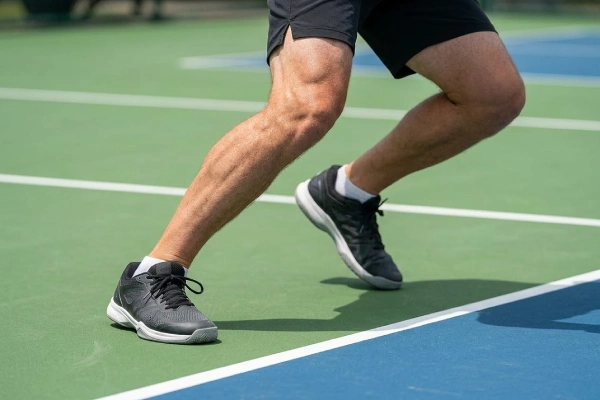
Repeated lateral movement adds up quickly
A lot of knee discomfort in pickleball starts with repetition. The court is smaller than a tennis court, but the knee still works hard. In many rallies, you are not covering much distance, but you are reacting constantly. That means shuffle, plant, recover, reset, and bend. Those short movements may look light, but they still load the knee with every change of direction.
The kitchen line puts the knee under constant demand
The kitchen line adds another layer. Players stay in a low stance, reach quickly, block, reset, and move again with little time to prepare. That low posture can increase demand on the knee, especially during long rec sessions or tournament blocks where fatigue starts to show. Once your legs get tired, your steps may get shorter and your timing may drop. Then the knee has to control more of the movement.
Footwear and player profile can increase knee load
Footwear changes the picture too. Court shoes are built to handle side motion and quick stops better than running shoes. If a player uses footwear made mostly for straight-line motion, the lower body may feel less stable during wide or sudden moves. That can push extra work into the knee. Some knee discomfort starts from poor movement support under the foot, not just from the knee itself. That is also why broader pickleball injury prevention matters alongside knee support.
Player profile matters as well. Newer players may still be building movement habits. Older active players may feel more fatigue after long sessions. Competitive players may move faster and load the knee harder during singles. These groups may need different levels of support, but pickleball asks the knee to stay ready on almost every point.
That is why knee support gets attention in this sport. The demand is real. The bigger issue is choosing support that helps this movement pattern instead of getting in its way.
What can knee support actually help with?
Many players hope support will fix the whole problem. It won’t. Still, the right product can make the knee feel steadier, more comfortable, and easier to trust during play.
Knee support can help by adding compression, improving joint awareness, and giving the knee a more stable feel during shuffles, stops, and recovery steps. For many players, that means less fatigue, better comfort, and more confidence rather than a full solution by itself.
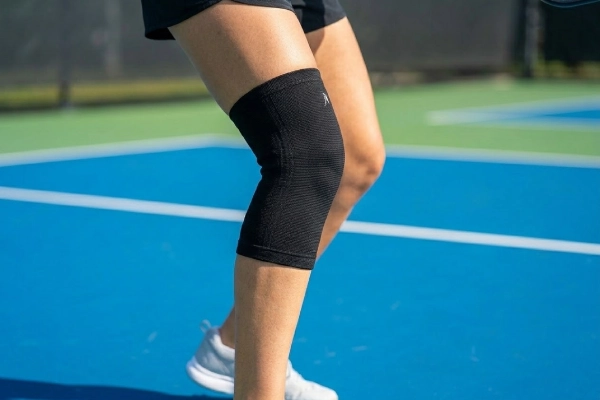
Compression can improve how the knee feels during play
The first thing many players notice is compression. A sports knee sleeve or brace can make the knee feel more supported during play. If your knee feels loose, tired, or less stable than you want, even a light support product may help you move with more trust. It does not increase strength. It changes how the joint feels during movement.
That feel becomes more useful during side steps and quick stops. Pickleball has a lot of short reactions. You shift left, recover, step in, then push back out. In those moments, the knee needs to feel stable during quick transitions. A well-matched support product can help some players feel more secure in those moments.
Support can increase comfort and confidence
Comfort is another reason people wear support. Not every player has a larger knee issue. Some just feel mild soreness after two-hour sessions. Some feel early stiffness in the first game. Some notice that their knee gets more tired than the rest of the leg. In those cases, support may help manage the workload and make play feel smoother.
Confidence may be the biggest benefit of all. A player coming back after mild strain often changes movement before they notice it. They do not push off the same way. They hesitate on wide balls. They stand a little higher. Those changes can hurt movement even before symptoms get worse. In many cases, the right support helps because it restores trust, and that trust can change how a player moves.
Knee support works best as part of a bigger setup
Still, support works best as part of a bigger setup. Shoes matter. Warm-up matters. Match volume matters. Recovery matters. Support is useful, but it should fit into the whole routine. The product should help the knee feel better during court movement, not act like a substitute for everything else.
When does support start to limit mobility?
Support can help your knee feel safer. It can also make movement feel slower if the product is too much for your actual needs. That is where the real trade-off starts.
Support starts to limit mobility when it feels too stiff, too bulky, or too tight for normal pickleball movement. That can reduce knee bend, slow recovery steps, and change how you shuffle, plant, and react during fast points.
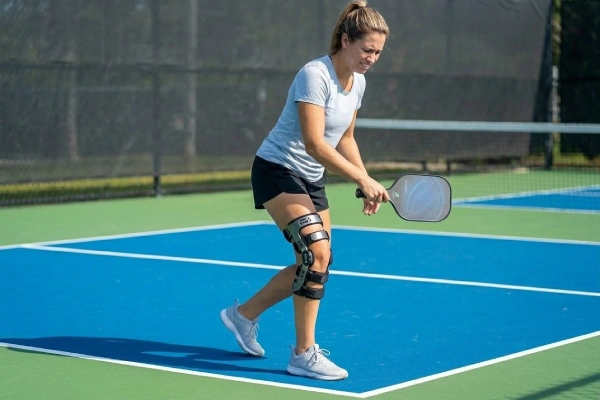
Too much stiffness can change natural movement
Players want more support because they want to protect the knee. That makes sense. But pickleball is built on quick resets, short direction changes, and repeated low reactions. If a product blocks those actions, it may stop helping.
Some support products feel secure the moment you put them on. It may feel reassuring while standing still, but harder to bend in during play. You may notice it during low kitchen exchanges, quick push-offs, or wide recovery steps. The support is there. Your natural flow is not.
Bulky support can feel secure but slow on court
The second issue is bulk. A heavier knee brace or thicker structure can feel like a good choice for a player who wants maximum control. Yet that same design may feel slow during live play. The knee does not only need protection. It also needs to move freely through quick reactions. Even so, a product can feel safe and still be wrong for match play.
Over-support may lead to movement compensation
There is also a hidden problem. Too much support can change movement patterns. A player may shorten stride length, avoid deeper bend, or shift more load into the hip or ankle. They may not notice this in the first game. They notice it after an hour when movement feels off.
Stronger support is not always wrong, but it must match the use case. A player with mild fatigue from regular doubles often needs a very different product from a player who feels real instability during cuts and push-off. The wrong product may protect the knee on paper while making the player less natural on court.
That is the balance point. Good pickleball knee support should steady the knee without teaching the body a worse way to move.
Should you choose a knee sleeve or a knee brace?
Most players do not need every option on the market. They need to know which category fits their knee and their game. That choice usually starts with a choice between sleeve and brace.
A knee sleeve is usually better for light support, compression, and freer movement during regular pickleball play. A knee brace is often better for players who need stronger control and stability, though it may feel less natural during quick court movement.
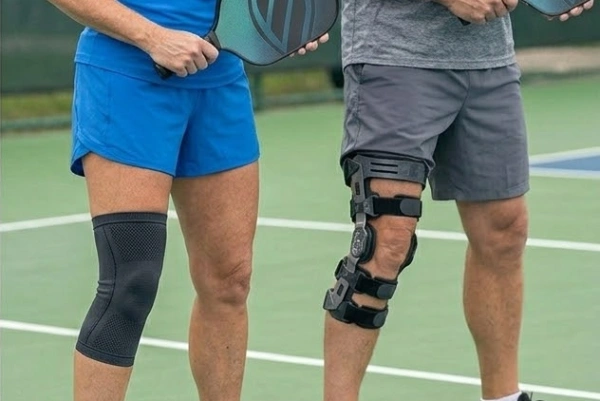
When a knee sleeve makes more sense
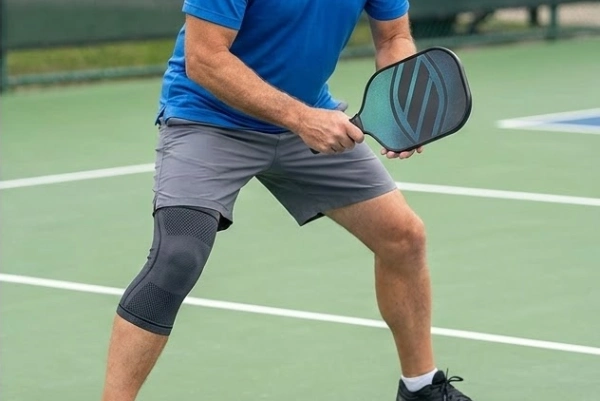
A knee sleeve is often the better first step for regular play. It gives compression, a close fit, and a lighter support feel. Many pickleball players want the knee to feel steadier without losing natural bend and footwork. A sleeve often works well for mild soreness, joint awareness, and fatigue during long sessions.
Sleeves also tend to feel easier during active movement. They are usually lower profile, simpler to wear, and less likely to interfere with quick side motion. For players who want regular on-court comfort and confidence, a sleeve often makes more sense than a larger brace.
When a knee brace may be the better choice
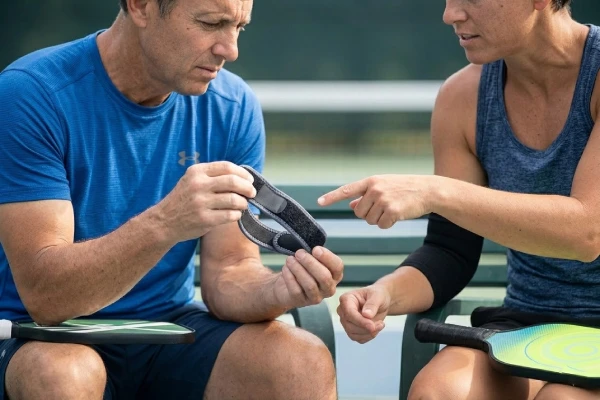
A knee brace moves into a stronger support category. It is more likely to help players who feel real instability or want firmer control around the joint. Some players need that level of control because a sleeve does not feel like enough. In that case, the brace can be the better option, especially if the player is returning from a more serious knee problem or wants stronger control during training.
How to decide based on support and mobility
The trade-off is movement freedom. A brace may give more structure, but it may also feel less flexible during repeated shuffles, quick bends, and low reaction points. Players who want regular play with as few restrictions as possible often do better starting with a sleeve. If the knee still feels unstable and the sleeve does not give enough control, then moving toward a brace makes more sense.
For product planning, this difference matters a lot. Sleeve buyers and brace buyers are not always the same user. Their needs, expectations, and product tolerance are different. That is one reason this category should not be sold as one simple “knee support” story.
How do you choose the right pickleball knee support?
A support product should match your knee, your playing style, and what actually happens on court.
To choose the right pickleball knee support, look at symptom level, support need, fit, material, and real court use. The best product should stay in place, feel comfortable through long play, and support the knee without changing normal movement too much.
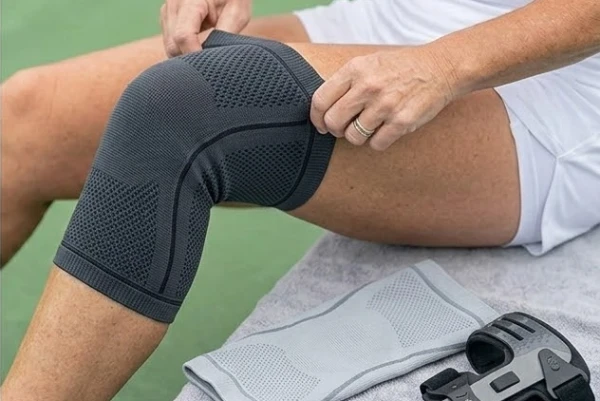
Start with your real support need
Start with the reason you want support. Mild soreness, long-session fatigue, early stiffness, and lack of confidence are not the same thing. A player with mild soreness may do well with a sleeve. A player who feels unstable during cuts may need more structure. If you skip this step, it is easy to buy too much support or the wrong type of support.
Match the product to how you play
Then look at how you play. Singles puts more pressure on court coverage. Doubles still loads the knee, but often through shorter bursts and many low reactions near the kitchen. Some players move hard and cover space quickly. Some play a more compact game. The support product should match that movement pattern.
Check fit, material, and long-session comfort
Fit matters as much as support level. If the product slides down, folds behind the knee, or feels uneven, it will become a distraction. A support item should feel secure without pinching or shifting. Test it during movement, not while standing still. Shuffle. Bend. Step wide. Recover to center. That tells you more than the label.
Material matters too. Breathability, stretch recovery, and skin feel shape repeat use. A support item that feels fine for ten minutes may feel annoying after ninety. Breathability and comfort matter in pickleball because long sessions quickly expose poor product feel.
Use case is the last filter. Some players want one product for everything. That is not always realistic. A lighter item may work best for live games. A firmer item may make more sense during recovery weeks or heavy drills. In most cases, the right choice is the product that fits one clear job well, not the one that tries to do every job at once.
How can you keep movement natural while wearing knee support?
A good support product should help your knee and still let you move like yourself. That takes more than picking the right category. It also depends on how you wear and use it.
You can keep movement natural by using the lightest support that still helps, checking fit before play, pairing support with court shoes, and warming up properly. Support should work with your footwork, not compete with it.
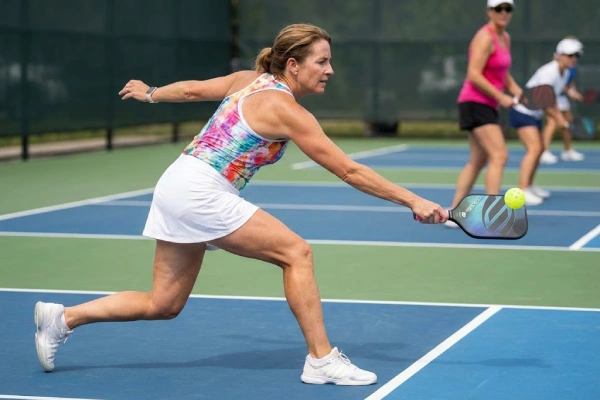
Use the lightest support that still helps
The first rule is simple. Do not solve a small problem with a very large product. If a light sleeve gives enough support for regular play, there may be no reason to move into a heavier brace. Many players lose natural movement because they jump straight to maximum support instead of testing the lowest level that still helps.
Test the fit before live play
Check fit before you start playing. Walk in the product. Bend your knee. Shuffle to each side. Step into a low ready stance. If it already feels stiff, pulls behind the knee, or shifts during those basic moves, it will not feel better once the rally starts.
Pair support with shoes and warm-up
Shoes also shape how support feels. A stable court shoe can reduce extra motion that travels into the knee. A poor shoe can make the whole lower body feel less controlled, even if the support itself is fine. That is why knee support and footwear should not be treated as separate choices.
Warm-up is just as important. Some players wear support and assume the knee is ready. It is not. The knee still needs movement prep. Dynamic warm-up helps the leg feel ready to bend, push, and recover at game speed. It also helps the player notice whether the support feels right that day.
Adjust support as your knee changes. The product that helps during a sore week may not be the one you want once you feel stronger. Some players do better with one item for matches and another for recovery blocks. That is normal. The key point is that movement should still feel natural. If the product starts controlling your game more than helping your knee, it is time to reassess.
What should brands and retailers focus on in pickleball knee support?
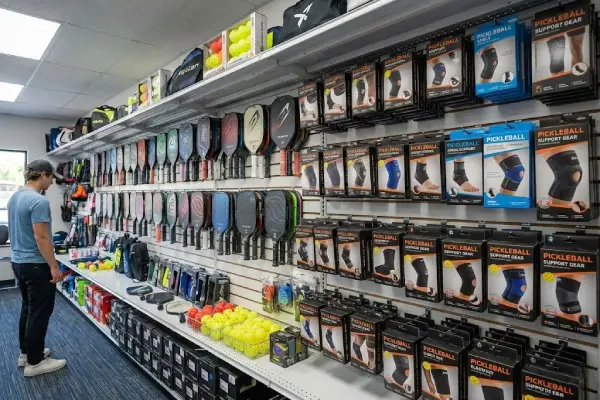
This category is growing, but pickleball buyers do not all want the same kind of support. Better product planning starts with clear user groups and real on-court needs.
Brands and retailers should focus on support level, fit stability, comfort, breathability, and movement-friendly design. The strongest product plan is usually a segmented line that serves light-support players, active older users, and players who need more structure without giving up all mobility.
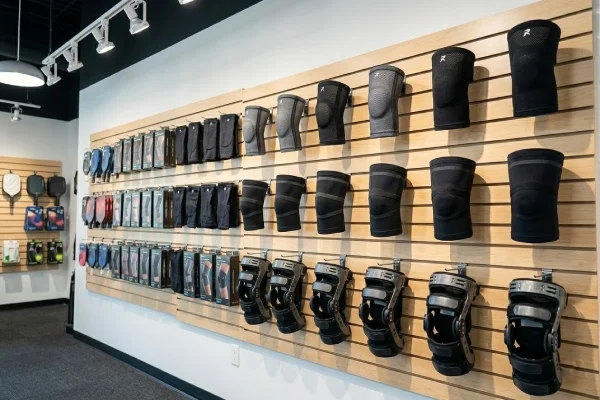
Build around clear support levels
Pickleball knee support should not be treated like a generic sports support item. The player base is broad. Some users want a sleeve for comfort and long-session fatigue. Some want moderate support for regular weekly play. Some want stronger structure because they do not trust the knee during cuts.
That is why support-level segmentation matters. A segmented line usually covers the market better than one “all players” product. One line may focus on lightweight sleeves for daily court use. Another may target players who want stronger control, firmer compression, or more structured support. This kind of range gives brands a clearer story and gives buyers a better reason to choose.
Comfort and fit affect repeat use
Comfort is not separate from performance in this category. If a product feels hot, rough, thick, or unstable after an hour, repeat use drops. Pickleball players often play longer than they expect. That means breathability, skin feel, edge comfort, and stretch recovery affect product success in a direct way. A support item must feel good while the player bends, shuffles, and resets over and over.
Fit stability is another buying point that deserves more attention. Players do not want to stop and readjust knee support between games. Products that slip or bunch lose trust fast. Fit stability affects reviews, repeat purchase, and trust in the product line.
Position products for real player groups
The visual side matters too. Many pickleball buyers want products that look sport-ready, clean, and easy to wear. They do not always want something that looks heavily medical unless that is the clear purpose. That opens room for retail lines that blend support, comfort, and court-style positioning.
For brands planning a private-label range, working with the right OEM/ODM support manufacturer or custom knee sleeve manufacturer can make product development more focused and easier to scale. That also makes it easier to build products around clear player groups instead of one broad support claim.
Conclusion
The best pickleball knee support helps your knee feel steadier without taking away the quick, natural movement that makes your game work.
FAQ
Is a knee sleeve good for pickleball?
Yes. A knee sleeve works well for many pickleball players who want light compression, better joint awareness, and a steadier feel during regular play without too much restriction.
Can a knee brace affect pickleball movement?
Yes. A knee brace can affect movement if it feels too stiff or bulky for your real needs. It may reduce bend, slow side steps, or change natural recovery patterns.
Should you wear knee support for every pickleball game?
Not always. Some players wear knee support only during long sessions, sore weeks, or recovery periods. It should solve a real problem, not become an automatic habit.
What is better for mild knee soreness in pickleball?
For mild knee soreness, many players do better with a knee sleeve. It usually gives enough compression and comfort for regular play while keeping movement more natural than a brace.
How tight should pickleball knee support feel?
Pickleball knee support should feel snug and stable, not painful or overly tight. It should stay in place, give even pressure, and avoid blocking circulation or knee bend.
Can knee support prevent pickleball injuries?
Knee support can help some players feel more stable and comfortable, but it cannot prevent every injury by itself. Shoes, warm-up, movement quality, and recovery still matter.
What features matter most in pickleball knee support?
The most useful features are fit stability, breathability, comfort during long sessions, proper support level, and enough flexibility to keep court movement feeling quick and natural.
What should brands look for in pickleball knee support products?
Brands should look at support segmentation, fit consistency, comfort, breathable materials, and movement-friendly design. Products usually perform better when they match clear player needs and use cases.