A gaming finger sleeve can help, but the wrong one can feel slow, slippery, or unstable.
The best finger sleeve for gaming depends on your game type, sweat level, and touch preference. For most mobile players, the right choice comes down to material, thickness, and friction stability, not hype or price alone.
Some players want a faster glide. Others want more control. Some just want their thumb to feel consistent from the first match to the last. That is why the best choice depends on how you actually play.
What does a gaming finger sleeve actually help with?
Many players expect better aim right away. That is not the real job of a finger sleeve.
A gaming finger sleeve mainly helps with touch response, sweat control, and more stable finger glide. It does not add skill, but it can make screen contact feel more consistent during repeated swipes and taps.
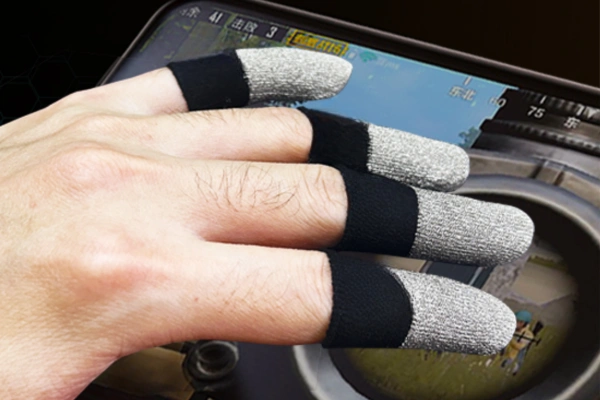
A good finger sleeve helps in three simple ways.
First, it can improve touch consistency. On a phone or tablet, your input depends on stable screen contact. When your skin gets sweaty, oily, or sticky, that contact can change from one swipe to the next. A sleeve can reduce that variation and make your input feel steadier.
Second, it can help manage sweat. A lot of players do not start using a finger sleeve because they want some dramatic upgrade. They start using one because their bare thumb feels fine at first, then worse after a few minutes. The screen begins to drag. Short swipes feel uneven. Long drags stop feeling smooth. In that case, the sleeve is not creating performance out of nowhere. It is cutting down interference.
Third, it can make glide feel more predictable. The truth is, most players do not need the lowest possible friction. They need friction that stays similar through a full session. If your thumb feels fast one minute and sticky the next, your control changes with it.
That is also why some players describe the problem as delay. In many cases, it is not real latency. It is unstable touch, broken swipe paths, or small changes in drag that make control feel off. If you also want to see the wider logic behind sleeve use in gaming, it helps to understand why some players use gaming sleeves in the first place. The same idea applies here, just on a smaller and more touch-sensitive part of the hand.
Which material is better for gaming: silver fiber or carbon fiber?
Most players compare finger sleeves by feel, but the fabric changes both touch response and control.
Silver fiber usually feels smoother and more responsive on touchscreens, while carbon fiber often feels slightly firmer and more controlled. The better choice depends on whether you want faster glide or steadier resistance.
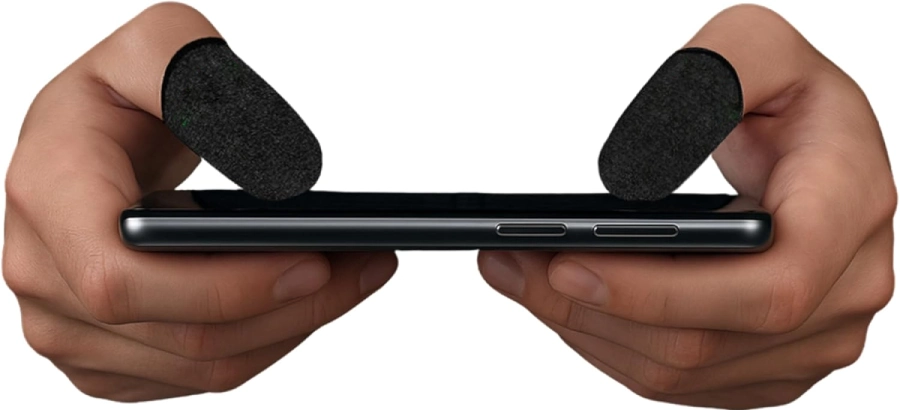
Why silver fiber often feels faster
Silver fiber is usually the safer starting point if you want light, quick, clean screen contact. It is often chosen because it feels smooth and supports stable triggering on capacitive screens. If your game involves aim correction, quick drags, or repeated fine movement, silver fiber usually feels closer to what those players want.
Why carbon fiber may feel more controlled
Carbon fiber tends to feel different. It often gives a little more texture and a little more control. Some players like that because a small amount of resistance makes movement easier to judge. That can matter when you do not want your thumb to glide too freely.
That does not mean carbon fiber is slower in a bad way. It means the feedback can feel firmer. Some players prefer that for movement control or for games where stopping accuracy matters as much as speed.
Why cheap mixed fabrics are harder to judge
Cheap mixed fabrics are where things get less clear. Many low-cost listings use material names loosely. You may see silver fiber, carbon fiber, copper fiber, ice silk, or other labels, yet the real structure and consistency may vary a lot. Some low-cost sleeves still work well. The problem is not that budget sleeves never perform. The problem is that quality is less predictable.
So what does this mean for you? Choose silver fiber if you want a smoother, lighter feel and stronger confidence in touch response. Choose carbon fiber if you want a slightly firmer feel and often better wear resistance. Material sets the basic feel. Thickness decides how direct that feel becomes.
Does thickness change how a gaming finger sleeve feels and performs?
Two sleeves can use similar materials but still play very differently. Thickness is one big reason.
Yes. A thinner gaming finger sleeve usually feels closer to bare-finger touch and may improve precision, while a thicker one may feel softer or more buffered but less direct. Public product data in the research ranges roughly from 0.25 mm to 0.8 mm.
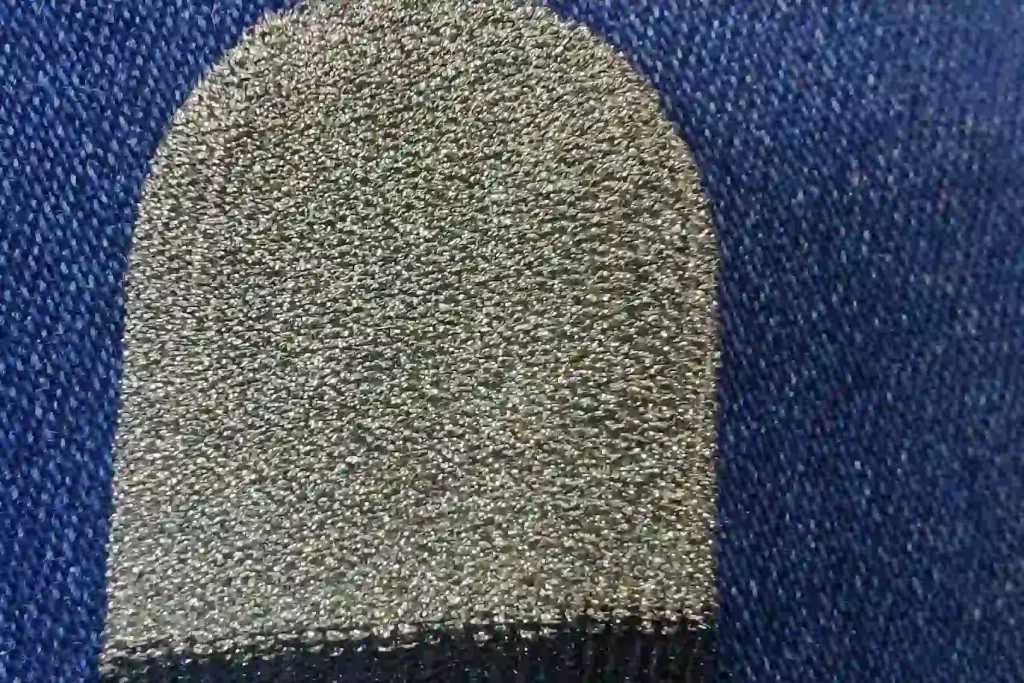
Thickness changes more than most buyers expect.
A thinner sleeve usually feels more direct. Your thumb stays closer to the screen. Small touch areas can feel easier to control. Short swipes may feel sharper. Quick aim correction can feel more natural because there is less material between your skin and the glass.
That is why many competitive players are drawn to thinner designs. They often feel more like an adjusted version of bare-thumb play rather than a padded layer added on top.
But thinner is not always better. Thin sleeves can wear out faster. They may snag more easily. They may also feel less forgiving if your hands get very sweaty over long sessions. Once a very thin sleeve starts losing shape or surface consistency, performance can drop quickly.
A thicker sleeve can feel a little softer and a little less direct. Some players like that because the thumb feels less exposed to small friction changes. Others feel it takes away too much precision. On small on-screen controls, even a small change in thickness can affect how clearly your touch translates.
Here’s what most people miss. Thickness is not only about comfort. It affects touch accuracy, drag feel, heat build-up, and the sense of how much cloth you feel during play.
If you want a more direct and competitive feel, thinner usually makes more sense. If you care more about comfort, softer contact, or a bit more buffer between skin and screen, a thicker design may feel easier to live with.
Which finger sleeve works best for FPS, MOBA, and rhythm games?
The best finger sleeve for one game may feel wrong in another.
For FPS games, players often want faster, steadier aim control. For MOBA, comfort and repeated tap precision matter more. For rhythm games, long-slide stability and heat control become more important.
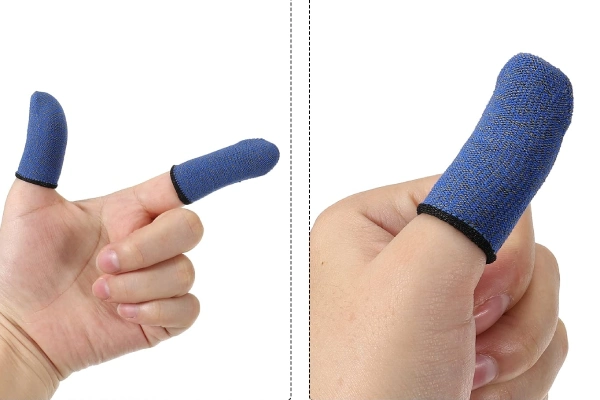
Best for FPS and battle royale
In FPS and battle royale games, the thumb often handles tracking, dragging, recoil correction, or quick view control. That means tiny friction changes can matter a lot. A sleeve that feels light, stable, and clean during repeated motion is usually the better match. Silver fiber often fits that need well because it tends to feel responsive and smooth on the screen.
Some players also like a firmer feel for movement or directional control. That is where carbon fiber may appeal more. It can feel more planted. The result is not always more speed, but sometimes better confidence in where the thumb stops.
Best for MOBA
In MOBA games, the pattern changes. You still drag and swipe, but you also do a lot of taps, directional skill placement, and short controlled motions. That shifts the priority a little. Pure glide matters less than comfort and steady touch. If the sleeve feels too slick, your release points may suffer. If it feels too thick, small controls may feel dull. A balanced, breathable sleeve often works better here.
Best for rhythm games
Rhythm games are different again. Long slides, repeated motion, and heat build-up can become the main problem. In that setting, stable friction matters more than raw speed. A sleeve that starts smooth but changes after a few songs is a poor match. Players in this category often do better with a sleeve that stays predictable as the session goes on.
That difference becomes even clearer when you look at how FPS and MOBA setups do not ask for the same kind of movement control. The same basic idea applies here. A good match depends on what kind of motion your game repeats all the time.
Is the smoothest finger sleeve always the best?
A lot of buyers chase the smoothest option. That can be a mistake.
No. The best gaming finger sleeve usually gives you stable friction, not just the slickest surface. If it feels too slippery, your movement may become harder to stop, place, or control cleanly.
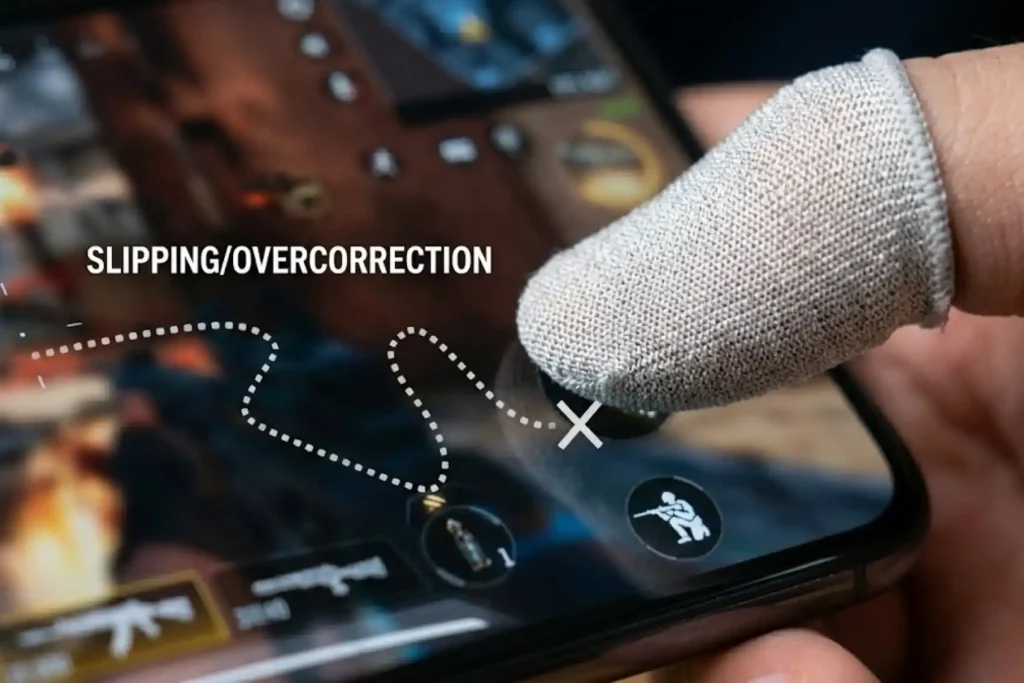
Smooth is not the same as controllable.
A sleeve can feel very fast for the first few swipes and still be the wrong choice for actual play. If the thumb glides too freely, it may become harder to stop at the right point. Overcorrection becomes more likely. Long drags may overshoot. Quick micro-adjustments can feel loose rather than clean.
That is why some players prefer a little more resistance. Not because they want more drag in a bad way. They want better feedback. That extra bit of control can help the thumb feel more connected to the movement path.
This matters even more if your hands sweat. Sweat does not always make the screen simply more slippery. It can make friction less consistent. One swipe feels fine. The next feels sticky. Then the next feels fast again. A good sleeve should reduce that swing.
So the target is not maximum glide. It is predictable glide. That is a big difference.
Material plays a role here. Thickness plays a role too. But construction matters as well. Edge finish, surface texture, and how the sleeve keeps its shape can all affect movement feel over time. In other words, construction details can change glide just as much as the fabric itself.
The bottom line? The best sleeve is not always the one that feels fastest in a five-second test. It is the one that still feels controllable during the kind of motion your game asks you to repeat again and again.
How should you choose the right finger sleeve for your play style?
At this point, the answer is simple: there is no single best finger sleeve for every gamer.
The right choice depends on how you play, how much you sweat, and what kind of touch feel helps you stay consistent. A good sleeve should support your movement style instead of forcing you to adapt to it.
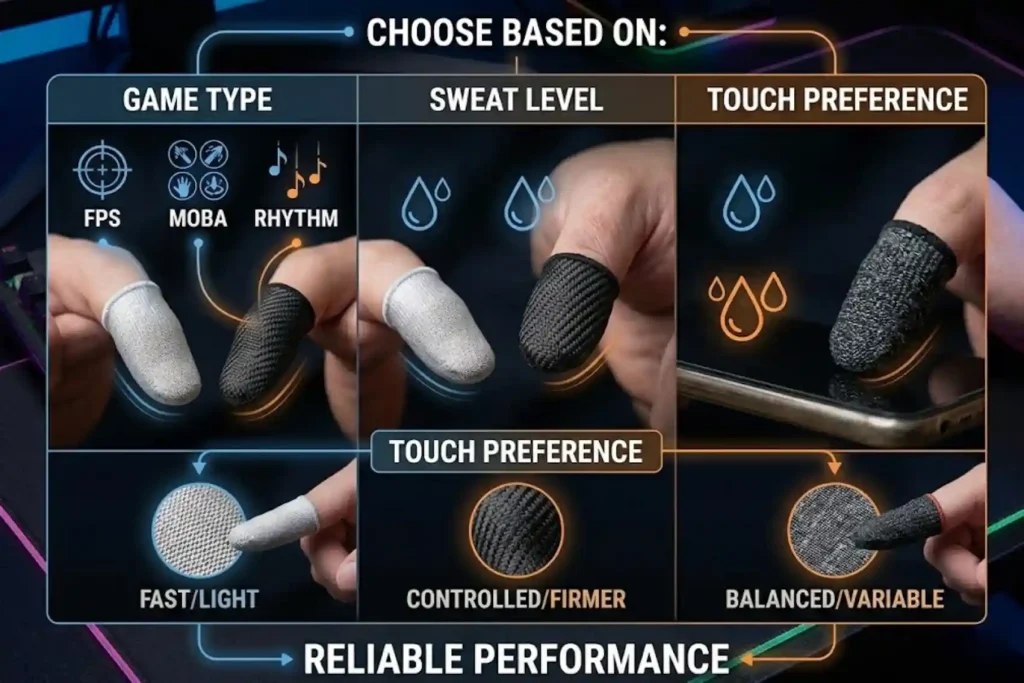
Start with your game type
Start with the kind of movement your game asks you to repeat.
If you mostly play FPS and care about fast drag correction, a thinner and smoother route usually makes more sense. If you mostly play MOBA, balanced touch, comfort, and clean release points matter more. If you spend most of your time in rhythm games, long-slide stability and consistent friction should move higher on your list.
Then choose the feel you trust most
After that, choose the feel that gives you the most confidence.
If your thumb often feels sticky, unstable, or unreliable once it warms up, you probably need better sweat control and more stable conductivity. In that case, a thin conductive sleeve is often the right direction.
If you like faster movement and a lighter touch, silver fiber usually makes more sense. If you want a firmer, more planted feel, carbon fiber may suit you better.
Judge it by consistency, not first impression
A sleeve that feels amazing for three minutes but fades after twenty is not a good answer. Session length changes the decision more than many players realize.
That is why budget should come after consistency. A cheaper sleeve that performs predictably may be more useful than a flashy listing with unclear material claims. What matters most is whether the sleeve still feels steady once sweat, heat, and repeated motion start affecting your thumb.
For brands planning a broader product line, it also helps to look at custom gaming sleeve development for private label projects. If you are building a new accessory line, it is useful to understand how custom support gear usually moves from idea to production.
The best finger sleeve for gaming is the one that matches your game, your fingers, and your control style, not the one with the loudest claim.
FAQ
They can help with touch consistency, sweat control, and smoother movement on the screen. They do not improve skill by themselves.
Silver fiber usually feels smoother and more responsive, while carbon fiber often gives a firmer and more controlled feel. The better choice depends on how you play.
Not always. Thinner sleeves often feel more direct, but they may wear out faster and may not suit every player’s sweat level or comfort preference.
A conductive sleeve with better sweat handling usually works better than generic fabric. Stable friction matters more than maximum smoothness if your thumb changes feel during long matches.
Some sleeves reduce resistance too much for certain players. If stopping control feels worse, the surface may be too slick for your play style.
Some can be gently cleaned, but rough washing may reduce performance and shorten lifespan. Gentle care and full drying usually make more sense than aggressive washing.
It depends on material, session length, sweat, and how often it is stretched or cleaned. Thin sleeves often wear out faster than thicker ones.