Your arm sleeves slide down mid-workout or mid-shift. You keep yanking them back up. It breaks your focus and can leave creases and sore spots.
Arm sleeves slide down because friction drops (sweat, smooth fabric), fit doesn’t match your arm’s taper, or the cuff loses tension over time. The fix is a better size check plus a “secure fit” design—like anti-slip grip strips, a stronger cuff, and a shape that follows your arm.
If you want a quick overview of sleeve types and what to look for across sports and daily wear, the arm sleeves buying guide lays it out in one place.
Why do arm sleeves slide down during sports or workouts?
Fast arm movement and sweat turn a snug sleeve into a sliding sleeve. That means constant adjusting, elbow bunching, and sometimes rubbing that feels worse than the support helps.
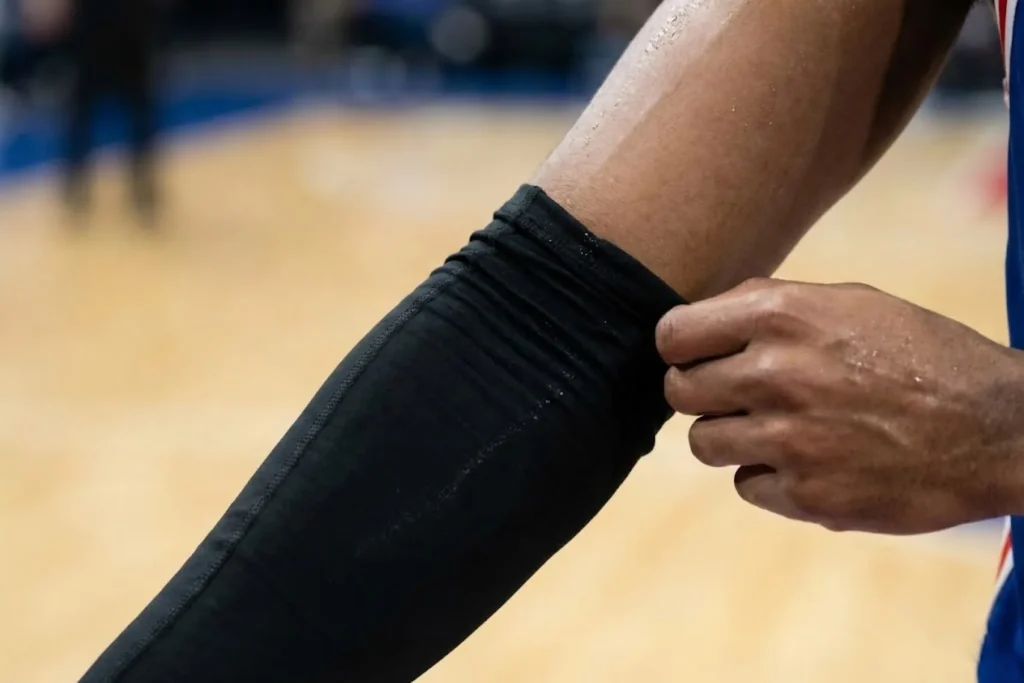
Arm sleeves slide down in sports because sweat lowers friction and repeated arm swings create shear forces that “walk” the sleeve downward. If the top cuff isn’t secure, the sleeve keeps creeping until it stacks near the elbow.
Here’s the deal… most sleeves are made from polyester/nylon blends with spandex. They stretch well, but the surface can be slick against skin. Add sweat, sunscreen, or lotion, and the grip gets weaker. Now your sleeve has two problems at once:
- Lower friction at the skin-fabric contact point
- More motion from running, basketball, tennis, volleyball, lifting, or fast gaming sessions
And motion isn’t gentle. Every swing, push, or throw creates a small “pull down” moment at the upper cuff. Over minutes, those small pulls add up. That’s why people complain the sleeve “never stays tight enough” and ends up creasing at the elbow.
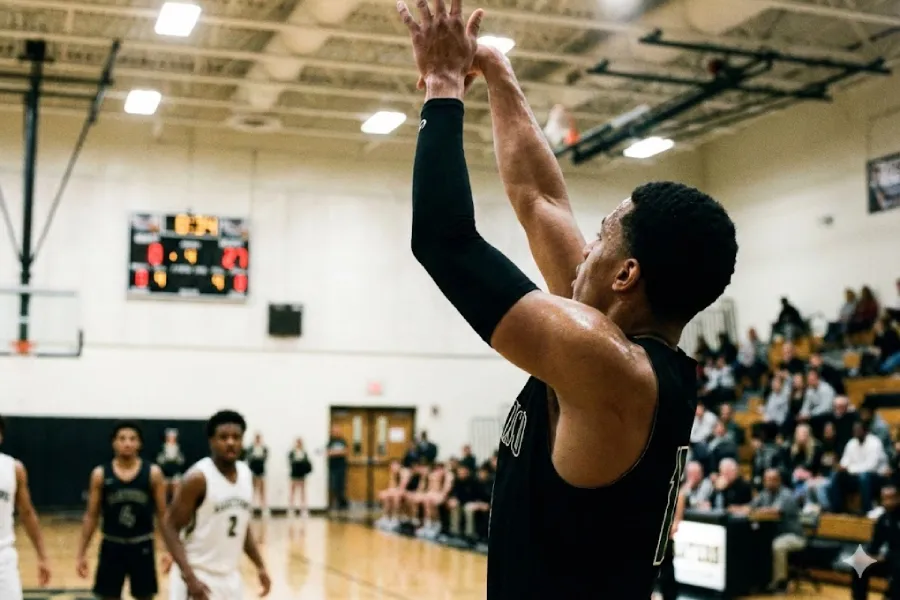
You might be wondering… why does it happen more in certain sports? Because the more you swing and flex, the more the sleeve gets tugged and twisted. Sports with constant arm action (like basketball) make it worse. If you’re curious how sleeves are used in that setting, this breakdown of arm sleeves in basketball explains the typical movement demands.
Also, not every sleeve is built for high-motion use. Some are made for warmth or light compression, not for staying locked in place during sprints, spikes, or heavy sets. That’s why athletes often prioritize secure cuffs and stable knit structures, not just “more compression.” If you want the bigger picture of why sleeves are worn in training at all, why athletes wear arm sleeves covers the main reasons.
Is the sleeve size wrong if my arm sleeve keeps sliding down?
Wrong sizing is the fastest path to sliding. Too loose slides. Too tight can still slide because it shifts and “rolls” as you bend your elbow.
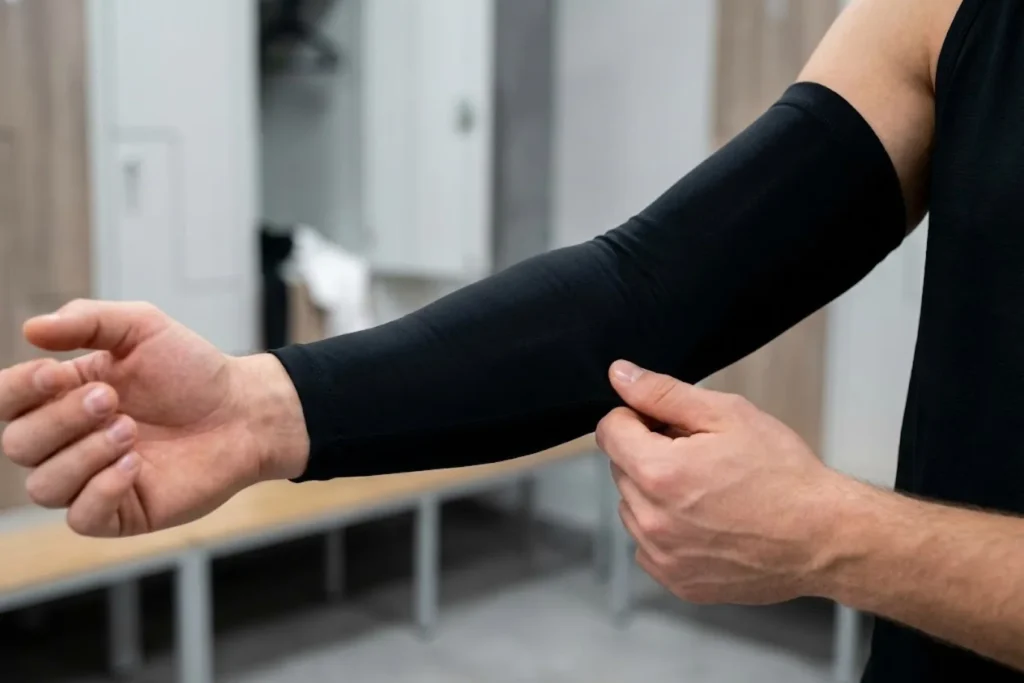
If your arm sleeve keeps sliding down, sizing is usually the main cause. A sleeve should feel snug at the upper arm without pinching, and it should stay in place when you bend and straighten your elbow ten times.
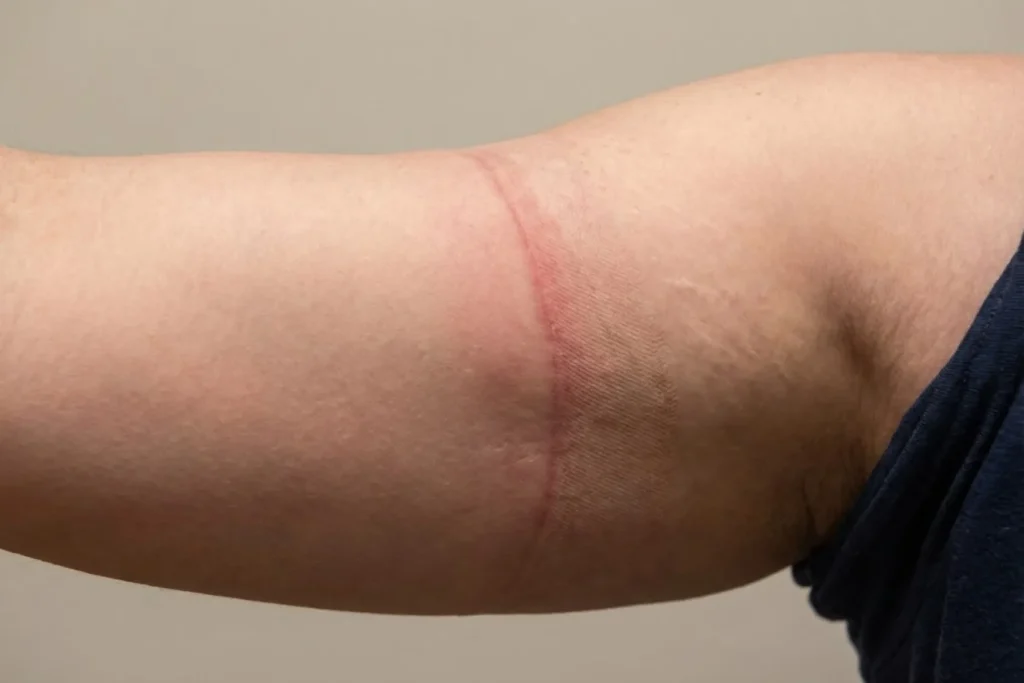
The truth is… arms aren’t cylinders. Your upper arm is wider near the shoulder and narrower closer to the elbow. That taper matters. If a sleeve is sized mainly off the forearm, the upper cuff may be too loose. If it’s sized mainly off the biceps, the forearm may feel tight while the cuff still slips once sweat shows up.
Use these quick checks:
- Two-finger cuff check: You should be able to slide one or two fingers under the top cuff. If you can fit four, it’s likely too loose.
- Elbow bend test: Bend and straighten your elbow 10 times. If fabric bunches into a thick fold at the elbow crease, the sleeve may be too long or the shape may not match your arm.
- Hand/skin check after 10 minutes: If your fingers tingle, feel cold, or look pale, the sleeve is too tight.
Here’s what most people miss… a sleeve can be “tight” and still slide if the pressure is in the wrong place. A tight forearm with a loose cuff will still creep down.
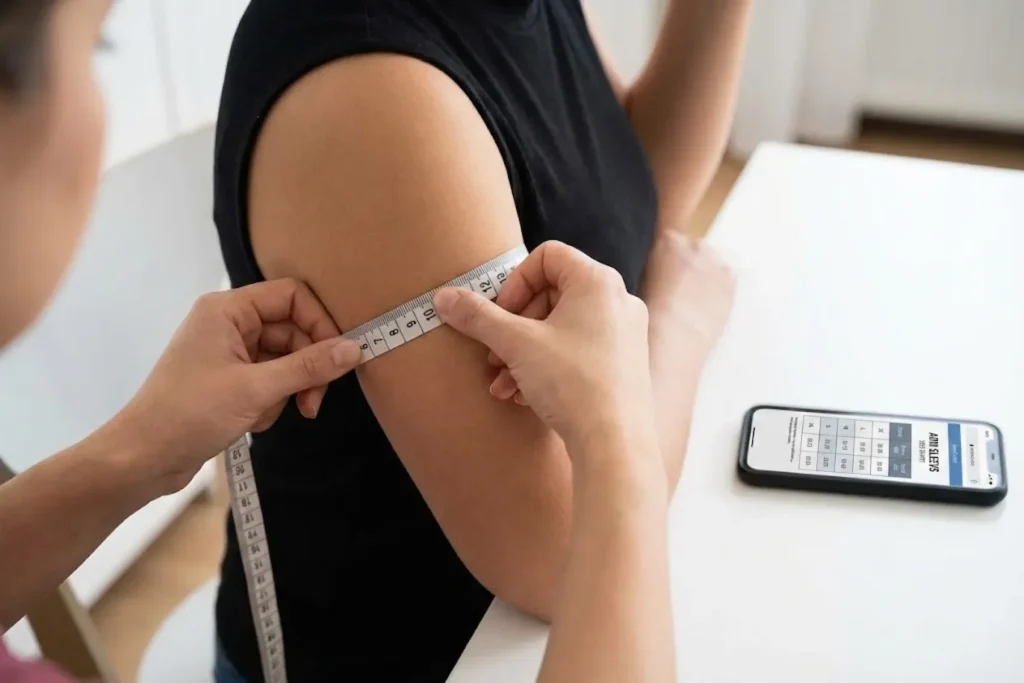
That’s why measuring both your forearm and upper arm matters. This step-by-step guide on how to measure for the right arm sleeve fit makes the sizing decision much easier, especially if you’re between sizes.
If you’re buying for a team, clinic, or retail line, sizing consistency matters even more. A sleeve that fits one person great and another poorly creates returns, bad reviews, and “it slides” complaints. Look for clear size charts tied to real measurement points, not just S/M/L labels.
Does “more compression” stop arm sleeves from sliding down?
It sounds logical: tighter should stay up. But too much compression can backfire, especially at the cuff, because it can roll, dig in, and then migrate downward.
More compression doesn’t always stop arm sleeves from sliding down. Compression helps support tissue, but staying in place depends on secure cuff design, friction, and a shape that matches your arm’s taper—without cutting off comfort.
But here’s the kicker… compression and fixation aren’t the same thing. Compression is about even pressure across an area. Fixation is about preventing movement. Many sleeves deliver pressure, but they don’t “lock” to the skin.
When people try to fix sliding by sizing down, they often trade one problem for another:
- Deep cuff marks that feel sore
- Itching or rubbing at the elbow crease
- Numbness or tingling in the hand
- A cuff that rolls into a thicker band and then slides anyway
So what does this mean for you? Aim for “snug and stable,” not “as tight as possible.”
A better approach is graduated or smart tension—slightly more hold near the top, smoother comfort through the elbow zone, and stable stretch in the forearm. Some sleeves use knit structures that help spread pressure evenly, so you don’t get one harsh line of squeeze at the cuff.
If you’re wearing a sleeve because your elbow area feels irritated, stability matters even more. A sleeve that slides and bunches can create extra rubbing right where you don’t want it. If you’re dealing with soreness, this overview of arm sleeves for elbow pain explains when sleeves can feel helpful and when you may need a different support choice.
And if you’re deciding between options for pain management, sometimes the answer isn’t “tighter sleeve,” it’s “different product.” This comparison of arm sleeve vs elbow brace helps you decide when a brace makes more sense for stability.
What anti-slip features actually work to stop sleeves sliding down?
Some “anti-slip” claims are just marketing. Real anti-slip performance comes from a combination of grip, cuff structure, and fit that stays stable when you sweat.
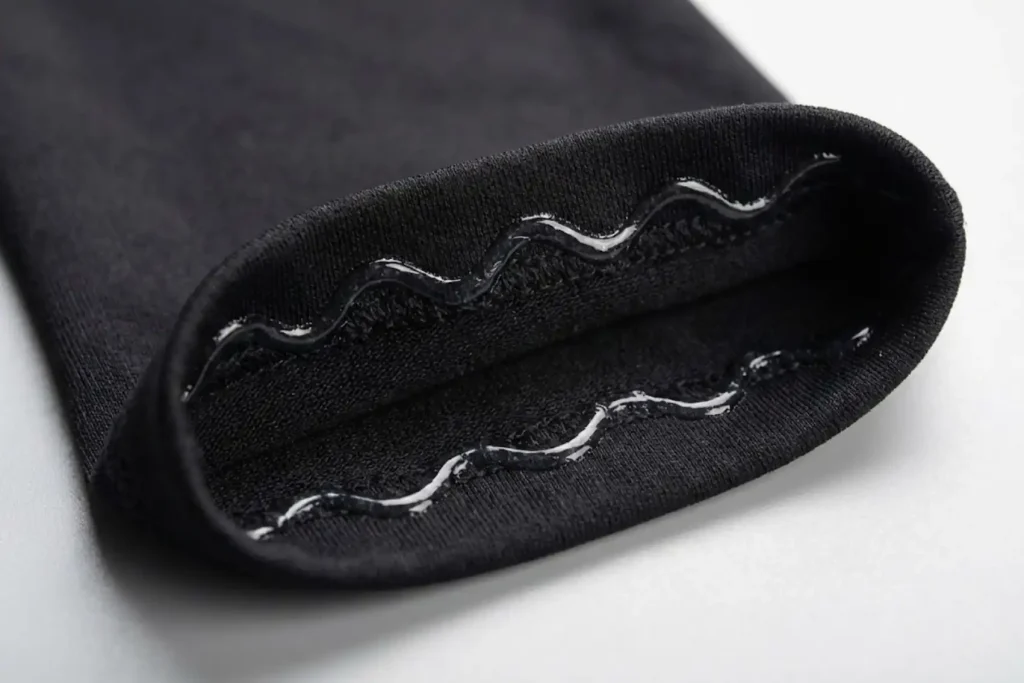
The anti-slip features that work best are grip strips or anti-slip bands inside the top cuff, a stronger double-layer cuff, and a sleeve shape that follows your arm. Continuous grip patterns usually hold better than scattered dots during high-motion sports.
Here’s what most people miss… anti-slip has to work in motion and in sweat. A sleeve can feel fine standing still and fail the moment you start moving.
These are the most common anti-slip approaches and what they do:
| Anti-slip approach | What you feel | Best for | Watch-outs |
|---|---|---|---|
| Silicone dots | Light tack in spots | Light activity | Can leave pressure points; may lose hold when very sweaty |
| Continuous grip strip / anti-slip band | More even “hold” around the cuff | Sports, long sessions | Needs good placement so it doesn’t roll |
| Stronger cuff (double-layer rib) | Firm edge that resists rolling | High-motion wear | Too stiff can feel harsh if sizing is wrong |
| Ergonomic shape (contour / pre-curved) | Less bunching at elbow | Repeated bending | Needs correct sizing to match taper |
The bottom line? A sleeve that stays up usually uses more than one of these. Grip helps, but grip alone won’t save a sleeve that’s the wrong size or the wrong shape.
This is also where product design choices matter. A sleeve that follows the arm’s curve reduces fabric bunching at the elbow. Less bunching means less “push down” force during flexion. Pair that with a stable cuff and an anti-slip band, and sliding becomes much less common.
If you’re sourcing for your brand or buying in bulk for a team, an anti-slip design is one of the best ways to reduce returns. Many “sliding” complaints come from the same few issues: cuff tension, grip pattern, and shape mismatch. If you’re building a line that needs better stay-up performance, custom arm sleeves with anti-slip grips are often the cleanest way to control cuff structure, grip style, and sizing consistency.
And if you want to evaluate manufacturing and quality control steps across sports supports, this OEM/ODM sports support manufacturing guide is a helpful reference for what to check before scaling production.
How can you stop arm sleeves from sliding down right now?
You don’t always need a new sleeve. Small changes in fit, placement, and care can improve grip and reduce sliding today.
To stop arm sleeves from sliding down, start by placing the cuff on a slightly wider part of the upper arm, keep the elbow area smooth (no folds), and avoid lotions under the cuff. If sliding continues, switch to a sleeve with an anti-slip band and a stronger cuff.
Try these practical fixes:
Put the cuff in the right spot
Don’t place the top cuff right on the narrowest area above the elbow. Move it higher onto a slightly wider section of the upper arm. That gives the cuff more “shape to hold.”
Smooth the elbow zone before you start
When the elbow area has folds, bending your arm pushes those folds downward like a wedge. Pull the sleeve up, then smooth the fabric so the elbow area lies flat.
Skip lotions under the cuff
Sunscreen and body lotion reduce friction fast. If you need sunscreen, let it dry fully before putting the sleeve on, and keep it away from the cuff line.
Wash and dry the sleeve the right way
Heat can weaken spandex over time. When elasticity drops, the cuff loses tension and sliding gets worse. Use gentle washing and air dry when possible.
Use the “10-minute test”
Wear the sleeve for 10 minutes while moving normally. If it slides more than a small amount, don’t keep fighting it. That usually means it’s the wrong size or the cuff design is too weak for your use case.
If you’re wearing sleeves for tendon irritation from repetitive gripping (like tennis or golf), stability matters because bunching can rub right at the elbow area. This page on arm sleeves for tennis elbow and golfer’s elbow explains what to look for when comfort and steady fit matter day after day.
What “slide-down” complaints mean for brands and bulk buyers
If you sell arm sleeves, “it slides down” isn’t a small issue. It turns into returns, low star ratings, and repeat customers who never come back.
For wholesale buyers, sleeve slip is usually a product design and consistency problem. The fastest way to reduce refunds is to control cuff tension, grip structure, and sizing tolerance—then verify it with a simple movement and sweat test before mass production.
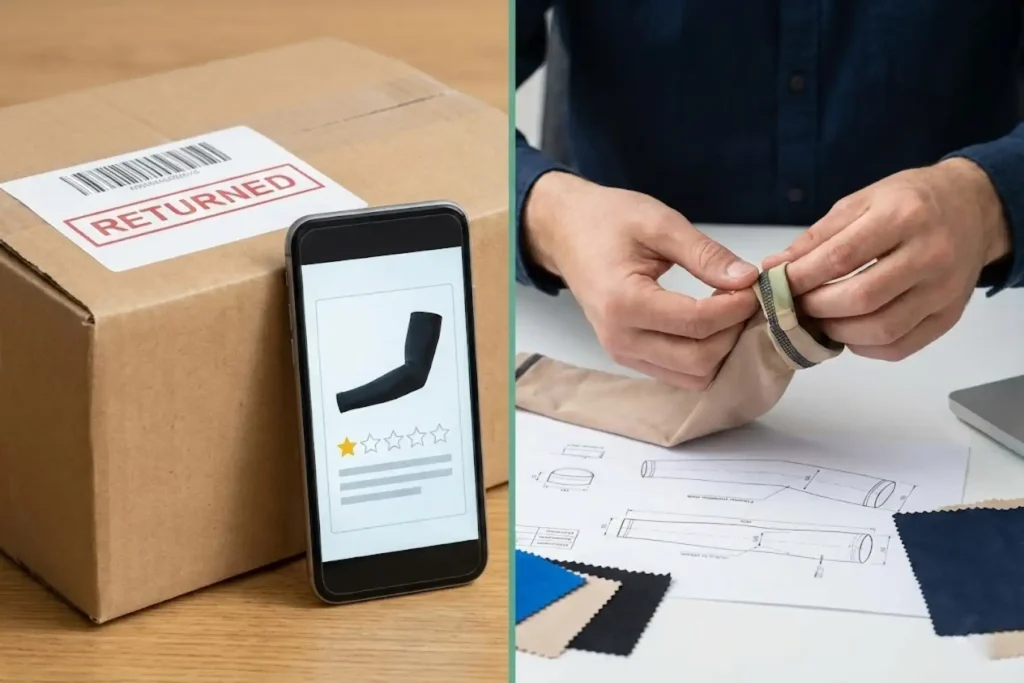
Here’s the deal… most “slip” complaints come from the same few failure points. If you’re sourcing, these are the checkpoints that matter most:
| B2B checkpoint | What to verify | Why it reduces “sliding down” reviews |
|---|---|---|
| Cuff construction | Double-layer cuff or higher-tension top band | Stops rolling and keeps steady hold |
| Grip method | Continuous anti-slip band vs scattered dots | More stable hold during fast arm motion |
| Knit density | Higher needle count, stable stretch recovery | Less bagging after long wear and washes |
| Sizing tolerance | Clear upper-arm + forearm measurement spec | Fewer “too loose” or “slides after 10 minutes” cases |
| Sweat condition test | Quick wet-skin motion test (swing + bend) | Finds slip issues that don’t show up dry |
The bottom line? If you want a sleeve that stays put in real sports use, you need “secure fit” by design—not just tighter compression. That’s why many brands choose custom arm sleeves so they can lock in grip style, cuff structure, and sizing rules instead of guessing. If you’re also evaluating suppliers for broader categories, this OEM/ODM sports support manufacturing guide gives a simple framework for what to check before scaling.
Conclusion

Arm sleeves sliding down is a common issue, but it’s not impossible to solve. By choosing sleeves with anti-slip features, the right fit, and high-quality materials, you can eliminate the need for constant adjustments and enjoy your activity without distractions.
For more tips on choosing the right arm sleeve and finding the perfect fit, be sure to check out our comprehensive arm sleeves buying guide.
FAQs of Arm Sleeve Slide Down Issues
Why do arm sleeves slide down even when they feel tight?
A sleeve can feel tight in the forearm but still slip if the top cuff isn’t secure or your arm tapers a lot. Sweat also lowers friction, so small shifts add up until the sleeve stacks at the elbow.
How do I stop my arm sleeve from rolling down when I spike or swing?
Rolling usually means the cuff is fighting your movement and folding over itself. Try a sleeve with a stronger cuff and an anti-slip band, and make sure the elbow area is smooth before play. If it still rolls, sizing is likely off.
Is my arm sleeve sliding because it’s the wrong size?
Most of the time, yes. If it’s too big, it won’t keep steady pressure and will creep down. If it’s too small, it can roll, pinch, and still migrate. Always follow the brand’s chart because sizing varies.
Do silicone grip strips actually work, or is it marketing?
They can work, especially when the grip is a continuous band that creates even hold around the cuff. But grip strips can’t “save” a bad fit. If the sleeve is too loose, it will still slide once you sweat and start moving.
Why do my arm sleeves slide down more when I sweat?
Sweat creates a thin film that reduces friction between fabric and skin, so the sleeve loses its “lock.” That’s why many users report sliding plus elbow creases in hot or high-intensity sessions. A secure cuff and better moisture control help.
Should I size down if I’m between two sizes?
Often yes, but only if you don’t get numbness, tingling, or cold fingers. Sliding usually points to a sleeve that’s too big, and some brands even suggest sizing down when you’re between sizes. Do a 10-minute movement test to confirm.
How long do arm sleeves last before they start slipping?
Heavy use, frequent stretching, and hot drying can reduce elastic rebound over time, so the cuff loses hold and sliding becomes more common. If you notice the sleeve feels “looser” after washing or months of use, it may be worn out.
What quick fixes can I try before buying a new sleeve?
Start by moving the cuff higher onto a wider part of your upper arm, smoothing the elbow area to avoid folds, and letting sunscreen or lotion fully dry before wearing. Also, wash gently and air dry to protect elasticity. If it still slides, switch designs.