Arm sleeves are functional compression or fabric garments widely adopted in professional sports and outdoor activities. If you are asking what do arm sleeves do, the quick answer is that they provide targeted benefits for performance and protection. They are primarily worn for temperature regulation, sun and abrasion resistance, muscle stabilization, and injury management. This Ultimate Guide is your definitive resource designed to answer what are arm sleeves for—explaining their types, the underlying science, and the specific reasons why athletes, fitness enthusiasts, and individuals wear them.
What Are Arm Sleeves? Basic Definition and Common Types
Arm sleeves, often simply called sleeves or arm warmers, are close-fitting garments worn over the forearm and bicep, typically extending from the wrist to the shoulder. They are usually made from synthetic blends like polyester, spandex, and nylon for stretch, moisture-wicking, and breathability, giving the arm functional coverage without the bulk of a long-sleeved shirt or jacket.
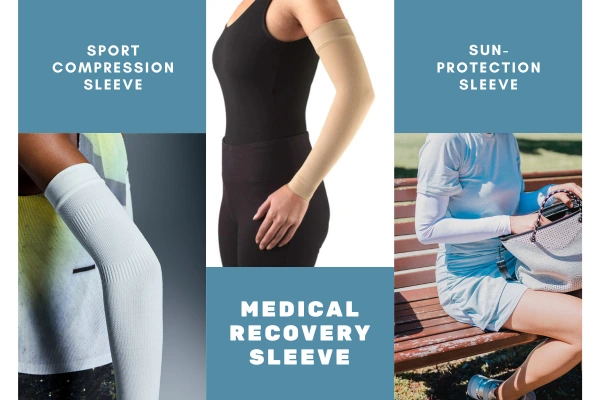
The fundamental answer to what are arm sleeves used for often depends on their type and material composition. They generally fall into three broad categories:
- Athletic & Compression Sleeves: Designed with performance fabrics and sometimes graduated compression technology (tighter at the wrist, looser toward the bicep) to aid blood circulation and muscle stabilization during or after physical activity.
- Sun Protection Sleeves: Made from fabrics with a high UPF (Ultraviolet Protection Factor) rating, specifically designed to block harmful UV rays during outdoor activities like cycling, hiking, or fishing.
- Medical & Recovery Sleeves: Used primarily for managing conditions like lymphedema, promoting blood flow post-surgery, or providing light support to the elbow joint.
While arm sleeves share a similar basic structure, their specific applications vary widely. For instance, competitive sports like running and basketball require highly specialized usage of arm sleeves. For a deep dive into those specific functions, see our dedicated guides on the topic.
What Do Arm Sleeves Do? A High-Level Overview of Their Core Benifits
Different people phrase the same question in different ways—“what are arm sleeves for?”, “what do arm sleeves do?”.
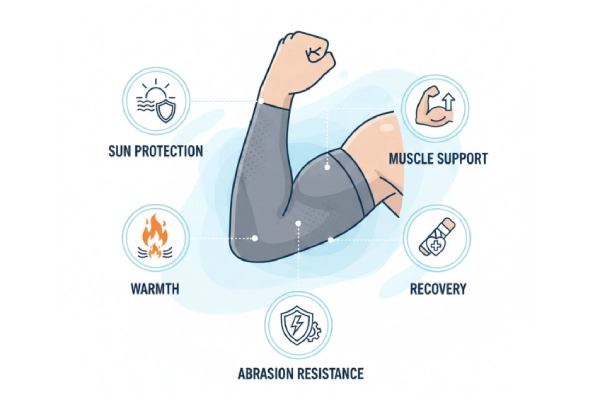
Temperature Management: Warmth, Wind Resistance, and Sun Protection
One of the most common reasons to wear arm sleeves is temperature control. In cold or windy conditions, insulating fabrics – sometimes enhanced with far-infrared (FIR) ceramics or integrated magnetic elements – help keep the arm muscles warm and comfortable without the bulk of a full long-sleeve top.
In hot weather, performance sleeves use the opposite strategy: lightweight, breathable knits, Coolmax-type cooling yarns, and even menthol-infused finishes that create an instant, refreshing cool touch as sweat evaporates.
This matters not only for athletes training or competing for long hours, but also for people enjoying recreational activities in the sun.
For detailed strategies, refer to our Running Arm Sleeve Guide. And for brands or buyers, all of these real-world requirements—warmth, cooling, and UV protection—can be built into custom products through our full-service OEM/ODM arm sleeve solutions, so you can specify fabrics, technologies, and performance levels tailored to your market.
Skin and Soft Tissue Protection
The sleeve acts as a second skin, providing crucial abrasion resistance. This is especially true for contact and floor sports.
What is the point of arm sleeves in sports involving close contact or frequent diving?
- Impact Protection: They minimize scrapes, scratches, and mat burns that commonly occur in wrestling, volleyball, and basketball.
- Managing Abrasions: They can keep mild wounds or cuts covered and clean during activity.
In sports like basketball, volleyball, and baseball, the specific protective function can vary significantly.
See how protection factors into performance by checking out our specialized guides on Basketball Arm Sleeves, Volleyball Arm Sleeves, and Baseball Arm Sleeves.
Functional Support, Recovery Aid, and Psychological Edge
Beyond basic protection, the overall benefit of what does arm sleeves do extends to subtle physiological and psychological areas, providing a competitive edge.
- Proprioception and Stability: The “wraparound feel” or light pressure provides proprioceptive feedback, increasing the wearer’s awareness of the limb’s position, which many athletes find helpful for consistency and focus. Furthermore, sleeves (especially compression types) are engineered to stabilize muscle tissue, potentially reducing damaging muscle vibration during prolonged exercise.
- Recovery Potential: By assisting with muscle stabilization, they are theorized to minimize fatigue and aid in post-exercise recovery by promoting efficient circulation.
- Ritual and Focus: For many athletes, wearing a sleeve becomes a pre-game ritual, a visual marker of focus, or a psychological booster. This answers why do people wear arm sleeves even when conditions don’t strictly require physical coverage.
Compression Arm Sleeves vs Regular Sleeves: Principles, Effects, and Use Cases
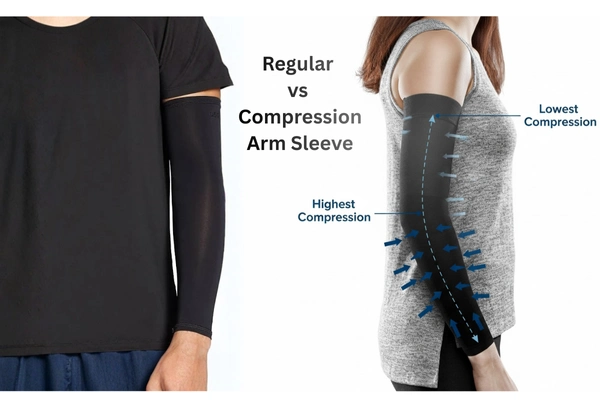
Understanding the difference between compression arm sleeves vs regular sleeves is essential, as the mechanism and intended use are vastly different.
What Are Compression Arm Sleeves?
Compression sleeves are engineered to apply a specific amount of pressure, often measured in mmHg (millimeters of mercury). This pressure typically starts tighter at the wrist and gradually decreases as it moves up the arm. This gradient pressure is key to maximizing effectiveness, ensuring optimal fit and targeted pressure application.
Precise pressure application and muscle stabilization define the purpose of arm compression sleeves.
What Do Compression Arm Sleeves Do?
The claimed effects of compression sleeves include:
- Improved Circulation: Aiding blood flow, which may expedite the removal of waste products and delivery of oxygen/nutrients to tired muscles.
- Swelling Reduction: Assisting in the management of edema or swelling (common in medical/post-operative settings).
- Muscle Stabilization: Dampening muscle oscillation and vibration during impact, which can contribute to reduced fatigue.
When to Choose Compression vs. Regular
| Sleeve Type | Primary Function | Typical Scenario |
| Compression | Circulatory support, recovery, stability, edema control | Post-workout recovery, long-duration activity, medical/surgical use |
| Regular | Sun protection, abrasion resistance, warmth, psychological comfort | Everyday wear, light exercise, sports with frequent ground contact |
Risks and Considerations
While compression sleeves are generally safe, wearing an incorrect size or wearing them for excessively long periods (especially medically graded sleeves) can potentially impede circulation or cause discomfort.
For anyone considering compression sleeves for medical reasons, particularly post-lipo or injury, it is paramount to follow professional guidance. See our detailed notes on Compression Sleeve Risks and Usage Duration.
Athlete Usage: The Rationale Behind Single vs. Double Arm Sleeves

Why do athletes wear arm sleeves so frequently in high-level competition? Professional athletes use this gear because practical needs, performance goals, and competitive demands all push them toward it. While all users benefit from the core functions outlined in Section 2 (such as temperature control and abrasion resistance), athletes have specific reasons for adopting them.
Shared Needs and Performance Optimization
Athletes in nearly all sports, from long-distance runners to baseball pitchers, utilize sleeves because the gear allows them to harness multiple functions—protection, support, and temperature regulation—without the constraint of a long-sleeved shirt. This versatility is essential for maintaining peak performance across various conditions and maximizing the benefits discussed earlier.
Single vs Double Sleeves: Habits, Injuries, and Technique
The distinct question of wearing sleeves on one arm usually points to a strategic or physical reason related to the player’s primary movement or injury history.
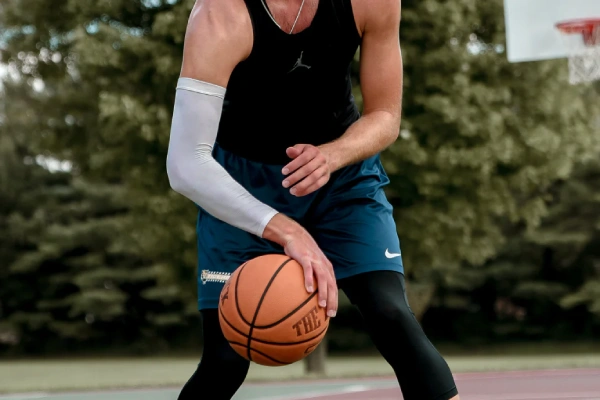
- Shooting/Throwing Arm: In sports like basketball or baseball, players might wear a sleeve on their non-dominant or non-throwing arm for consistent warmth, light support, or a consistent tactile feel without restricting the dominant arm’s movement. Alternatively, a shooter might wear it on the dominant arm for a consistent release point sensation.
- Injury History: A player may wear a sleeve only on the arm that has a history of tendonitis, elbow pain, or a previous abrasion, using the sleeve as a reminder and light compressional support.
Appearance, Branding, and Team Uniformity
Beyond function, modern sports culture plays a role. Sleeves have become a fashion statement, a part of a personal “look,” or even a mandatory element aligning with a team’s aesthetic or a sponsorship agreement.
Who Should Use Arm Sleeve? Recommendations by User Type
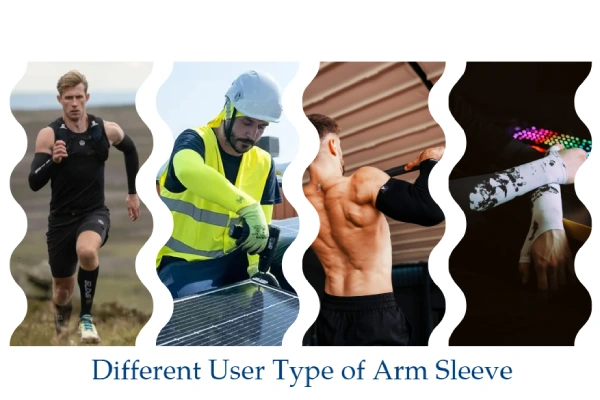
| User Type | User Characteristics & Scenarios | Best Fit for Brand Positioning |
|---|---|---|
| Everyday Fitness Users | Light training routines such as gym workouts, yoga, and basic outdoor exercise. They look for comfort, light protection, and clean aesthetics, often using arm sleeves for sun coverage or equipment friction reduction. |
Lifestyle sports brands Gym accessory retailers E-commerce basic performance series |
| Runners & Ball Sport Athletes | High-intensity training involving repetitive arm movement. They require support, durability, and temperature control. For this group, arm sleeves function as essential performance gear. |
Running brands Basketball & volleyball brands Professional sports equipment retailers |
| Gamers & Esports Players | Long mouse usage sessions requiring smooth gliding, sweat control, and consistent arm movement. Arm sleeves also support branding for teams and streamers. |
Esports merch brands Team merchandise lines Livestream influencer product lines |
| Users Needing Light Support or Skin Protection | Individuals who prefer soft, non-compressive sleeves for mild discomfort or sensitive skin. Comfort and gentle coverage are the primary considerations. |
Wellness product brands Drugstore distribution Everyday health product retailers |
Detailed benefits and use cases are covered in the dedicated article on why gamers wear arm sleeves.
How to Start Using Arm Sleeves: Basic Selection Tips and Next Steps
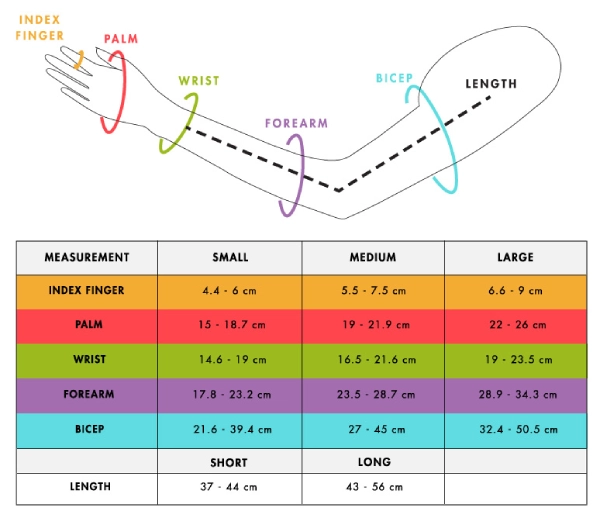
Ready to try arm sleeve? If you’re brand-new and want a simple starting path, three steps are enough at this stage. The detailed “how”—how to choose, how to measure, how tight they should be, how long to wear them—is handled in separate, more practical articles.
Step 1: Define Your Primary Use Scenario (The Why) Are you primarily seeking sun protection for cycling, support for post-workout recovery, or abrasion resistance for basketball? Your “why” determines the sleeve type.
Step 2: Decide on Compression Level (The Type) Once you know the scenario, decide if you need the functional pressure of a compression sleeve or the simpler coverage of a regular sleeve.
Step 3: Get the Right Fit (The How) The sleeve must fit properly—not too tight to restrict circulation, and not too loose to slide down.
Do not guess your size. Learn the proper method in our practical guide: How to Measure for Arm Sleeves. Once you receive it, learn How to Wear Arm Sleeves correctly.
FAQ: Common Questions About Arm Sleeves
What are the main benefits of wearing arm sleeves?
Arm sleeves offer several key benefits: they regulate temperature, protect skin from sun and abrasion, add light muscle support, and can improve perceived comfort and recovery. For athletes, they also help keep muscles warm between efforts and provide a consistent feel during repetitive motions, which can boost confidence and reduce distraction across different sports.
How do compression arm sleeves work?
Compression arm sleeves work by applying gentle, even pressure around the arm. This pressure helps improve venous return, reduce muscle vibration and micro-movement, and may limit swelling after hard efforts. Better circulation and reduced “bounce” can make the arm feel more stable and less fatigued during and after training or competition.
Are arm sleeves effective for slimming arms?
Arm sleeves can make arms look slightly slimmer while you wear them because the fabric compresses soft tissue, but they do not burn fat or permanently change arm size. Long-term slimming still depends on overall calorie balance, strength training, and body-composition changes, not on any specific garment, including compression sleeves.
Do arm sleeves help with elbow or joint pain?
While arm sleeves do not replace medical treatment or proper bracing, they can offer light support and psychological comfort for mild joint pain or tendonitis. The gentle compression may increase blood flow and awareness of the limb’s position (proprioception). Always consult a professional for chronic conditions, but sleeves can be a helpful, non-restrictive aid during physical activity.
Are arm sleeves cooling or warming?
Arm sleeves are both, depending on the material. Sleeves made of thermal fabrics provide insulation and warmth in cold conditions. Conversely, high-tech performance fabrics wick sweat away, and the subsequent evaporation creates a significant cooling effect in hot weather. This highly versatile gear regulates skin temperature across diverse environments.