
ZZSUPPORT is a sports support factory that focuses on OEM/ODM orders. We produce knee, ankle, elbow, arm and calf sleeves, waist and back supports, neck braces and related products under our clients’ own brands.
You can work with us in two ways: based on your existing design/target sample you send, or based on a product idea within this range. Our team adjusts materials, structures, support level, logo and packaging to meet your target function and budget.
This guide explains these options step by step, so you can see clearly what can be customized to help you engineer a superior product.
Material Basics: Knitted vs. Stitched Supports
Most sports supports are built in two ways: knitted sleeves and stitched braces.
| Aspect | Knitted support (sleeve) | Stitched support (brace) |
|---|---|---|
| Structure | Tube knitted directly from yarn | Panels cut from fabric/foam and sewn together |
| Material form | Yarn → knitted fabric in one step | Fabric/foam sheets → cutting → sewing |
| Thickness & feel | Thin–medium, soft, elastic, easy to wear under clothing | Thicker, more structured, clear front/back and left/right |
| Adjustability | Fixed size, usually no straps | Straps, Velcro and extra parts allow adjustable tightness |
| Support level | Light–medium, even compression | Medium–high, easier to add stays, hinges and localized reinforcement |
| Typical use | Daily sports, light support, compression series | Rehab, heavy-duty use, products needing stronger fixation or shaping |
| Cost tendency | Fewer steps, usually lower unit cost for simple designs | More cutting/sewing, normally higher unit cost; final price depends on complexity |
Knitted Supports – Sleeve-Style Compression

A knitted support is made directly from yarn on a circular knitting machine and looks like a tube sleeve. For this type, we mainly use four yarn types: polyester (economical), nylon (balanced performance), bamboo/bamboo charcoal (premium comfort), and polypropylene (lightweight, quick-dry). Patterns and compression zones are created by changing the knit structure.
Rankings below are general tendencies for typical sports-support yarns. But exact values depend on yarn spec and finishing.
- Cost: Polyester ≈ Polypropylene < Nylon < Bamboo / Bamboo Charcoal
- Softness/hand feel (from basic to softer): Polypropylene < Polyester < Nylon < Bamboo / Bamboo Charcoal
- Stretch & shape retention: Polyester < Polypropylene < Bamboo / Bamboo Charcoal < Nylon
- Abrasion resistance/surface durability: Polypropylene < Bamboo / Bamboo Charcoal < Polyester < Nylon
- Moisture absorption: Polypropylene < Polyester < Nylon < Bamboo / Bamboo Charcoal
- Drying speed: Bamboo / Bamboo Charcoal < Nylon < Polyester < Polypropylene
- Odor-control / “freshness” potential: Polyester < Polypropylene < Nylon < Bamboo / Bamboo Charcoal
You can see these different yarn options and knit structures in practice in our custom compression knee sleeve range.
Stitched Supports – Panel-Style Braces

A stitched support is made from flat material sheets that are cut into panels and then sewn into shape.
Key characteristics
Thickness and feel:
Thicker and more structured than a knitted sleeve, with a defined front/back and left/right.
Adjustability:
Usually includes straps, Velcro, and other parts so the user can adjust the tightness in different areas.
Typical use:
Rehab braces, post-injury supports, and products that need stronger shaping or a limited range of motion.
Cost tendency:
The final cost depends on panel count and design complexity. More cutting and sewing steps, plus extra components, so the unit cost is generally higher than a simple knitted sleeve of a similar size.
Common materials in stitched supports
SBR/SCR Neoprene
Dense synthetic rubber that provides firm support, basic impact cushioning and heat retention around the joint. Widely used as the main body material for structured knee, elbow and back braces.
If you want to see how this material is used in real products—such as closed-patella, open-patella and side-stabilised designs—you can explore our custom models here: Custom neoprene knee sleeves
Also if you are comparing 3 mm, 5 mm and 7 mm options and are not sure which thickness fits your users, you can also refer to our detailed thickness guide: What mm knee sleeve should I get?
Stretch Fabric (Nylon/Polyester/Spandex Blends)
4-way stretch fabric is used as the outer or inner layer, or as the main body in lighter designs. It follows body movement, improves comfort and appearance, and protects the foam or neoprene core.
Mesh Fabric
Lightweight, open-weave fabric used in selected zones such as the back of the knee, elbow crease or large surface areas. It increases airflow and moisture release to make thicker braces more comfortable for longer wear.
Functional Add-on Materials Options

On top of standard yarns and fabrics, we can add the following functional materials when needed. Brands usually use them to create higher-spec versions of existing patterns.
Far Infrared (FIR) Yarn and Fabric

FIR fabrics contain ceramic or mineral particles and are usually placed on the inner or middle layer of the support. They are often chosen for products aimed at users with long-term knee or back discomfort or for athletes who want a warmer, more “recovery-focused” sleeve after training.
Typical applications include FIR knitted knee sleeves for daily wear, FIR calf sleeves for endurance running and cycling, and FIR lumbar belts for people who stand or sit for many hours at work. For brands that need data support, FIR emission and related tests can be arranged through third-party laboratories, and wearer or skin-temperature tests are possible on request.
Magnetic Fibers – FIR-Based Option

Magnetic fiber is an upgrade based on FIR yarns. On the same functional yarn base, we add fine magnetic particles into the fiber, so the fabric has both far infrared and magnetic properties, but still feels like a normal, soft textile.
This combined fabric can be used in knee sleeves, lumbar belts, and other supports that stay close to the body. Magnetic performance can be checked by measuring Gauss Values on the fabric and by wash-durability tests to see how stable the effect is after repeated laundering. There’s also an interesting way to verify this magnetism. Check out our magical test: one of our innovative magnetic elbow braces can even light up a light bulb.
The main differences between FIR-only and FIR + magnetic are:
- Cost
Magnetic fibers are more expensive than FIR-only fibers. It raises the finished brace cost, so brands usually use it on higher-priced SKUs rather than entry models. - Target users
FIR-only fabrics are suitable for users who mainly need warmth and basic recovery support in daily life.
FIR + magnetic fabrics are used for users who expect a stronger “therapy-style” effect and already pay attention to magnetic functions in their products.
Antibacterial and Odor-Control (Silver / Copper)

Address the No.1 user complaint—smell. This can be reduced by using yarns that contain silver or copper ions, or by applying an antibacterial finish to the fabric.
We use these materials in copper-infused knee sleeves, compression gloves, and ankle sleeves that are worn for long periods in sports and work environments, especially in warm or humid conditions.
As our copper-infused protective gear, the fabric was tested according to the AATCC 100 standard. The report confirms that the copper fabric achieved 99.999% bacterial reduction within 24 hours against Staphylococcus aureus and Klebsiella pneumoniae. Also, the copper content tested by Intertek is up to 4000ppm. For brands that need similar support, we can arrange the same or equivalent testing for new developments.
Cooling Yarns and Fabrics

Cooling fabrics utilize special cross-sections or mineral-infused yarns and moisture-transfer constructions to enhance heat dissipation and provide a “cool touch” sensation. They are suitable for products used in hot climates or high-sweat situations.
Typical uses include lightweight cooling arm sleeves for running and cycling, thin cooling knee and calf sleeves for indoor court sports and gym training, and back supports with cooling panels for warehouse and delivery workers.
Menthol Finish

Menthol finishes apply microcapsules to the inner fabric surface. When the support is put on and moves against the skin, friction releases a brief cooling sensation. The effect is strongest during the first wear and gradually decreases with washing.
This technology is mainly used on products designed for short-term relief after activity, such as menthol ankle sleeves or knee sleeves included in first-aid or recovery kits.
Performance Components: Support, Protection & Fixation

High performance is not accidental; it’s engineered. By mastering these three component categories, you ensure your product delivers on its promise, reducing returns and commanding a higher price point.
Joint support – what holds the joint
- Spiral stays
Flexible flat springs that bend with the knee but stop it from “collapsing” sideways. Good for sports sleeves where you want extra support without making the product feel heavy. - Metal hinges
The firmest option. Hinges give clear side-to-side control and are used when you want a true brace, not just a sleeve. Best for post-injury, post-op or heavy-duty models. - High-toughness resin stays (steel-plastic stays)
Sits between spiral and full metal. Lighter than hinges, stiffer than basic plastic. Good when you want more structure than a simple sleeve, but still need comfort and lower weight.
Protection – what guards the front and sides
- Patella gel ring
A soft gel ring around the kneecap to spread pressure and keep the patella sitting in the right “window”. Common on open-patella knee sleeves. - Impact pads (hex/honeycomb/EVA)
Foam pads are placed where hits are frequent: front of the knee, thigh, or forearm. Used for basketball/volleyball knees, football arm sleeves and similar contact-sport products. If you’re considering padded styles, you can see the example of our Custom Compression Padded Knee Sleeve here.
Secure Fixation: Reducing Returns and Bad Reviews
Silicone anti-slip

The standard option deploys wavy lines or dotted patterns on the top/bottom edge to maximize grip and anchor the brace securely during intense movement.
Self-Adhesive Straps

Adjustable straps using hook-and-loop closures so users can set the tightness and fixation position according to their leg or arm shape.
⚠️ But with self-adhesive straps, many products place the hook side directly on the main body fabric. When end users repeatedly fasten it to knitted or brushed surfaces, they cause pilling and pulling, and the brace quickly appears worn, even though the structure remains sound. This is a frequent reason for complaints and low product ratings.
To reduce this, we usually:
- Reserve specific loops or landing zones for the hook side of the strap.
- Use loop fabrics or hook-compatible patches in these zones instead of exposing the main body fabric.
- Select outer fabrics with improved resistance to pilling in areas of unavoidable contact.
With this layout, the strap still gives enough adjustment, but the high-wear points are controlled, which helps the brace keep a cleaner appearance over its service life. If you want to see how this design looks in a finished product can check this custom knee sleeve with adjustable straps product example.
Logo & Branding Options for Sports Supports
Most logo options add roughly FREE to $0.08 per piece, depending on the method, logo size and number of positions. For styles that need a separate mold, the usual mold fee is about $30 per design.
Screen Printing
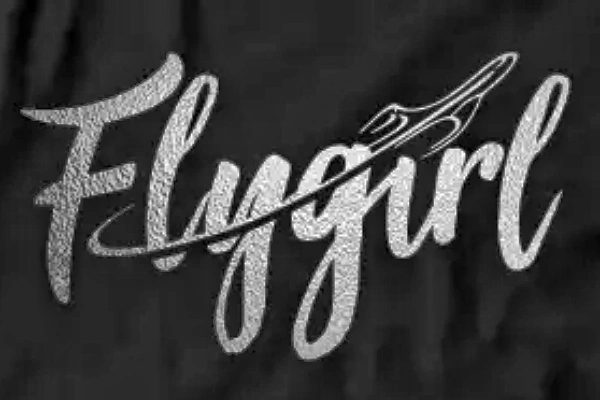
Thin ink layer printed directly onto the fabric surface, very flat, almost no thickness, so that users barely feel the logo. Suitable for simple logos and solid colors.
Pros:
- Lowest setup and unit cost among logo options.
- Works well on flat areas of sleeves, braces and straps.
- Easy to change colors or minor artwork without changing tooling.
Cons:
- Durability depends on ink and washing conditions; heavy friction can cause fading.
- Not ideal for very stretchy zones or highly textured fabrics.
Embroidery
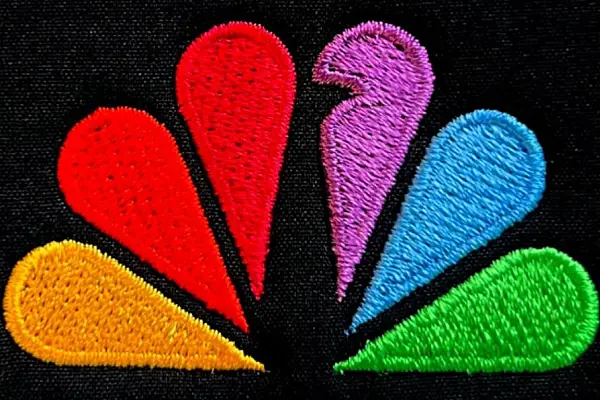
Logo formed by colored stitching directly into or onto the fabric, with raised threads and a clear texture under the fingers. It has a higher unit cost than printing but offers long-lasting performance on suitable fabrics.
Pros:
- Good durability when used on thicker knits and straps.
- Gives a more “crafted” and substantial feel than flat printing.
- No risk of ink cracking.
Cons:
- Adds weight and thickness; not suitable for very thin sleeves.
- Fine details and very small text are harder to reproduce.
- Needle holes can be an issue on some waterproof or membrane fabrics.
Heat Transfer
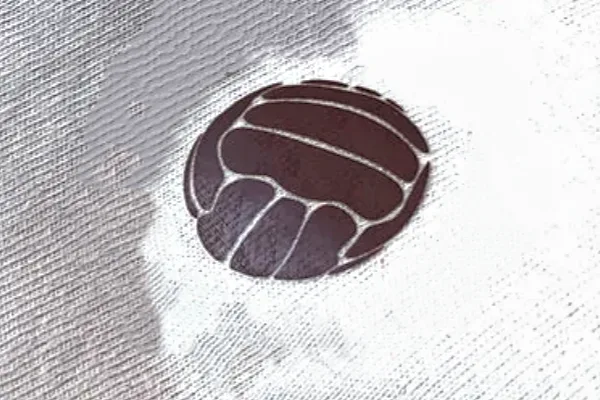
Logos made from transfer film or ink, applied with heat and pressure. Smooth, slightly more presence than basic screen print, still flexible. More expensive than simple screen print but supports more complex artwork.
Pros:
- Handles small text, gradients and multi-color designs well.
- Good choice when artwork needs sharp edges and full color.
- Thin enough for most sleeves without feeling bulky.
Cons:
- Quality varies with film type; low-grade films can crack or peel over time.
- Works best on relatively flat areas; not ideal on very rough or heavily ribbed surfaces.
Silicone Patches / TPU Labels
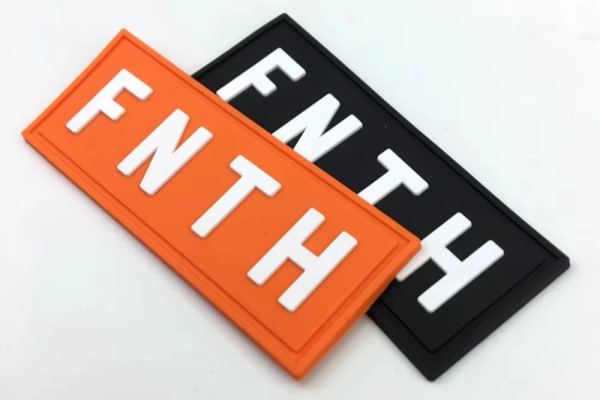
Separate raised labels (silicone or TPU) that are stitched or heat-pressed onto the product. Firm, rubber-like block with clear height; easy to feel through the fingers. Higher unit cost but reusable across many SKUs.
Pros:
- Strong presence on the product; easy for users to locate.
- Very good stretch and crack resistance compared with flat prints.
- One patch design can be used across different products and categories.
Cons:
- Additional production step (sewing or pressing).
- Adds localized thickness; less suitable for very lightweight sleeves.
- Not ideal for very small logos due to the minimum patch size.
Jacquard Knitting
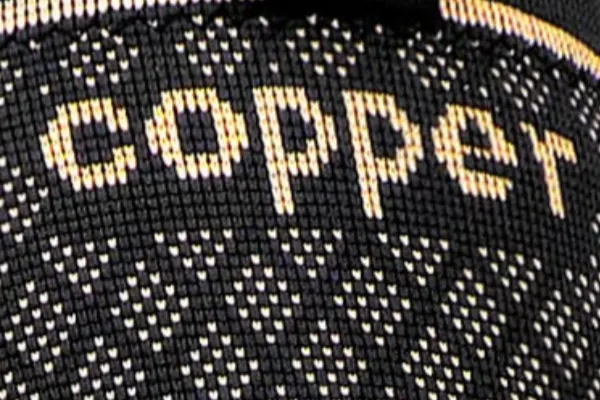
We can knit logos and patterns directly into the fabric with different yarns, so they feel almost the same as the base fabric. Higher initial programming cost but lower ongoing logo cost.
Pros:
- Excellent wash and abrasion resistance
- Logo cannot peel or fall off
Cons:
- It limits fine gradients and very detailed graphics
Colors and Consistency

We follow your design files and Pantone references rather than forcing a fixed color scheme. If your artwork uses contrasting colors, we reproduce them; if you prefer a more unified look, we can match the main fabric, bindings, straps, Velcro and logo to the same or related tones. In both cases, color sampling is done in advance so you can confirm the effect before mass production.
Certified Reliability: Quality & Compliance

For brands selling sports supports in medical, rehabilitation or mainstream retail channels, basic safety and compliance documents are often an entry requirement, not a “plus”. We follow established international standards so you can use our products as Class I medical devices or as general sports/rehab goods, depending on your market.
Key systems and certifications we work with include:
- Medical Device Quality: ISO 13485
- European Union: CE Mark
- United Kingdom: UKCA Mark
- United States: FDA Registration
In addition to these product- and system-related standards, our factory also holds social responsibility audits such as BSCI Audit, as required by some retail customers. We keep test reports and internal QC records (for example, material safety, mechanical performance, and wash durability) on file and can share them as part of your supplier review package.
Download All Active Certifications and Compliance Reports Here
Retail Readiness: Packaging and Presentation

The final presentation is often the deciding factor at the point of purchase. Your packaging should be optimized for your primary sales channel. For E-commerce, simple Open Bags or lightweight Color Bags minimize volumetric weight and shipping costs. For Retail/Storefront, we recommend high-quality Color Boxes or Display Boxes to maximize shelf appeal, integrating features like hang tags and viewing windows. We also offer sustainable options using FSC-Certified Paper and recyclable materials.
Transparency: Costing and Global Logistics

The Transparent Cost Formula
The approximate price ranges below are based on a 1,000-piece volume, with significant volume discounts available.
Total Unit Price = Product Base Cost+Stitching Complexity+Logo Application+Packaging Type+Logistics Cost
| Items | Price Range | Factors |
| Product Base | $0.60 – $2.00 / piece | Material choice: knit vs neoprene, functional yarns, padding, hardware |
| Stitching/Assembly Complexity | $0.05 – $1.50 / piece | Number of panels, reinforced zones, added stays/hinges, and finishing steps |
| Logo & Branding | $0.05 – $0.60 / piece | Simple screen prints vs. premium silicone patches or jacquard branding |
| Packaging | $0.05 – $0.60 / piece | Basic polybag vs. premium color box or custom retail display |
| Logistics Cost (Sea Freight Example) | $0.02 – $0.30 / piece | Volume (optimal for >5 CBM), destination, weight, and chosen Incoterm (e.g., FOB vs DDP) Note: Range based on 1 CBM to California, USA. |
Lead Times and Capacity
Typical development and production timelines are as follows (exact timing depends on season, material type and order volume):
- Sample prototyping (existing design or clear tech pack): about 5–7 days after confirmation of details.
- Sample prototyping (new pattern or new tooling): about 12–14 days, including time for pattern creation and adjustments.
- Mass production: about 20–30 days after sample approval and deposit.
Our factory capacity and process controls are set up for continuous orders:
- Monthly production capacity: over 600,000 pieces.
- On-time delivery rate: around 98% based on recent records.
- 24-hour production capability for large or time-sensitive batches.
- 100% inspection before shipment, with an internal target defect rate below 0.1%.
Shipping and Documentation
For shipping, we support both air and sea options (FCL and LCL), depending on your required arrival time and budget. Typical sea transit times to main ports are about 15–25 days; air freight is faster but with a higher cost per kilogram.
We arrange standard export documents, customs papers, insurance and, where required, pre-shipment inspections as part of the process. This allows you to plan inventory and campaigns around realistic delivery
FAQs: Solving Your Critical Sourcing Questions
What is the typical Minimum Order Quantity (MOQ) for a custom sports support?
The MOQ varies based on the product complexity and the material chosen. For standard ODM products (pre-existing designs), MOQs generally start at 500 units per style/color/size run. For complex OEM designs involving custom hardware or specific functional yarns (like FIR or Cooling Tech), the MOQ is typically higher. We recommend discussing your total product range to find the most cost-effective solution.
What is the lead time for sampling and mass production of a new brace design?
Sampling lead time ranges from 7 to 14 days, depending on design complexity and required custom tooling (e.g., custom padding molds). Mass production lead time typically ranges from 30 to 50 days after sample approval and receipt of the deposit. This includes material procurement, cutting, stitching, quality control (QC), and packaging.
How do you ensure the quality and compliance of the sports supports?
We manage quality assurance through a multi-stage process: 1) Incoming Quality Control (IQC) for raw materials, 2) In-Process Quality Control (IPQC) at stitching and assembly lines, and 3) Final Quality Control (FQC) before packaging. We adhere to international quality standards for medical devices (where applicable) and consumer goods, utilizing rigorous tensile strength and wash testing protocols. Full QC reports are provided for every batch.
Who retains the Intellectual Property (IP) for a custom OEM design?
For all OEM projects (where the buyer provides the design and technical specifications), the client retains 100% of the Intellectual Property and design rights. We operate strictly as the manufacturer and sign Non-Disclosure Agreements (NDAs) to guarantee your design exclusivity and confidentiality. For ODM co-developed products, we agree on IP ownership with you and define it clearly in the initial contract.
Partner with a Specialist, Not Just a Factory

Building a successful sports support brand requires more than just mass production—it demands expertise in materials science, biomechanics, and retail strategy. By partnering with ZZSUPPORT by Shandong Zhongzhi Health Industry,.co, you gain access to a fully worry-free product quality.
We run our own production with around 100 factory staff and a 20-person office team, a monthly capacity of about 600,000 pieces, and certifications including ISO 13485, CE, etc. In short, we are not just a factory that takes orders, but a long-term technical partner built for brands that care about reliability, consistency, and clear communication.
Ready to develop your next product line? Reach out to our team with your concept, sample, or target quantity, and we can also arrange a visit to our factory so you can review the production and quality in person.
For project inquiries or to plan a visit, you can contact us here:
Email: [email protected]
Phone: +86 18758207020
LinkedIn
YouTube
Instagram