Wearing a knee sleeve the wrong way can make your knee feel worse, not better. The good news? A few simple habits can keep it comfortable and effective.
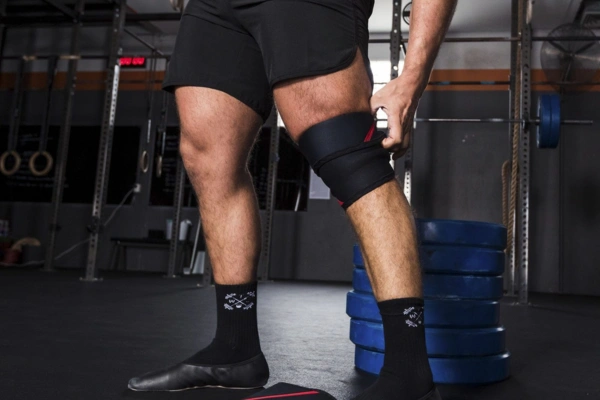
A knee sleeve should slide on smoothly, sit centered over your kneecap, feel snug but not painful, and stay flat with no folds. To wear a knee compression sleeve correctly, roll or fold it, pull it up from your ankle, position the middle over the knee joint, smooth out wrinkles, then test your range of motion before you train or walk.
Worried about when you should actually wear it? You can read our full guide here: When to wear a knee compression sleeve.
What is the correct way to wear a knee sleeve?
Putting on a knee sleeve should not be a fight every time. A clear routine makes it fast and safe.
The correct way to wear a knee sleeve is to pull it on from your foot upward, not from the top down. Start with clean, dry skin, fold the sleeve in half, slide the folded section over your calf, then pull it up so the center sits over your kneecap. Finally, unfold, smooth all wrinkles, and check that it feels snug, not painful.
Here’s the deal: most people struggle because they try to drag a tight sleeve straight over the knee. That stretches the fabric and makes it twist.
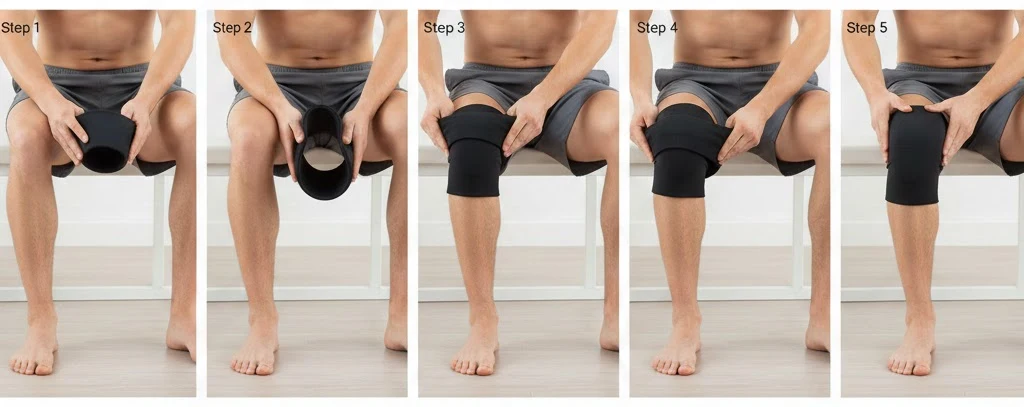
Follow this step-by-step instead:
1. Prepare your skin and sleeve
- Make sure your leg is clean and dry.
- Do not put lotion or oil right before wearing.
- Turn the sleeve so any logo or size label faces forward.
2. Fold the sleeve in half
- Hold the sleeve by the top and fold it down into itself, so it looks like a thick band.
- This shortens the sleeve and makes it easier to control.
3. Slide it over your foot and calf
- Sit on a chair or bench.
- Put your toes into the opening and pull the folded sleeve up to mid-calf.
- Keep the seam and logo facing front so the sleeve does not twist.
4. Position the sleeve over the knee
- Grab the folded edge and pull the sleeve up so the middle of the sleeve sits right over your kneecap.
- For most designs, the top edge should end a few fingers above your patella, and the bottom edge a few fingers below.
5. Unfold and smooth out wrinkles
- Unfold the top half of the sleeve up your thigh.
- Use your hands to smooth out any folds, bunching, or twisting.
- The fabric should lie flat all the way around the leg.
6. Check the feel
- Stand up and bend your knee several times.
- It should feel like a firm “hug,” not like a tourniquet.
- If you feel numbness, tingling, sharp pain, or the sleeve cuts into the skin, take it off and try again or size up.
7. Repeat for the other leg (if needed)
- If you use sleeves on both knees, repeat the same process on the other side.
- Try to align logos and seams the same way so both sides feel even.
If your sleeve has any silicone grip lines at the top, make sure they sit flat against the skin. This helps reduce slipping when you walk or train.
How should a knee compression sleeve fit on your leg?
Even a perfect technique cannot fix the wrong size. Fit matters as much as the way you put it on.
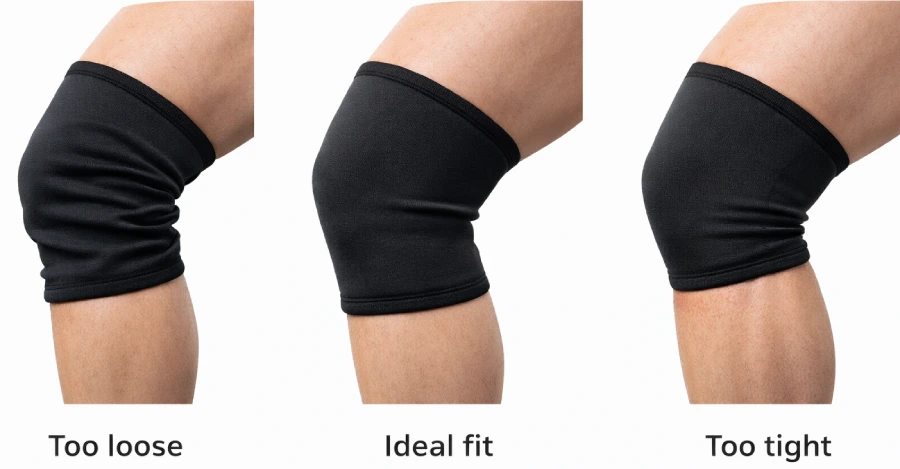
A knee compression sleeve should feel snug and secure, like a firm handshake around your knee. It should not slide down during movement, should not pinch your skin, and should never cause numbness or color changes in your lower leg. If it feels painful, leaves deep marks, or is constantly slipping, the fit is wrong.
Before you buy or wear a sleeve, always:
- Measure your leg at the point above and below your knee (follow the brand’s size chart).
- Compare your numbers to the sizing guide. For more details, see: How to choose the right size knee sleeve.
Quick Checklist
Here’s a quick fit checklist you can use at home:
| Fit Checkpoint | Correct Fit (Good) | Too Tight (Problem) | Too Loose (Problem) |
|---|---|---|---|
| Overall feel |
Good
Firm, supportive “hug” around the knee. Feels secure but comfortable. |
Too tight
Painful squeeze, hard to bend the knee, constant pressure. |
Too loose
Barely any pressure, no real feeling of support. |
| Skin & circulation |
Good
Normal skin color, no numbness or tingling in the lower leg. |
Too tight
Red or purple color, tingling, “pins and needles,” or a cold foot. |
Too loose
Circulation is normal, but the sleeve does not actually support the joint. |
| Movement |
Good
Stays in place when you squat, walk, or go up and down stairs. |
Too tight
Cuts into the skin when you bend, feels restrictive or painful. |
Too loose
Slides down with just a few steps or light movements. |
| Fabric on skin |
Good
Fabric lies smooth with no deep dents or heavy marks. |
Too tight
Deep grooves or pressure lines appear within a few minutes. |
Too loose
Gaps between fabric and skin, some areas barely make contact. |
| Donning / doffing |
Good
Takes a bit of effort to pull on and off, but still very manageable. |
Too tight
Very hard to pull over the calf or off the knee, feels like a struggle. |
Too loose
Falls on and off with almost no effort, barely clings to the leg. |
If you fall between two sizes, think about how you will use the sleeve:
- For heavy lifting or sports: a slightly tighter fit can give more support.
- For daily wear or long walks: a more relaxed fit is usually safer and more comfortable.
Where exactly should a knee sleeve sit on your knee?
Even with the right size, the sleeve only works if the joint sits in the right place.
Most knee sleeves should sit with the center of the sleeve aligned over the center of your kneecap. The top edge usually ends a few centimeters (about 2–3 finger widths) above the patella, and the bottom edge the same distance below. This way, the sleeve supports the joint without digging into your thigh or calf.
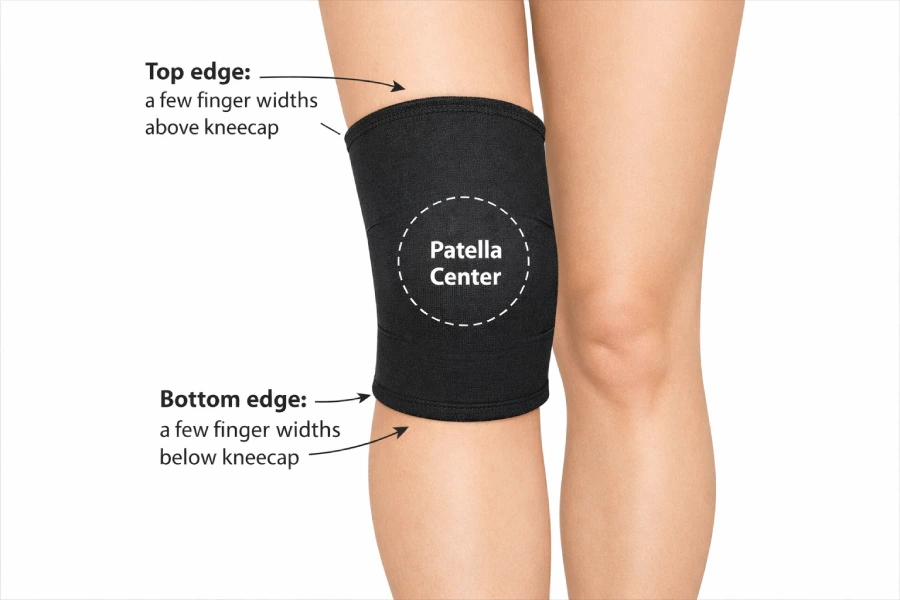
So what’s the right move?
- Find the center of your kneecap
- Sit or stand with your leg straight.
- Feel for the round bone in front of the knee. The middle of this bone is your target.
- Match the center of the sleeve to the center of the kneecap
- Many sleeves have a logo, stitching, or pattern that marks the middle.
- Line this up with the center of your kneecap.
- Check the top and bottom edges
- The top edge should not be so high that it digs into the soft area of your inner thigh.
- The bottom edge should not sit right in the middle of your calf muscle “bulge,” which can cause rolling and slipping.
- Bend and straighten your knee
- Do a few squats or lunges.
- Watch in a mirror if you can: the sleeve should move with your knee, not slide down or twist.
If your knee sleeve has extra features (gel pads, side stays, or built-in straps), make sure those parts line up with the areas they are meant to support, not random spots on your leg.
How do you wear different types of knee sleeves?
Not every knee sleeve is the same. Fabric, thickness, straps, and padding all change how you put it on and adjust it.
To wear different types of knee sleeves correctly, always start with the basic pull-on method, then adjust any straps, pads, or special panels so they sit over the targeted area. Compression-only sleeves should lie flat. Sleeves with straps or pads need extra checks to prevent twisting, gapping, or pressure points.
Here’s the breakdown:
1. Simple compression knee sleeves
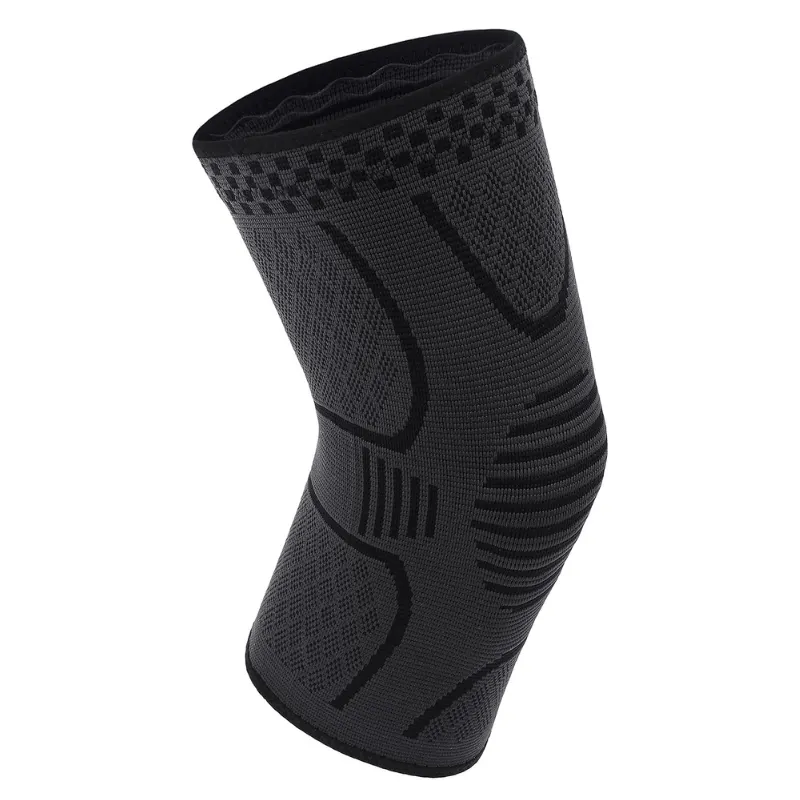
These are knitted or elastic sleeves without straps or hinges. They are great for light support in everyday use, running, or general workouts.
Use the basic fold-and-pull method above, align the center over your kneecap, and smooth out all wrinkles. If the sleeve still twists or slides, it is usually a sign that the size is off rather than a wearing problem.
If you run a sports brand or store, this style is often the “entry” product in a knee support line. You can see how we build them for private label buyers in our custom compression knee sleeve manufacturer guide.
2. Neoprene knee sleeves (3mm, 5mm, 7mm)
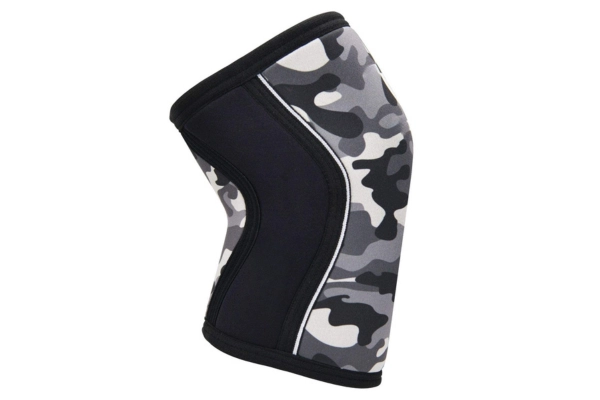
Thicker neoprene sleeves (often 5mm or 7mm) are common in weightlifting and CrossFit because they feel warmer and more “locked in” around the joint.
Fold or roll the sleeve tightly before you pull it on, slide it up to the calf first, then pull it over the knee. Expect more resistance – this is normal for stiffer neoprene. If you struggle to get it past your calf at all, the sleeve is probably too small.
Not sure which thickness to choose? We compare 3mm, 5mm, and 7mm in detail here: What mm knee sleeve should I get.
For gyms and brands looking to create their own sleeves, we also make custom neoprene designs: custom neoprene knee sleeve manufacturer.
3. Knee sleeves with adjustable straps
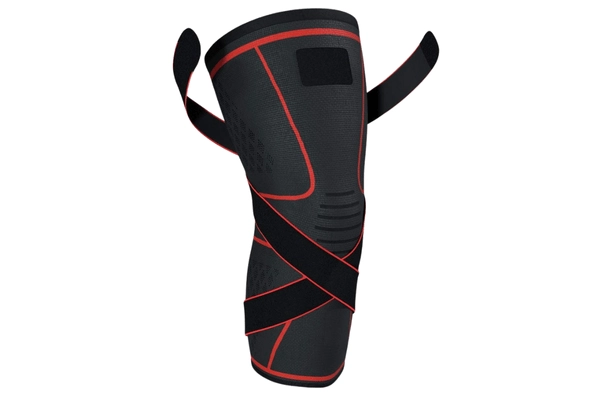
Strap-style sleeves give you more control over where you put pressure. They are useful if you want extra support around the patellar tendon or need to fine-tune the tightness for different activities.
First, position the sleeve body correctly over the knee. Then fasten the straps from bottom to top so you are not pushing fluid down your leg. Tighten them until the knee feels supported but stop before the straps cut into your skin or leave deep marks.
If you are choosing models for your own product line, you can see how a strapped design is laid out here: custom knee sleeve with adjustable straps manufacturer.
4. Padded knee sleeves
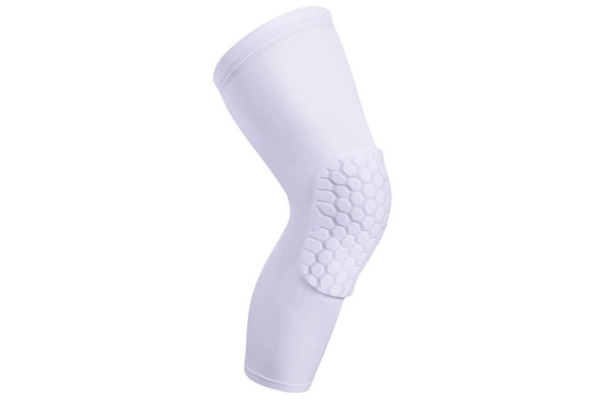
Padded sleeves are common in volleyball, basketball, wrestling, and jobs where you kneel on hard surfaces. The padding is there to absorb impact and protect the front of the knee.
Put the sleeve on as normal, then make sure the pad sits directly over the front of your knee, not too high on the thigh or too low on the shin. Test a gentle kneel on a soft surface – the pad should touch the ground first, not your kneecap.
If you are comparing pad shapes and thicknesses for team or work use, you can see an example build here: custom compression-padded knee sleeve manufacturer.
5. Copper, bamboo, and other fabric blends
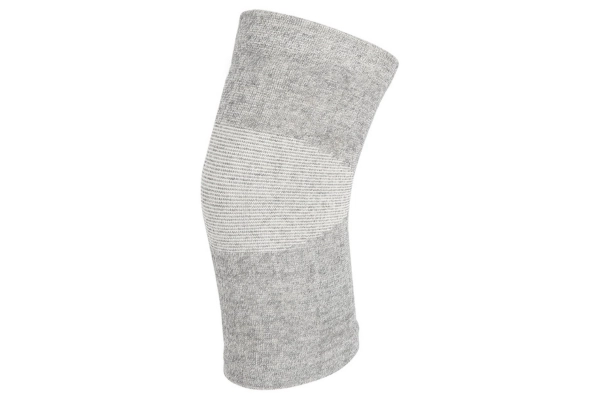
These sleeves work like regular compression sleeves but use different yarns for comfort, odor control, or warmth. Many people like them for all-day wear or low-impact activity.
Wear them using the same method as simple compression sleeves. If the fabric feels softer and thinner, they may be better for daily use than for very heavy lifting or strong rebound in squats.
For buyers building a more “lifestyle” or recovery-focused line, fabric blends such as bamboo and copper are popular options:
What mistakes should you avoid when wearing a knee sleeve?
Small mistakes add up. They can cause skin trouble, slipping, or even more pain around your joint.
The biggest mistakes when wearing a knee sleeve are choosing the wrong size, twisting the sleeve so seams dig into the skin, letting it bunch behind the knee, and wearing it so tight that it affects your circulation. Avoid these by checking fit, smoothing the fabric, and listening to any pain or numbness signals.
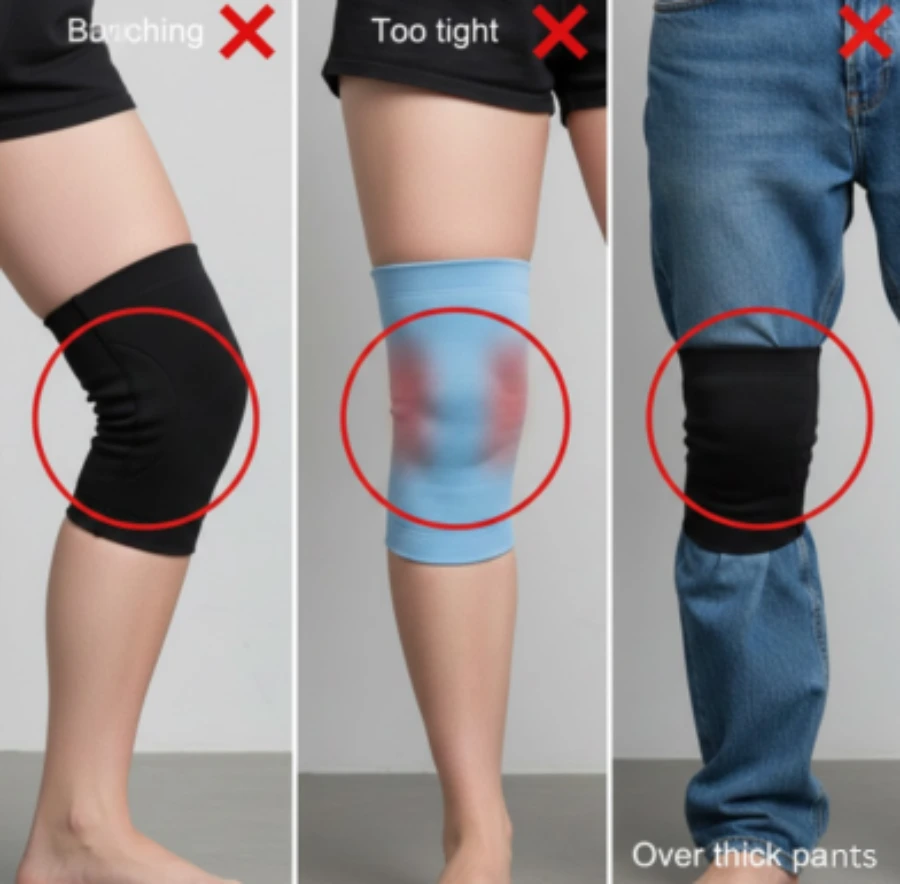
Here are the main things to watch out for:
- Wearing the wrong size
- Too small → pain, numbness, deep marks, and poor circulation.
- Too large → no support, constant slipping, irritation from friction.
- Letting the sleeve bunch behind the knee
- Extra folds create pressure at the back of the joint.
- This can make bending painful and irritate the skin.
- Twisting seams or logos
- If seams sit on the side or back of your leg instead of straight, they can dig in.
- Always align the design with the front of your knee.
- Wearing over-thick clothing
- A thin base layer can be fine, but thick pants make sleeves slip and bunch.
- When possible, wear the sleeve closest to your skin.
- Ignoring skin reactions
- Redness that fades after removing the sleeve is normal.
- But blisters, rash, or broken skin mean you should stop wearing it and talk to a professional.
- Using a sleeve instead of medical care
- A knee sleeve is support, not a cure.
- If you have severe pain, deformity, locking, or swelling that does not go down, see a doctor or physical therapist.
Here’s the catch: if you use a sleeve to hide serious pain, you might keep training on an injury that needs rest.
Should you wear a knee sleeve over or under pants?
This is a common everyday question, especially for people who wear sleeves at work or in cold weather.
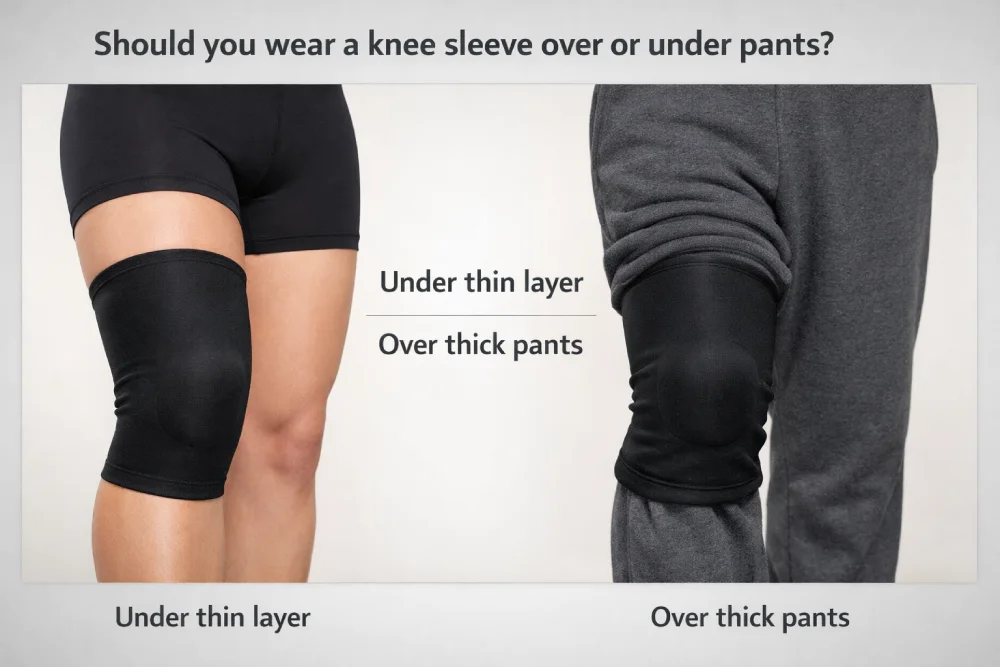
You can wear a knee sleeve under or over pants, but under thin, smooth fabric usually works best. Under pants gives better grip and compression, while over thick or rough fabric often causes slipping and bunching. If you need to wear it over clothing, choose slim, smooth pants and re-check the fit.
Underpants (best for support)
- Wear the sleeve directly on your skin.
- Put slim leggings, compression pants, or thin joggers on top.
- This keeps the sleeve in place and lets it work properly.
Over pants (only if you must)
- Choose pants with smooth fabric, not loose, slippery material.
- Expect to adjust the sleeve more often.
- Make sure the sleeve still feels snug enough to support your knee.
We will share more detailed tips on slipping and pants in a separate guide on knee sleeve wearing tricks, and we will link it here once it is live.
Quick note for brands and buyers
If you run a sports brand, gym, clinic, or retail store, the way end users wear knee sleeves should influence how you design them:
- Correct length to cover above and below the joint
- Silicone grip lines that match real-life movement
- Strap positions that do not cut into the skin
- Padding in the right spot for kneeling or impact
At ZZSUPPORT, we manufacture custom knee sleeves and other supports with OEM/ODM service:
You can send us your logo, ideas, or samples, and our team will help you design sleeves that your customers actually enjoy wearing.
FAQs
How do you put on a knee sleeve step by step?
To put on a knee sleeve, fold it in half, slide the folded part over your foot and up to mid-calf, then pull it over your kneecap. Unfold it, center it on the joint, and smooth out all wrinkles.
How tight should a knee sleeve be?
A knee sleeve should feel snug, like a firm hug, but never painful. You should still move and bend your knee freely, without numbness, tingling, or color changes in your lower leg. If that happens, choose a larger size.
Where should a knee sleeve sit on your leg?
A knee sleeve should sit with its middle centered over your kneecap, with the top edge a few finger widths above the patella and the bottom edge below it. This keeps the joint covered while avoiding pressure on your thigh and calf.
How do you keep a knee sleeve from sliding down?
To keep a knee sleeve from sliding down, choose the right size, put it on over dry skin, smooth out folds, and avoid very loose pants on top. If it still slips during squats or walking, the sleeve is usually too large.
Should you wear a knee sleeve on bare skin?
It is usually best to wear a knee sleeve on clean, dry skin. This gives a better grip and more even compression. If your skin is sensitive, try a thin, smooth base layer underneath and watch for any rash, blisters, or irritation.