If your knee problem may involve a ligament or meniscus issue, choosing the wrong support can waste time and make movement feel worse. A knee strap often looks like the easiest starting point because it is small, simple, and easy to wear. But that does not always mean it matches the real problem.
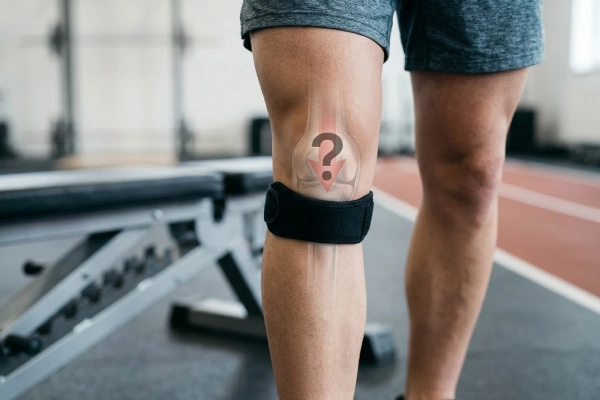
If your symptoms sound more like a ligament injury or a meniscus problem, a knee strap is usually not the first option to try. Tape may help in limited situations. A brace often makes more sense when you need more stability, more control, or support beyond the area below the kneecap.
The key is to match the product to the pattern. A patella strap is built for focused pressure below the kneecap. Tape is lighter and depends more on how it is applied. A brace is usually the better choice when your knee feels unstable, swollen, weak, or hard to trust under load.
If you want a broader starting point before comparing these options, it helps to begin with a fuller knee strap guide and a broader comparison of knee straps, braces, and sleeves. That context makes it easier to see why ligament and meniscus problems often move the decision away from a simple strap.
Quick Review: Knee Strap vs Tape vs Brace for Ligament or Meniscus Issues
Quick Review: Strap, Tape, or Brace?
A simple comparison for ligament or meniscus-related support choices.
Is a knee strap a good choice for ligament or meniscus problems?
Usually, no.
A knee strap is usually a weak match for most ligament injuries and many meniscus problems because it is designed for localized pressure near the patellar tendon, not for broader joint stability or motion control.

If your pain is focused just below the kneecap and gets worse with jumping, stairs, squats, or repeated stop-start movement, a knee strap may make sense. That is why this type of support is more often linked to patellar tendon overload, jumper’s knee, or some Osgood-Schlatter-related discomfort. If that sounds closer to your pattern, it also helps to check how a patella strap should sit below the kneecap and what a patella strap actually helps with.
But if your knee problem feels deeper in the joint, started after a twist, or comes with swelling, catching, locking, or a giving-way feeling, a strap is usually too limited. It does not guide the knee the way a brace can. It also does very little for symptoms that come from joint irritation or instability instead of tendon loading.
That is where many wrong product choices happen. You may feel pain at the front of the knee and assume a strap is the answer. But front knee pain is not always tendon pain. If the problem follows a twist, comes with rapid swelling, or makes your knee feel unstable, you are usually outside the normal job of a patella strap.
A strap can still feel comfortable in some mixed cases. It may give light pressure and make movement feel easier to manage. But that is different from saying it is the right tool for a suspected ligament injury or a meniscus problem.
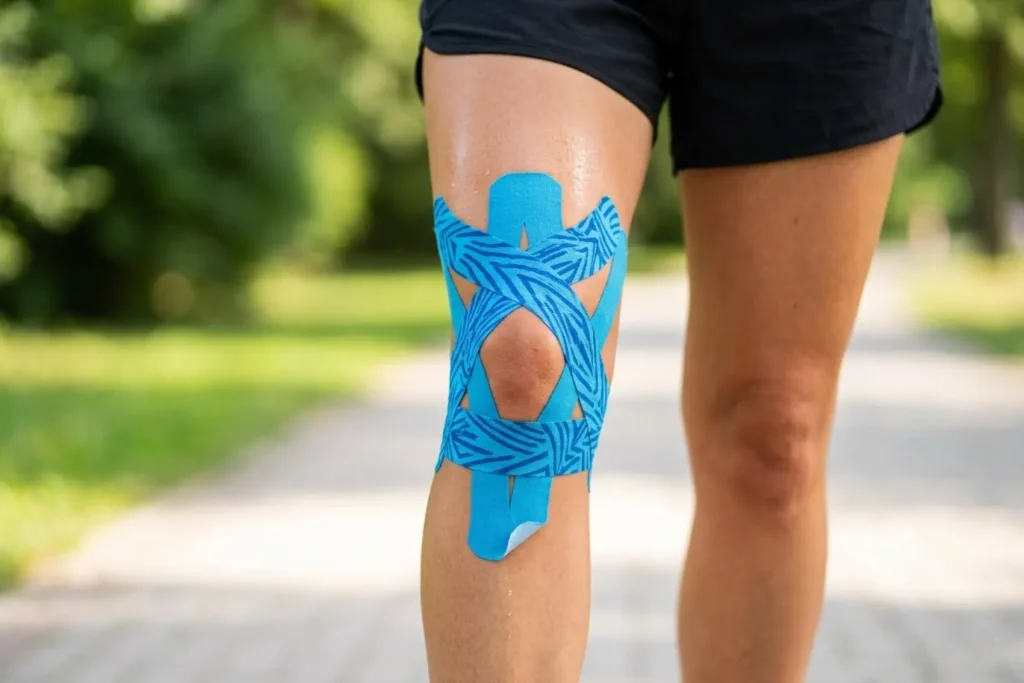
When can tape help, and what are its limits?
Tape can help in some situations, but it has limits.
Tape may help with short-term symptom relief, light support, or movement cueing, but it is usually less dependable than a brace when your knee needs real stability.
When tape may still be worth trying
If you want something low-profile, tape may look appealing. Tape feels light and adds very little bulk. It can also give your knee a better sense of movement during activity. For some situations, that low-profile feel is part of the appeal. For some situations, that may be enough for short activity, early return to training, or mild symptom support.
But tape works best when the support need is small, and the application is good. That is the tradeoff. Results depend on the taping method, placement, tension, sweat, skin condition, and how well it stays on during movement. A brace is usually more consistent because it does not depend so much on day-to-day technique.
Where tape starts to fall short
This matters if you are deciding between tape and a brace for a ligament issue. If your knee feels only mildly irritated and you want light support, tape may be enough for a short period. If your knee shifts, buckles, or feels unsafe during turns, stairs, or sports, tape is usually not enough. In that kind of situation, you may need to look beyond a strap and think more broadly about other types of knee support gear.
The same logic applies to many meniscus-related complaints. Tape may offer a little comfort, but it will not solve locking, catching, or blocked motion. If the knee feels mechanically wrong, tape is usually the weaker option.
In practical use, tape also has small but real drawbacks. Sweat can cause tape to peel off. Skin irritation is also possible. During activity, the support may lose tension and feel less reliable. If it is applied badly, it can feel useless. So while tape can help, it is usually the least stable option of the three.
When does a brace make more sense than a strap or tape?
A brace makes more sense when your knee needs more than localized pressure or light cueing. If your knee feels unstable, weak, swollen, or unreliable, a brace usually makes more sense than a strap or tape.
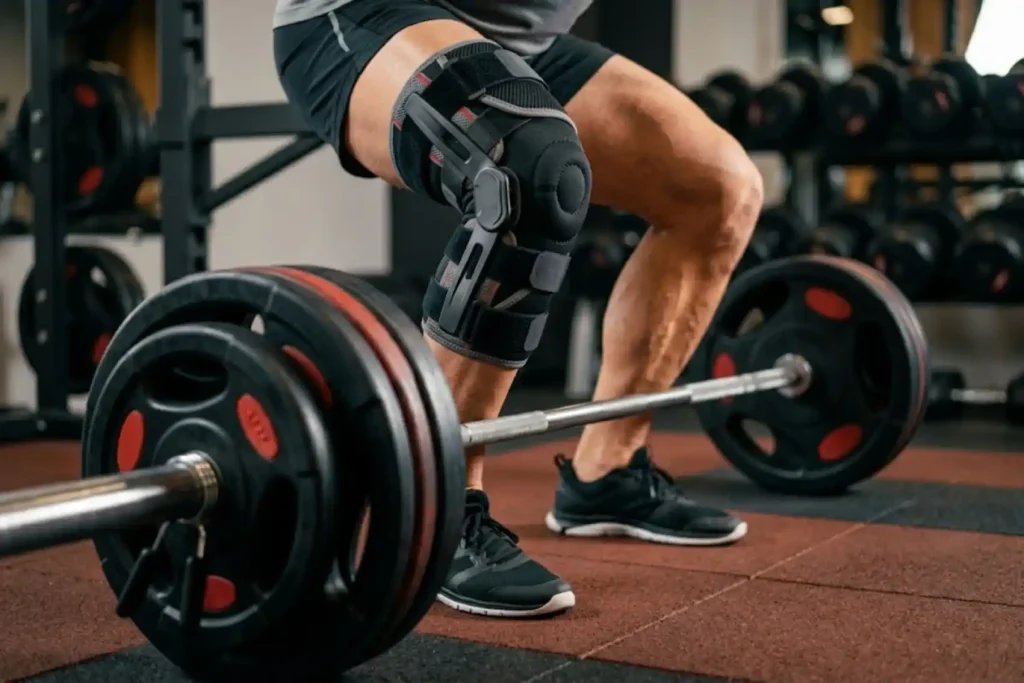
A brace does more than squeeze one small area. It can provide broader support around the joint and help limit motion that feels unsafe or poorly controlled. That is why braces are more commonly chosen for ligament-related problems and for knee issues that involve instability.
When ligament-related control matters more than simplicity
If you suspect an MCL, LCL, ACL, or PCL problem, the support question is usually about control as much as comfort. A strap below the kneecap is not built for that. Tape may help a little, but it is usually less reliable than a brace when you need more structure.
Why a knee sleeve may still fall short
A brace can also make more sense when a meniscus problem comes with swelling, twisting pain, repeated flare-ups, or a feeling that the knee cannot be trusted during daily movement. Not every meniscus issue needs a heavy hinged brace. In some cases, a lighter compression option may be enough, especially when the main goal is mild support rather than motion control. But if the knee feels unstable, catches during movement, or becomes harder to manage under load, stepping up to a brace is usually more logical than choosing a strap.
If you are comparing categories, it is also worth understanding what a knee sleeve is actually designed to do, because a sleeve can help with compression and everyday support but still fall short when your knee needs more structure.
The simplest way to think about it is this: if the support need is bigger than one small pain point, a brace usually deserves more attention. If you are evaluating products or planning a support line, it may help to review different knee brace structures for different support needs rather than treating every brace as the same type of solution.
How can you tell whether the problem sounds more like tendon pain, ligament instability, or meniscus irritation?
Start with the pattern, not the product.
If your pain is focused below the kneecap and worsens with jumping or stairs, a strap may fit better. If your knee twists, locks, catches, buckles, or feels unstable, brace-first thinking usually makes more sense.

If your main problem is localized pain below the kneecap, especially during jumping, squatting, stairs, or repeated training, the pattern may fit patellar tendon irritation more than a ligament or meniscus problem. That is the type of situation where a patella strap is more likely to help.
If your main problem is instability, think more seriously about a ligament-related issue. If your knee feels loose, weak, wobbly, or unreliable during direction changes or load, a brace is usually a better starting point than a strap.
If your main problem is catching, locking, swelling, stiffness, or trouble straightening the knee, the pattern sounds more like meniscus irritation or another deeper joint problem. In that case, a strap is usually the wrong tool, and tape is often too light. A sleeve may still have a role in some lighter cases, but it helps to know when a compression sleeve may be enough and when the situation has moved beyond that level of support.
There can be overlap. Your knee may hurt in the front and still feel unstable. A meniscus issue can exist with a ligament injury. A sports injury can involve more than one structure at the same time. That is why you should choose support based on the dominant symptom pattern, not just the search term you typed in.
Tape usually sits in the middle. It may help when symptoms are mild and you want low-bulk support. It becomes less convincing when the knee feels mechanically unstable or clearly blocked.
What signs mean you should stop guessing and get the knee checked?
Support products can help, but they are not diagnosis tools.
If your knee has severe swelling, locking, repeated buckling, major loss of motion, numbness, discoloration, or pain after a twist or trauma, it is better to get it assessed instead of guessing with a strap, tape, or self-selected brace.

This part matters because the wrong support can make you feel like you are addressing the problem when you are only covering it up. A strap may help a specific kind of tendon-related pain. Tape may help with light support. A brace may make the joint feel safer. None of those products can tell you what is actually injured.
You should be more careful if your knee locks, catches hard, buckles repeatedly, swells quickly after a twist, or will not fully straighten. Those signs usually deserve more than self-selection. The same is true if pain keeps getting worse or the knee feels less trustworthy over time.
A strap may be reasonable when symptoms are mild and clearly localized below the kneecap. A brace usually makes more sense when the knee feels unstable or shows signs of mechanical joint trouble. When the situation feels severe, unusual, or hard to explain, it is safer to get the knee checked before relying on support gear alone.
And if you are weighing longer-term use, it is also worth taking a closer look at whether knee support can help or create dependency concerns, especially if you are trying to balance symptom relief with strength, rehab, and return to activity.
Conclusion
If your problem may involve a ligament or meniscus issue, a knee strap is usually not the first support to try. Tape can help in lighter situations, but it is limited. If your knee feels unstable, swollen, weak, or mechanically wrong, a brace is usually the more realistic choice.
If you are building a knee support line for retail, rehab, or sport use, product positioning matters as much as appearance. Different symptom patterns call for different support structures, materials, and adjustment methods. For brands and buyers developing private label products, it helps to review OEM/ODM support for custom knee support lines before finalizing strap, sleeve, or brace direction.
FAQ
Usually not very well. A knee strap targets pressure below the kneecap, while meniscus problems often involve joint-line pain, swelling, catching, locking, or trouble straightening the knee.
Not always. Some meniscus problems only need lighter support, activity changes, and rehab. But if your knee feels unstable, swollen, or hard to trust during movement, a brace may make more sense than a strap or tape.
A brace is usually the more dependable choice when stability matters. Tape may help with light support, but it is more technique-sensitive and usually less consistent during movement.
You can, but it is usually a lighter support option. If your knee buckles, shifts, or feels unsafe, tape is often not enough and a brace usually makes more sense.
Think more about a meniscus issue if you notice joint-line pain, swelling, stiffness, catching, locking, or trouble fully straightening the knee. Patellar tendon pain is usually more localized below the kneecap.
Stop relying on support products and get your knee checked if you notice severe swelling, repeated buckling, locking, major motion loss, worsening pain, or symptoms after a twist or injury.