You put on an arm sleeve and wonder: is this normal tight, or too tight? If you guess wrong, you’ll get numbness, deep marks, or a sleeve that keeps sliding.
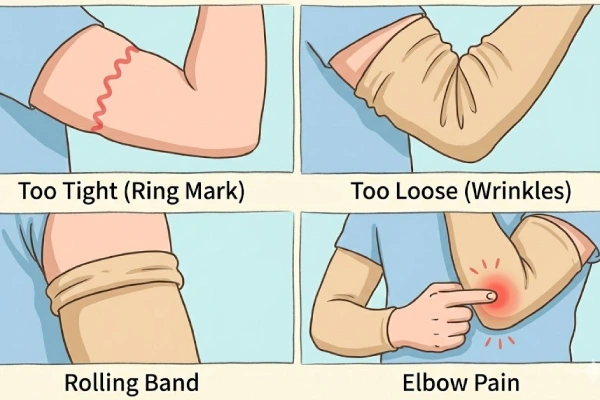
An arm sleeve should feel snug and even, like a firm hug—supportive but not painful. If you feel numbness, tingling, cold fingers, color change, or a hard “ring” line, it’s too tight and you should stop wearing it.
Here’s the deal: this guide is for sports and daily wear. It’s not medical advice. If you have circulation issues, nerve symptoms, diabetes, or swelling conditions, talk with a clinician before using compression gear.
How tight should an arm sleeve be for everyday comfort?
Your sleeve should stay in place and feel smooth, not like it’s squeezing one spot.
A good everyday fit means you can move your arm freely, the pressure feels even from wrist to upper arm, and you don’t keep pulling it up. You may see light marks after wear, but you should not feel pain, tingling, or see deep ridges.
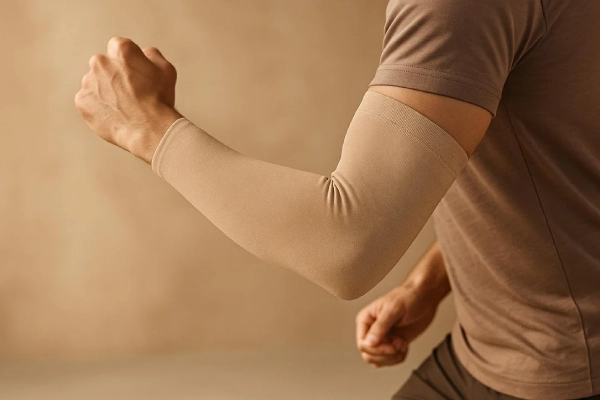
The truth is, most people judge tightness by the top band. That’s risky. A sleeve can “feel secure” at the top while being too tight in one ring-like area.
| Step / What to Check | What to Do | ✅ Good Fit | ❌ Too Tight / Too Loose Signals |
|---|---|---|---|
| 1) Put it on | Wear the sleeve normally (don’t fold/roll the edges). | Sleeve sits flat and smooth. | Edge rolls or forms a thick band. |
| 2) Flex test | Flex your elbow 10–15 times. | No sharp pressure near the elbow crease. | Pinching/burning at the elbow crease; “cutting in” feeling. |
| 3) 3–5 minute task | Do a normal activity for 3–5 minutes (typing, shooting, jogging in place). | Stays in place without constant adjustment. | Twisting/rolling/bunching, or you keep pulling it up. |
| 4) Sensation check | Notice your hand/forearm during and after. | Feels supportive but comfortable; pressure feels even. | Numbness/tingling, coldness, color change, deep ring marks. |
| 5) Surface check | Look/feel for folds and hotspots. | No “hot spots,” no fabric folds pressing in. | “Hot spots” where fabric folds press into skin; wrinkles/air gaps (too loose). |
If you mainly wear a sleeve to reduce skin friction (gaming, volleyball, desk work), you often don’t need strong compression. You might be wondering: “So why do some sleeves feel tighter?” Because brands use different knitting and size charts, and your arm shape is not a straight tube.
If you’re choosing sleeves for sport reasons, this article pairs well with:
How can you tell if an arm sleeve is too loose?
A loose sleeve feels fine for 30 seconds, then becomes a distraction.
An arm sleeve is too loose if it wrinkles, slides down, bunches at the elbow, or feels like it “floats” on your skin. If you keep adjusting it during activity, it’s not doing its job—whether that job is compression, warmth, or friction control.
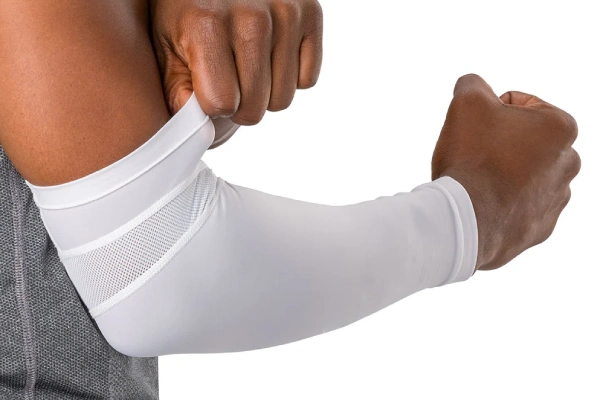
Here’s what most people miss: a sleeve that’s too loose can cause more rubbing than no sleeve at all. When fabric shifts, it drags on the skin and can irritate the elbow crease or forearm.
Typical “too loose” signs:
- Horizontal wrinkles that don’t smooth out after you pull it up
- Bunching behind the elbow when you bend
- The sleeve rotates around the arm
- The top slowly creeps down with sweat
- You feel a rubbing line, not steady support
If you sweat a lot, looseness shows up faster. Sweat lowers friction, so sleeves slide. Then people size down to stop sliding… and end up too tight. That cycle is why fit and design matter. If sliding is your main issue, use this guide: Why sleeves slide down and how to fix it
What tightness level should you choose for sports, work, and gaming?
Different goals need different tightness. One “perfect tight” doesn’t fit every use.
For sports performance and recovery feel, most people prefer a snug, supportive fit that stays put during sweat and motion. For work or gaming, many users do better with light compression or even just a smooth, fitted sleeve to cut friction—without squeezing the arm.
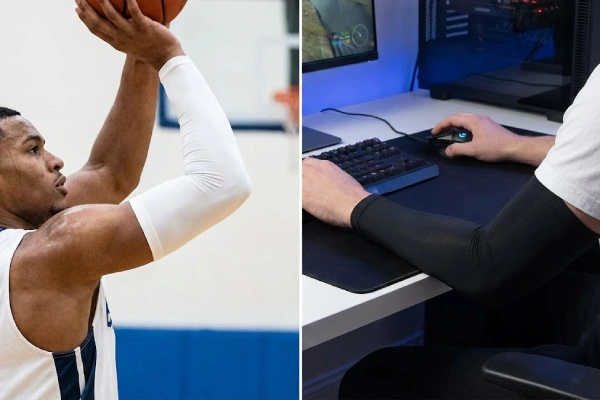
So what does this mean for you? Start with your main goal:
If you play basketball or baseball
You move fast, sweat hard, and your sleeve can shift. You usually want a snug fit with a stable grip, not a tight “ring” at the top. Basketball sleeve use guide & MLB sleeve style and use
If you’re a gamer
Many gamers use sleeves for glide and consistent mouse feel, not medical-level compression. If you feel tingling or your hand gets cold, it’s too tight for gaming. Why gamers wear sleeves
If you wear sleeves for “arm shaping” or coverage
Some buyers want a smoother look under clothing. That’s fine, but don’t chase a smaller size for a tighter look. For a deep view, you can read our post about “Do compression sleeves work for flabby arms?”
If you wear sleeves around the elbow discomfort
Don’t assume “tighter is better.” If the elbow crease hurts, a softer edge and better pattern often beats sizing down. If pain is sharp or worsening, stop and get help.
Why does an arm sleeve feel tight in one spot (and how do you fix it)?
If one part bites in, it’s usually the cut, the top band, or the way it’s worn.
A sleeve should feel even. If it feels tight only at the top edge or near the elbow crease, the common causes are: your arm’s tapered shape, a top band that rolls, a sleeve that’s too long and bunches, or a size chart that doesn’t match your measurements.
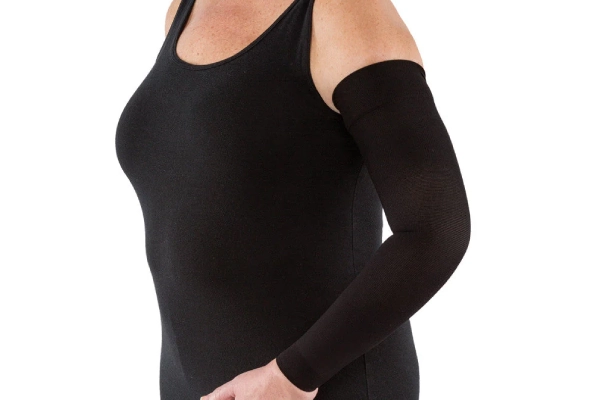
The bottom line? Arms are tapered. The upper arm and forearm are different sizes, and the elbow crease changes shape as you bend. A straight “tube” sleeve can’t match that well.
Fixes you can try today
- Re-check your measurements (don’t guess). Use the sizing method here.
- Stop folding or rolling the sleeve edge. That stacks fabric and creates a tight band.
- Smooth out wrinkles before activity. Folds turn into pressure points.
- Try a sleeve with a tapered pattern (wider upper arm, narrower forearm).
- Choose a top band built for grip without biting. Silicone grip options can help if they’re designed right (patterned dots/waves often feel less harsh than one thick strip).
Quick table: what your symptom usually means
| What you feel/see | Likely cause | What to do |
|---|---|---|
| Deep ring line at top | Top band too tight or rolling | Size up or choose softer/wider top band |
| Pinch at elbow crease | Sleeve too long, bunching, or wrong pattern | Choose better taper or shorter length |
| Slides down with sweat | Size too big or low grip at top | Check sizing; consider grip pattern |
| Wrinkles near elbow | Too loose or wrong length | Size down only if no tightness signs |
| Hand tingles or feels cold | Too tight / pressure point | Remove sleeve and change size/style |
What should manufacturers do to make “tight but comfortable” sleeves?
This is where product build matters more than marketing. A better sleeve can feel snug without feeling harsh.
Good sleeves use a tapered pattern, stable knitting, and a top band designed to grip without rolling. That helps the sleeve stay up without forcing you to buy a smaller size that causes numbness, deep lines, or elbow-crease pain.
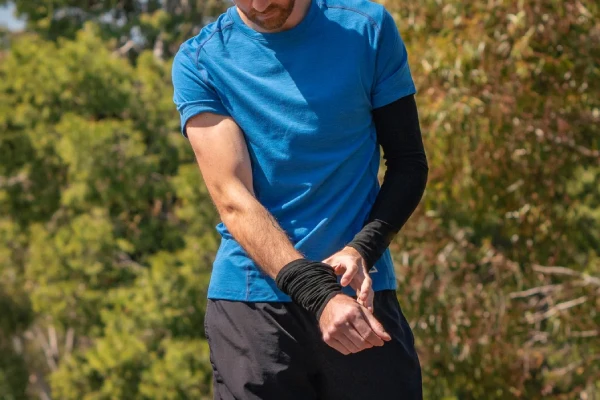
Here’s what most people miss: many “fit problems” are design problems. In manufacturing, we look at how the sleeve behaves after sweat, stretch, and wash cycles—not just how it looks on day one.
Key build choices that help tightness feel right:
- Tapered patterning: matches real arm shape, reduces “top tight / bottom loose.”
- Even compression zones: avoid one harsh ring of pressure.
- Top band engineering: dot/stripe/wave silicone layouts can add grip with less rolling risk.
- Seam and edge softness: a sharp edge can “cut in” at the elbow crease.
- Fabric balance: nylon/spandex blends can change rebound and skin feel. Too stiff feels harsh. Too soft slides.
If you buy in bulk or need your own branded sleeves, these design details should be part of your spec sheet. You can start here: Custom arm sleeve options (design/MOQ/use cases) & OEM/ODM manufacturing guide.
Conclusion
A sleeve should feel snug, smooth, and even. If you get numbness, tingling, coldness, color change, or deep ring lines, it’s too tight. If it wrinkles and slides, it’s too loose.
FAQs
Should an arm sleeve feel tight?
It should feel snug and supportive, not painful. The pressure should feel even along the arm and allow full movement. If you notice numbness, tingling, or sharp digging at the wrist/elbow, it’s too tight and you should adjust size or style.
How tight is “too tight” for an arm sleeve?
It’s too tight if you get numbness, pins-and-needles, coldness, or color change in the hand, or a deep ring mark that lasts. A rolled top band can act like a tourniquet, so remove it and resize.
Is it normal to have marks after wearing an arm sleeve?
Light, temporary indentations can happen, especially after activity. But if marks are deep, painful, or last a long time, the fit is likely wrong (too tight or rolling). Aim for smooth fabric contact without sharp edges digging in.
Why does my arm sleeve roll down at the top?
Rolling usually means the top band is too tight, the sleeve is the wrong length, or the pattern doesn’t match your arm’s taper. Rolling creates a thicker band that concentrates pressure. Size up or choose a wider/softer top band.
My sleeve slides down—should I size down?
Not automatically. Sliding can come from sweat, low-friction fabric, or a top band that can’t grip, not just “too big.” Sizing down can trigger a tight ring and rolling. First re-check measurements and consider better grip/top-band design.
Why does an arm sleeve hurt in the elbow crease?
Elbow-crease pain often comes from bunching or folding when you bend, or a sleeve that’s too long/straight-cut for a tapered arm. Wrinkles become pressure points. Look for a better tapered pattern, smoother fit, and avoid rolling edges.
Is tingling a “break-in” phase or a warning sign?
Tingling is a warning sign, not a normal break-in phase. Community reports often describe numbness when sleeves are overly tight or pressure concentrates near the top band. Remove the sleeve, reassess size, and switch to lighter compression or a different cut.
How tight should an arm sleeve be for gaming vs sports?
For gaming, many users mainly want low-friction glide, so light compression is usually enough. For sports, you may prefer a snugger fit to resist sweat and movement—but still never numbness or cold fingers. Different goals require different tightness.