Knee sleeves feel supportive, but many people worry they’re harming. If you wear one for every workout, will your knee get weaker? Here’s what research and clinicians say.
A well-fitted knee sleeve usually won’t weaken your knee. It can reduce pain and swelling, and improve body awareness so you move better. Weakness shows up when a sleeve replaces strength work, or when the fit and wear time are wrong.
As a specialized manufacturer of medical-grade protective gear, we operate at the intersection of textile engineering and joint mechanics. We see the science behind the fabric every day. The truth is more nuanced than a simple “yes” or “no,” and it requires looking past the surface of the fabric into the neuromuscular system. This guide—part of our comprehensive series on [Knee Supports & Sleeves]—will dismantle the muscle-weakening myth, explain the mechanics of proprioception, and show you how to use compression as a tool for strength, not a crutch for weakness.
The Muscle Atrophy Myth: Why Sleeves Aren’t Braces
The primary concern for most users is that a sleeve will “do the work” for the quadriceps and hamstrings, leading to muscle wasting. To address this, we must first distinguish between a rigid knee brace and a compression knee sleeve. For a deeper comparison, see our Knee Sleeve vs. Knee Brace buyer’s guide.
- The Rigid Brace (The Immobilizer): Mechanical hinges and rigid shells are designed to take over the structural load of a ligament (like our full range of ACL braces). In these cases, the brace does provide mechanical stability that the body isn’t currently providing. If worn 24/7 without a rehabilitation plan, the lack of demand on the stabilizing muscles can lead to atrophy.
- The Knee Sleeve (The Enhancer): custom compression knee sleeves with medical-grade support and 360° tactile feedback provide negligible mechanical “lifting” power. They cannot hold your bones in place if a ligament is fully torn. Instead, they provide medical-grade compression and tactile feedback.
Does knee compression sleeves work to weaken muscles? Actually, the opposite is often true. Research published in sports medicine journals indicates that for individuals with conditions like patellofemoral osteoarthritis, wearing a flexible support actually increases quadriceps strength and reduces muscle inhibition.
Factory Insight: We engineer our sleeves with a 3D circular knit pattern specifically to provide functional resistance. The fabric doesn’t replace your muscle; it provides a tactile “frame” that encourages your nervous system to fire those muscles more efficiently. Because the sleeve reduces the pain that usually prevents you from moving, it allows you to engage in the very strengthening exercises needed to fix the root cause.
How Knee Sleeves Actually Protect Your Joint: The Proprioception Loop
If a sleeve isn’t mechanically holding the joint together, how does it provide protection? The answer lies in your “sixth sense”: Proprioception.
Understanding Proprioception
Proprioception is your body’s ability to sense its position, location, and movement in space. Inside your skin, muscles, and tendons are millions of sensory receptors called mechanoreceptors. When you wear a high-quality sleeve, the specialized fabric stimulates these cutaneous (skin) mechanoreceptors around the joint.

The “Glowing Signal” Effect
When the sleeve applies consistent pressure, it sends a constant stream of “data” to your brain about where your knee is and how it’s moving. This “glowing signal” helps your central nervous system:
- Identify Optimal Movement Patterns: Better awareness helps you avoid “valgus collapse” (knee caving inward).
- Increase Muscle Recruitment: The brain feels the support and is more willing to “allow” the quadriceps to fire at full capacity.
- Enhance Joint Stability: By “feeling” the sleeve, your body coordinates micro-adjustments in balance much faster than it could without that tactile input.
Comparison Table: Knee Support vs. Muscle Weakness
To help you decide if a sleeve is right for your current activity level, we have mapped out how different types of support interact with your musculature.
| Support Type | Primary Function | Mechanical Support | Muscle Engagement | Best Use Case |
| Compression Sleeve | Proprioception & Blood Flow | Low (Elastic) | Highest (Stimulated) | Arthritis, Runner’s Knee, General Support |
| Hinged/Rigid Brace | Structural Stabilization | High (Rigid) | Moderate (Assisted) | Post-Op, Major Ligament Tears |
| Knee Wraps | Mechanical Rebound | Maximum | Low (Fabric does the work) | Elite Powerlifting (1-Rep Max only) |
| Cheap “Tube” Sock | Minimal Warmth | None | Low (Inconsistent) | Not Recommended for Injury |
Does a Knee Sleeve Help with Knee Pain?
The short answer is yes—but as a manufacturer, we want you to understand why. Does a knee sleeve help with knee pain simply by squeezing the leg? No. It works through a combination of the “Gate Control Theory” and the “Thermal Effect.”
1. The Gate Control Theory
The consistent, gentle pressure of medical-grade compression provides a non-painful sensory input. According to the Gate Control Theory of pain, these “touch” signals travel to the brain faster than “pain” signals, essentially “closing the gate” on the discomfort. This allows you to walk or exercise with a significantly reduced perception of pain.
2. The Thermal Effect & Synovial Fluid
Movement requires lubrication. Your joints are “oiled” by synovial fluid. Cold, stagnant joints have “thick” synovial fluid, which leads to stiffness and pain.
- Heat Retention: A sleeve maintains joint temperature.
- Viscosity Reduction: Increased warmth keeps the synovial fluid thin and viscous, allowing the cartilage to glide smoothly.
- Blood Flow: Compression encourages vasodilation, bringing oxygen-rich blood to the tendons and moving metabolic waste away from the area.

Professional Guidelines: When to Wear and When to Rest
The only way a knee sleeve could theoretically “weaken” your knee is through over-reliance during passive rest. To ensure your sleeve remains a performance tool and not a crutch, follow these factory-certified guidelines.
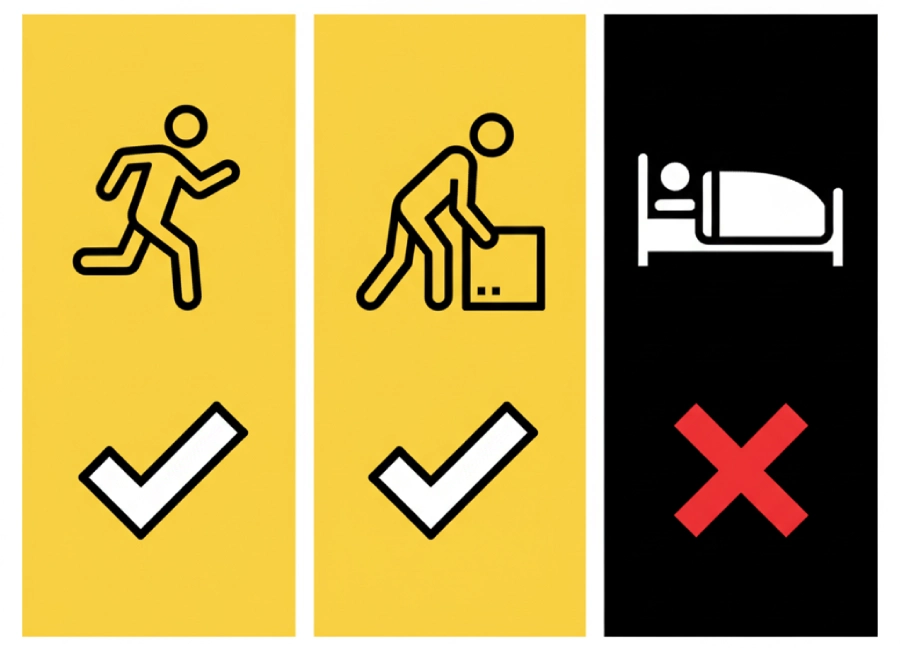
Active Usage (The “Green Zone”)
- During Workouts: Always wear the sleeve during squats, lunges, or running. This is when your joint is under the most stress and requires the highest level of proprioceptive feedback.
- During Prolonged Standing: If your job requires hours on your feet, the sleeve prevents “fatigue-based” instability.
- During Flare-ups: If you have an inflammatory “event” (swelling), the sleeve helps manage edema.
Passive Rest (The “Red Zone”)
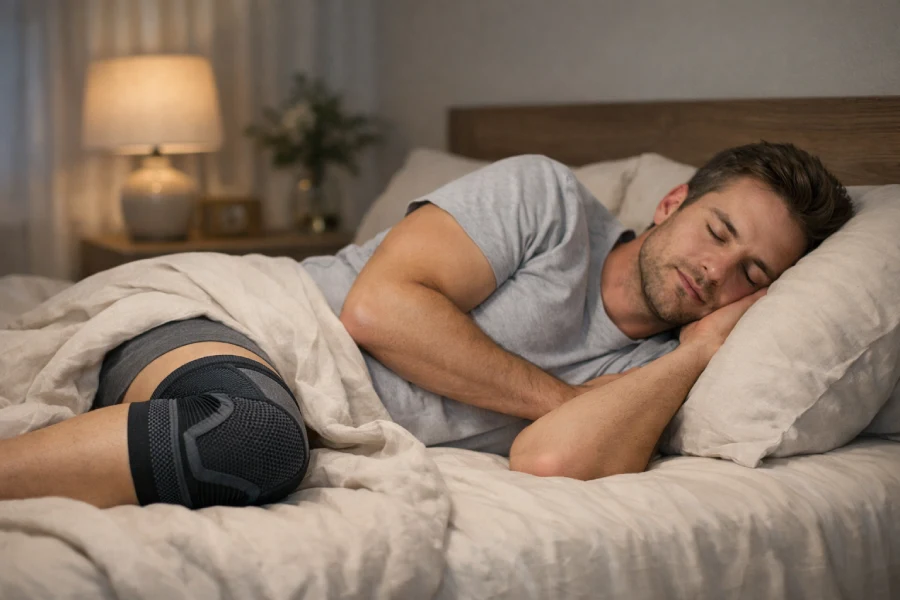
- Sleeping: Unless specifically directed by a surgeon for post-surgical swelling, do not wear a sleeve to sleep. Your circulation should be unimpeded during rest.
- Sedentary Sitting: If you are watching a movie or working at a desk for 4 hours, take the sleeve off. Your muscles should maintain their natural tone without external assistance during these times.
The Importance of Medical-Grade Fit
A sleeve that is too loose provides zero proprioceptive benefit. A sleeve that is too tight can restrict arterial blood flow, which will cause muscle fatigue and weakness. Always measure your mid-patella and thigh circumference to ensure a graduated compression fit.
Conclusion: The Expert Verdict
So, does wearing a knee sleeve weaken the knee?
From a manufacturing and biomechanical perspective, the answer is a definitive “No“. When used correctly, a knee sleeve is an enabling tool. It reduces the pain barrier, enhances your brain’s connection to your muscles through proprioception, and maintains the thermal environment necessary for joint health.
A knee sleeve only becomes a “weakness” if it is used as a substitute for movement. If you wear a sleeve but stop doing your squats, your knee will weaken—but not because of the fabric. It weakens because of the inactivity.
Your Action Plan:
- Select the right compression: Look for “medical-grade” or “3D knit” to ensure the sensory receptors are actually being stimulated.
- Pair with Strength: Use the sleeve to gain the confidence to perform 15 minutes of daily glute and quad isolation exercises.
- Respect the Rest: Take it off when you’re off your feet.
This is part of our broader initiative to educate athletes on joint longevity. If you’re not sure whether a brace or a sleeve is the right choice for you, explore our custom knee brace collection for rigid, hinged ligament support and our custom knee sleeve collection for flexible compression and everyday training support, then review our complete OEM/ODM sports support manufacturing guide covering design, branding, MOQs and lead times and contact us for a tailored quotation on your own design. Stay active, stay protected.
FAQs
Do knee sleeves make your muscles lazy?
Not by themselves. Muscles still stabilize your knee. Problems start when you stop strengthening and rely on the sleeve instead of training.
Can I wear a knee sleeve every day?
It’s better to wear it during activity, then take it off. One clinician’s guide says sleeves aren’t designed for all-day wear.
Do knee sleeves help with knee pain from running?
Often yes, for mild pain or swelling. Compression can reduce discomfort and improve body awareness, helping your form feel steadier during runs.
Does a knee compression sleeve work for arthritis?
It can. A randomized study on knee osteoarthritis found immediate pain reduction and improved performance on timed walking and TUG tests with a sleeve.
Should I sleep in a knee sleeve?
Usually no. If you need support at night, you should ask a clinician why. Over-wearing can irritate skin and hide a real issue.
Can a knee sleeve make my knee worse?
Yes, if you use it without diagnosing an injury, or if it’s too tight and causes numbness or fatigue. Stop and reassess.
Is a knee sleeve the same as a knee brace?
No. A clinician’s guide notes braces limit motion for more serious injury recovery, while sleeves mainly add compression and support for minor problems.
If my knee gives way, should I use a sleeve?
Giving way can signal instability or injury. A sleeve may not be enough. Get evaluated and follow a rehab plan before choosing support.