The knee joint is one of the most stressed and complex areas of the human body. Whether you’re a professional athlete, a dedicated runner, or simply managing daily joint discomfort, you’ve likely encountered the knee sleeve, like those in our custom knee sleeve collection. But what exactly is a knee sleeve? And how does this seemingly simple garment offer such significant support? This guide will break down the precise function, the underlying science, and the complete application boundaries of this essential piece of protective gear.
What Does a Knee Sleeve Actually Do?
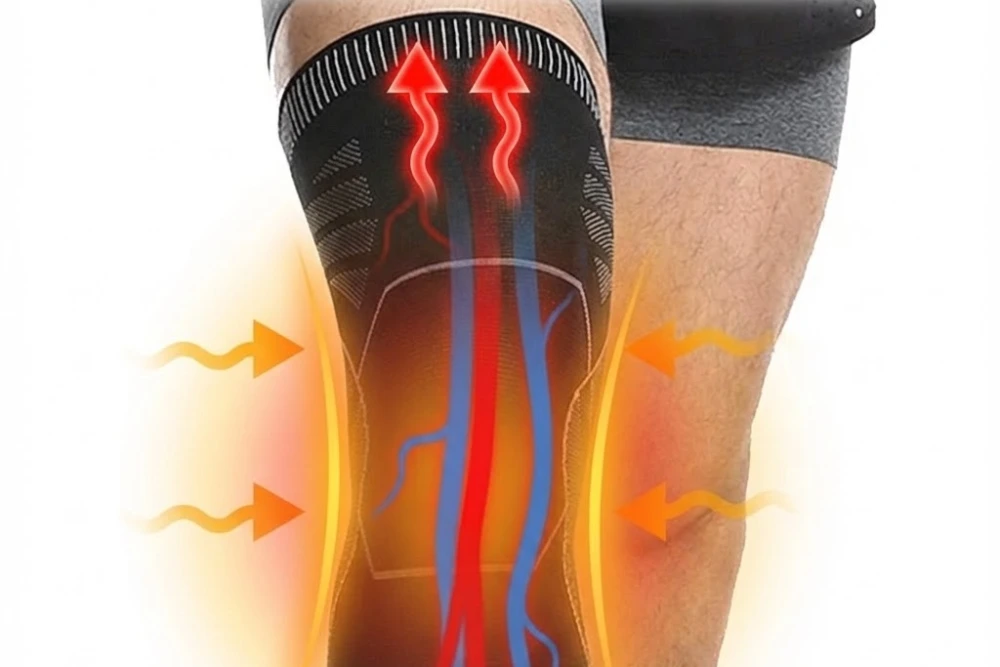
A knee compression sleeve is a soft, elastic tube that slides over the joint. It does not control the knee like a rigid brace. Instead, it offers a mix of comfort, light support, and protection.
For most people, the first noticeable change is comfort. The fabric hugs the joint, the knee feels warmer, and movement can feel more controlled. Over time, this small change often means better tolerance for training sessions, walks, or long work shifts.
Everyday Comfort and Relief
A good sleeve can:
- Ease daily strain and minor soreness during light exercise or long standing
- Reduce stiffness after rest or in cooler environments
- Give a more secure, supported feeling around the joint
This combination is why many people with “grumpy” knees prefer to keep a pair of sleeves in their sports bag or at work.
Light Support for Movement
During activity, the sleeve gently presses on the tissues around the knee. This helps manage mild swelling and keeps the area from feeling heavy or overloaded. It also enhances proprioception – your sense of where the joint is in space – which can make movements such as squats, lunges, cutting, and landing feel more stable.
The result is not a locked or restricted knee, but a joint that feels slightly more organized and controlled under load.
Soft Protection for an Irritated Joint
Sleeves also act as a thin protective layer. They reduce friction from clothing or gear, add a bit of cushioning, and give the joint a consistent, predictable feel. For people with mild irritation, this often makes the difference between stopping early and finishing the session.
How Do Knee Sleeves Work – Structure & Materials
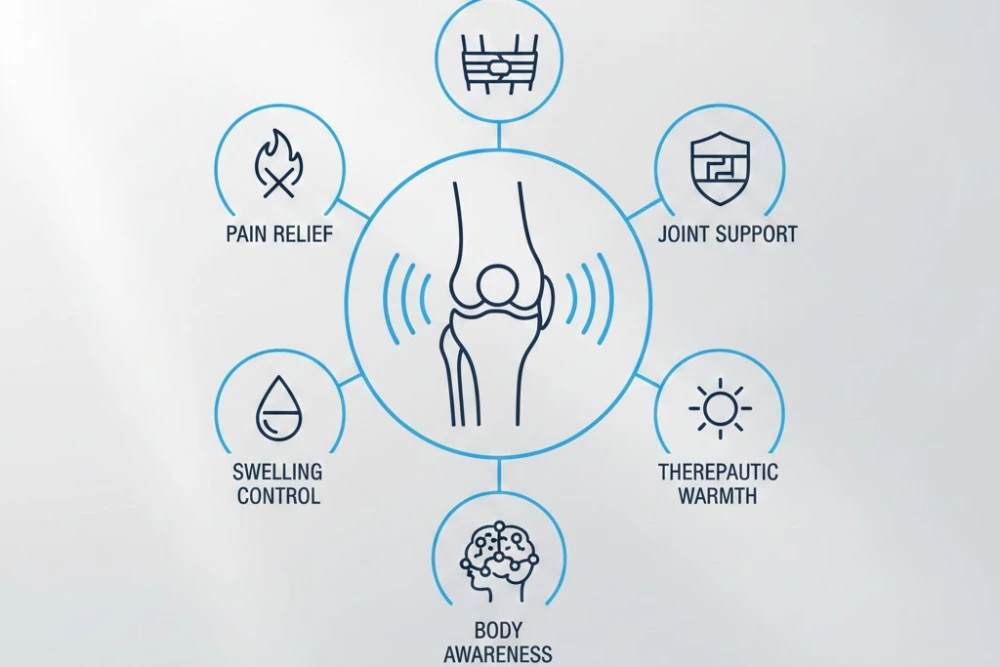
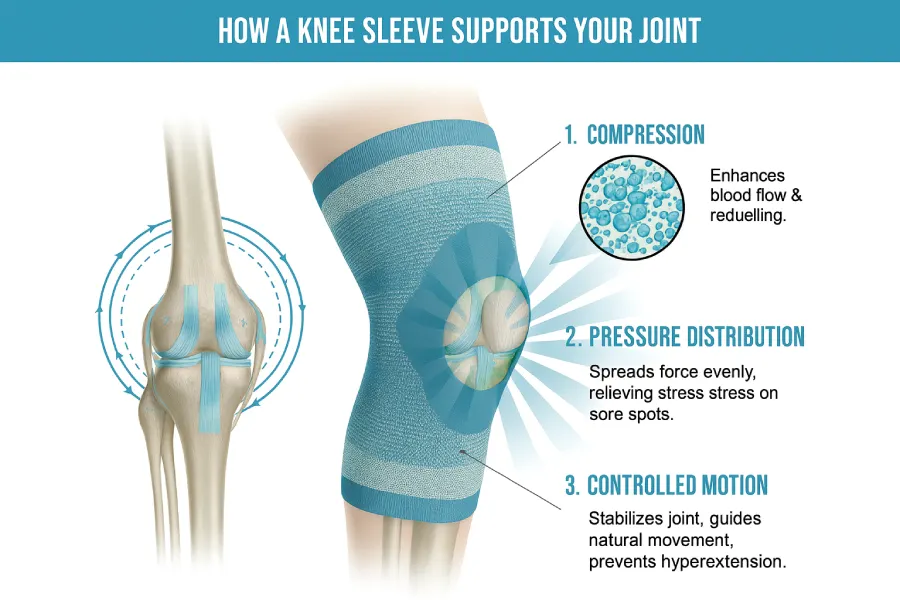
The effect of a knee sleeve comes from three simple mechanisms: compression, sensory feedback, and warmth. They work together rather than in isolation.
Compression and Fluid Control
When elastic fabric applies even pressure around the knee, it slightly limits the space available for excess fluid. This can help manage mild swelling during and after activity. The effect is modest but noticeable for many users: less puffiness, less feeling of pressure inside the joint, and better comfort after training.
Joint Awareness and Control
A sleeve is in constant contact with the skin. The nervous system uses this contact as extra information about how the knee is moving. With clearer feedback, technique often improves without conscious effort. Landings feel more controlled, steps feel cleaner, and athletes tend to trust the joint more, especially under heavier or repeated loads.
Warmth and Tissue Behavior
By slowing down heat loss, the sleeve keeps muscles and connective tissues around the knee at a more consistent working temperature. Warm tissues move more freely and usually tolerate load better. This is one reason sleeves are especially popular in cold gyms, outdoor fields, and ice rinks.
Who Are Knee Sleeves For?
Knee sleeves work best when the joint is structurally intact but irritated, overloaded, or exposed to frequent stress. They are not only for high-level athletes. Office workers, warehouse staff, older adults, and recreational runners all use them for slightly different reasons.
Training and Sports
Strength athletes, functional fitness fans, and field or court players often choose knee sleeves as part of their regular gear. In these contexts, sleeves can:
- Make heavy squats and lunges feel more secure
- Reduce the shock of repeated jumps, sprints, and direction changes
- Help the knees cope with high training volume and frequent competitions
The sleeve does not turn a weak joint into a strong one, but it can make hard work feel more manageable.
Recovery and Daily Support
For many people, the main goal is simply to move through the day with less knee discomfort. This group includes adults with early arthritis, people returning to activity after mild injuries, and workers who stand or walk for hours.
For them, a knee sleeve is mainly a comfort tool. It helps reduce morning stiffness, makes stairs or hills less demanding, and supports confidence when the knee feels “off” but not seriously injured.
Functional Boundaries: Sleeve vs. Brace (The Critical Distinction)
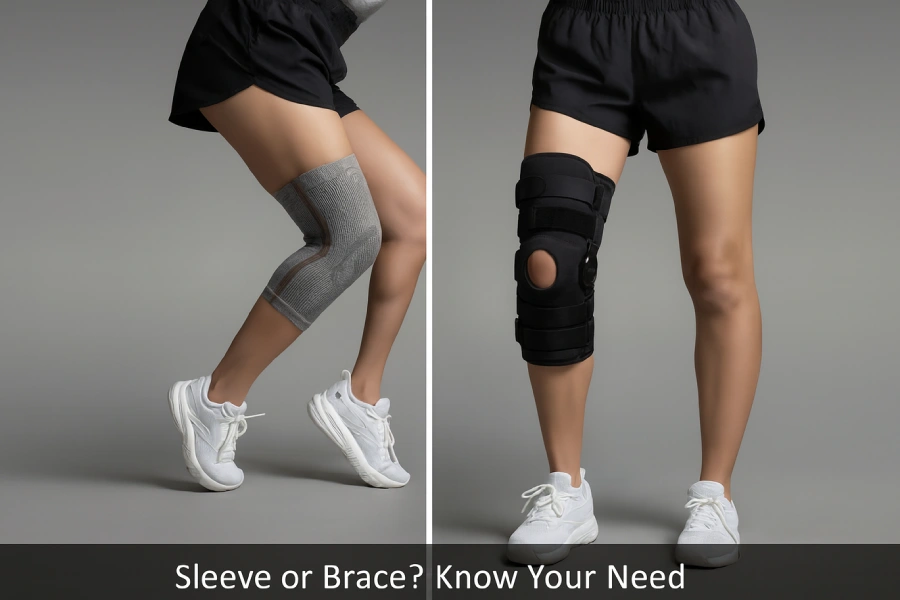
A frequent source of user confusion is the difference between a sleeve and a knee brace. While a sleeve provides compression and warmth, it offers minimal mechanical stability. A brace features rigid supports, hinges, or rigid straps designed to restrict dangerous motion after severe injury.
The Critical Choice: If your pain requires high mechanical stability or involves known ligament damage, a sleeve is inadequate. Understand the fundamental difference between these two devices here: Knee Sleeve vs. Knee Brace: How to Differentiate and Choose.
| Condition | Sleeve Sufficient | Consider a Brace |
|---|---|---|
| Mild pain or discomfort | ✓ | |
| Mild swelling after activity | ✓ | |
| Mild instability sensation | ✓ | |
| Mild arthritis symptoms | ✓ | |
| Overuse pain from training | ✓ | |
| Known ligament damage (ACL/MCL) | ✓ | |
| Severe or sharp pain | ✓ | |
| Significant swelling/effusion | ✓ | |
| Post-surgical recovery (early phase) | ✓ | |
| Recurring “giving way” episodes | ✓ |
Who Needs a Knee Sleeve? Identifying the Ideal User Group
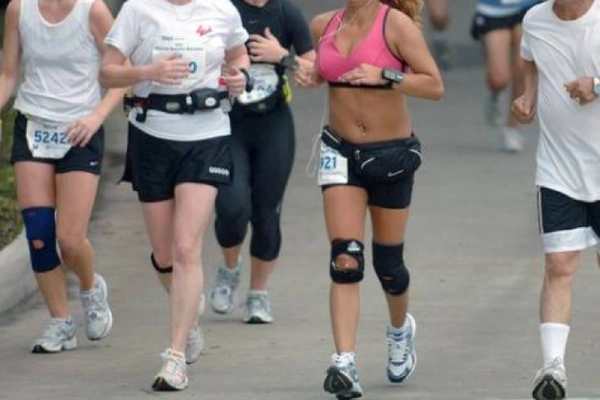
Identifying the appropriate user prevents misapplication of the product.
The Performance-Driven Athlete
This group includes weightlifters, CrossFit athletes, and individuals engaged in high-impact sports, using sleeves primarily for stabilization and performance gains under heavy load. What does knee sleeve do for this group is provide confidence and dynamic joint support.
Recovery and Daily Support
This segment includes individuals over 50, those with mild joint discomfort, or workers in occupations requiring prolonged standing. For them, the sleeve is a crucial tool for mobility maintenance and daily comfort.
The Dependency Myth: Will it Weaken My Knee?
A primary concern is whether continuous support causes muscle atrophy. Scientific evidence indicates that this is highly unlikely with non-rigid sleeves. However, psychological dependency on the perceived stability is a real factor to manage.
Addressing the Concern: We take a deeper look at the science behind this controversy and the risks of long-term reliance: Does Wearing a Knee Sleeve Weaken Your Knee?
Understanding Your Options: The Major Types & Materials of Knee Sleeves
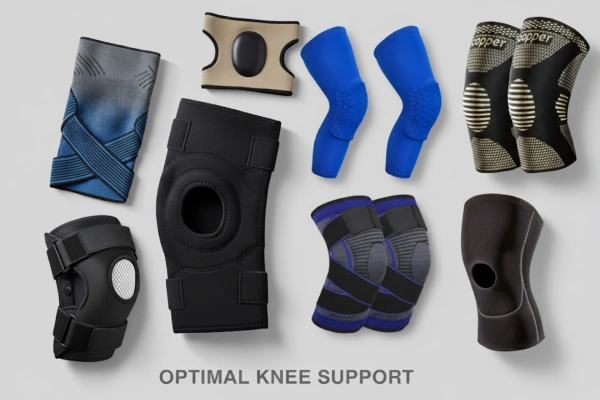
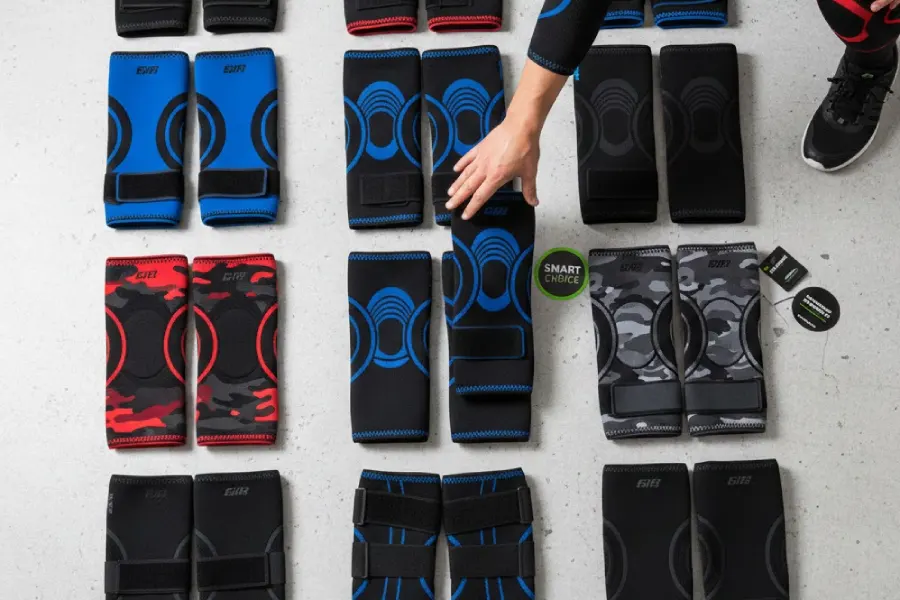
The way a knee sleeve behaves comes down to three elements: material, thickness, and structure. Small changes in each of these areas can completely change how the product feels.
Core Materials: Neoprene and Knitted Fabric
Most sleeves fall into one of two material families.
Neoprene Knee Sleeves
Neoprene is a dense, springy foam material often used in weightlifting and strength sports. It is typically offered in 5 mm and 7 mm thickness.
- Holds heat very well
- Feels firm and supportive
- Often chosen for heavy lifting, short training sessions, and cooler environments
Knitted (3D Knit) Fabric Sleeves
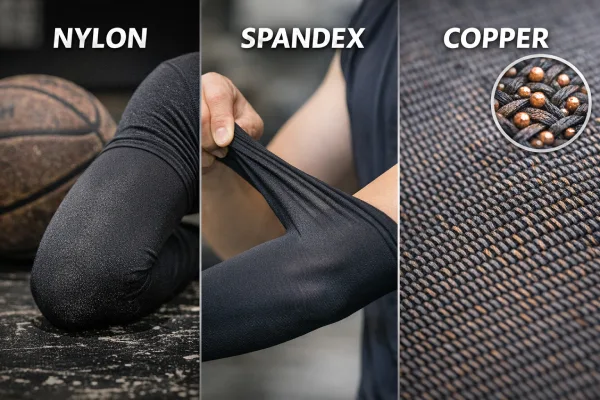
Knitted sleeves are built from yarns such as nylon and spandex. The result is a lighter, more breathable fabric with high stretch.
- Allows more airflow and moisture management
- Feels thinner and less bulky
- Better suited for endurance sports, daily use, and warmer climates
Structural Design and Styles
Beyond material, design shapes how the sleeve fits and performs.
Closed-Patella (Standard Pull-On)
This is the most common form: a tube that covers the knee completely, including the kneecap. It offers even compression around the joint and is popular for general sports, strength training, and warmth.
Open-Patella (Patella Tracking)
An open-patella sleeve has a cutout over the kneecap. This relieves pressure on the patella and can help with front-of-knee discomfort or mild tracking issues. Runners and jumpers often prefer this style when they feel pain directly around the kneecap.
Wrap-Around or Adjustable Sleeves
Wrap-around designs use hook-and-loop closures instead of a fixed tube. They are easier to put on for people with limited mobility and make it possible to fine-tune compression.
These designs are useful when knee size changes due to swelling, or when the user wants a looser or tighter fit on different days.
Integrated Support Features
To stand out in a crowded market, many sleeves now include extra features:
- Silicone anti-slip grips along the top edge to reduce sliding and rolling
- Gel pads around the kneecap for targeted cushioning and support
- Flexible side stays for mild lateral support without turning the sleeve into a rigid brace
These additions move some designs closer to light braces while keeping the overall feel soft and elastic.
5 mm vs. 7 mm Neoprene Sleeves
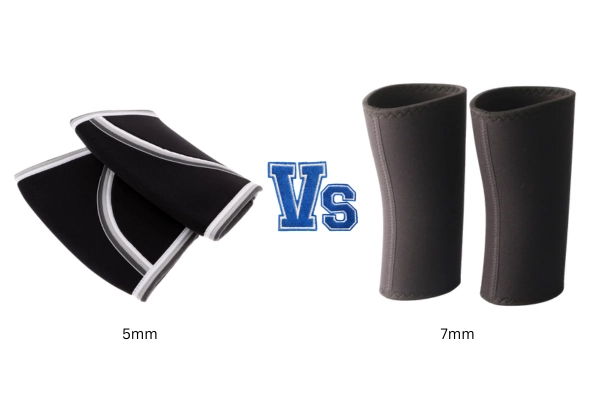
When neoprene is the main material, thickness quickly becomes a key decision. The two most common options are 5 mm and 7 mm.
5 mm Knee Sleeves
Five-millimeter sleeves offer a balance between mobility and support. They are a good choice for:
- Functional fitness and mixed training sessions
- Moderate weightlifting
- Sports that combine running, jumping, and strength work
They provide clear warmth and compression without feeling overly stiff, so they can stay on for longer workouts.
7 mm Knee Sleeves
Seven-millimeter sleeves are thicker, stiffer, and more elastic. They are often reserved for:
- Powerlifting and heavy barbell sessions
- Athletes who want a very firm, “locked-in” feeling at the bottom of squats
- Short, high-intensity sets rather than long conditioning sessions
A dedicated article can explain thickness selection in more detail: What mm Knee Sleeve Should I Get?
Advanced Materials and OEM Options
Beyond the primary Neoprene or Nylon base, many sleeves integrate high-performance yarns and treatments to enhance functionality (e.g., moisture-wicking, anti-odor, or specialized thermoregulation). This includes materials treated with copper, bamboo charcoal, or silver ion technology. These advancements push the boundaries of recovery and hygiene.
Beyond the primary Neoprene or Nylon base, many sleeves integrate high-performance yarns and treatments to enhance functionality (e.g., moisture-wicking, anti-odor, or specialized thermoregulation). This includes materials treated with copper, bamboo charcoal, or silver ion technology—for example, custom copper knee compression sleeves and custom bamboo compression knee sleeves using bamboo charcoal yarns. For buyers interested in classic foam-based constructions, our custom neoprene knee sleeve collection shows how these treatments can be paired with different base structures. These advancements push the boundaries of recovery and hygiene.
Supplier Insight: For manufacturers and bulk buyers, understanding the cost and function of these advanced textile technologies is crucial for product differentiation. Dive into the detailed specifications of materials, functional yarns, and specialized padding in our sourcing guide: OEM/ODM Sports Support Manufacturing Guide.
When a Knee Sleeve Is Not Enough
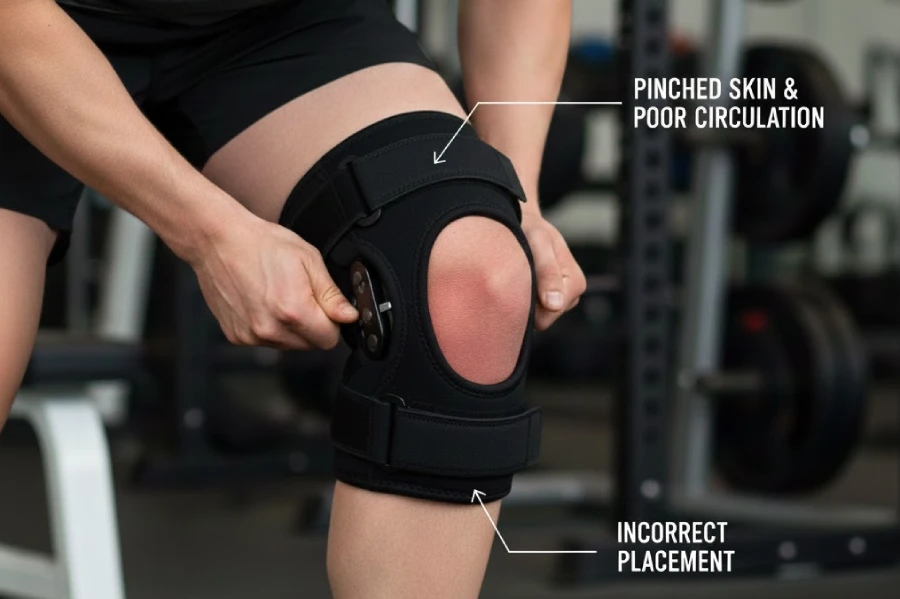
Even the best sleeve cannot replace proper assessment, rehabilitation, or medical care. There are clear situations where a sleeve on its own is not the right answer.
You should be cautious about relying only on a sleeve if you notice:
- Sudden, sharp, or severe pain in the knee
- Obvious instability or repeated “giving way” episodes
- Large and rapid swelling after an injury
- A recent surgery or known ligament tear without medical clearance
If the sleeve itself causes problems — numbness, tingling, increasing pain, or skin irritation that does not calm down — it may be too tight, poorly fitted, or simply not suitable for your condition.
In those cases, adjusting size and compression or seeking professional advice is more important than adding another layer of fabric.
Frequently Asked Questions
Q1: What is a knee sleeve?
A knee sleeve is a soft, elastic tube that slides over your knee to provide compression, warmth, and light support. It doesn’t lock the joint like a rigid brace. Instead, it gently hugs the area to reduce soreness, control mild swelling, and help the knee feel more stable during movement.
Q2: What is a knee sleeve used for / what is a knee sleeve for?
A knee sleeve helps with mild knee pain, swelling, and stiffness by providing even compression and warmth. It supports the joints during sports, workouts, or long days on your feet. It’s best for intact but irritated knees, not for fresh ligament tears, major trauma, or severe instability.
Q3: How does a knee compression sleeve work?
Knee compression sleeves work by squeezing the soft tissues around your knee, which improves blood flow, reduces fluid build-up, and supports muscles and ligaments. This can ease discomfort, enhance joint awareness, and make movement feel smoother, especially during running, squats, or other repetitive impact activities.
Q4: When should you wear a knee sleeve?
You should wear a knee sleeve when you expect extra stress on your knees—during running, jumping, heavy leg training, long walks, or standing jobs. Many people also use them on “bad knee” days or mild flare-ups. For sudden severe pain or injury, see a professional before relying on a sleeve.
Q5: Can you wear a knee sleeve all day?
You generally shouldn’t wear a knee sleeve all day, every day. Prolonged, tight compression can irritate skin, affect circulation, and encourage muscle dependency. Use it during activity and short recovery windows, then take breaks. If you feel numbness, tingling, or increasing discomfort, remove it and reassess the fit or usage.
Q6: Does a knee compression sleeve help with knee pain?
Yes, a knee sleeve can help with mild to moderate knee pain by improving circulation, controlling swelling, and supporting irritated tissues. Many people with early arthritis, overuse pain, or post-workout soreness feel more comfortable wearing one. For sharp, severe, or sudden pain, consult a professional first.
Conclusion: A Practical Tool, Not a Complete Solution
A knee compression sleeve is a simple product with a clear role. It offers compression, warmth, and feedback for knees that are working hard but are still structurally sound. It can make training, sport, and daily activity more comfortable, and it can help people stay active when their knees are slightly irritated.
At the same time, a sleeve cannot replace a brace, a structured rehabilitation plan, or medical care when there is serious damage inside the joint.
Two decisions matter most when choosing a sleeve:
- Selecting the right type and thickness for your activity, sport, or customer base. A separate article, What mm Knee Sleeve Should I Get?, looks at this in detail.
- Getting the correct size and compression level so the sleeve is secure but not restrictive. The article How to Choose the Right Size Knee Sleeve explains how to measure and fit.