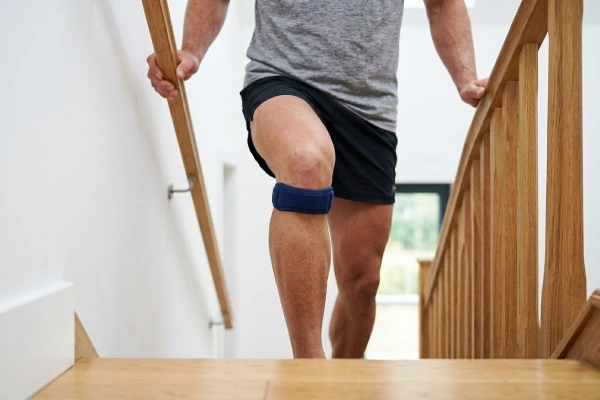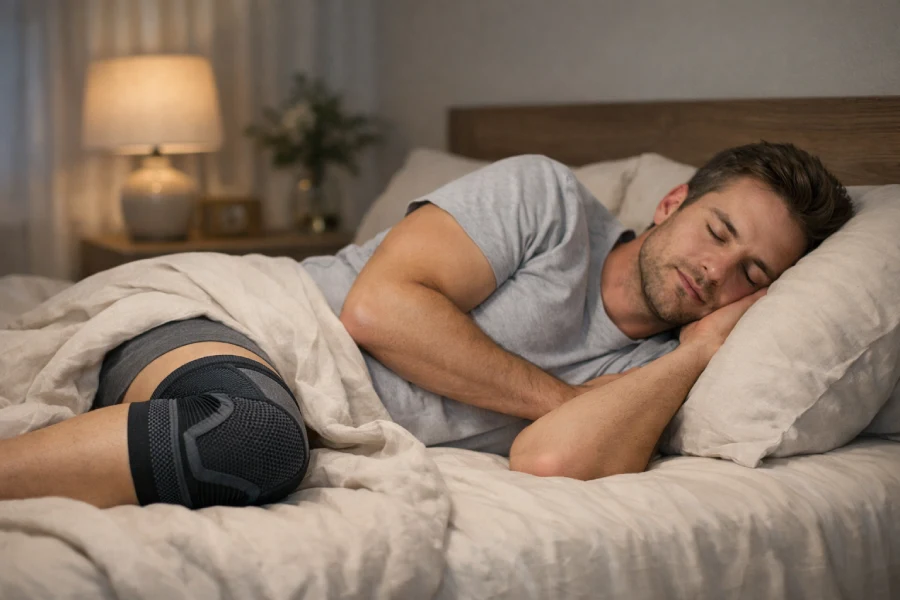
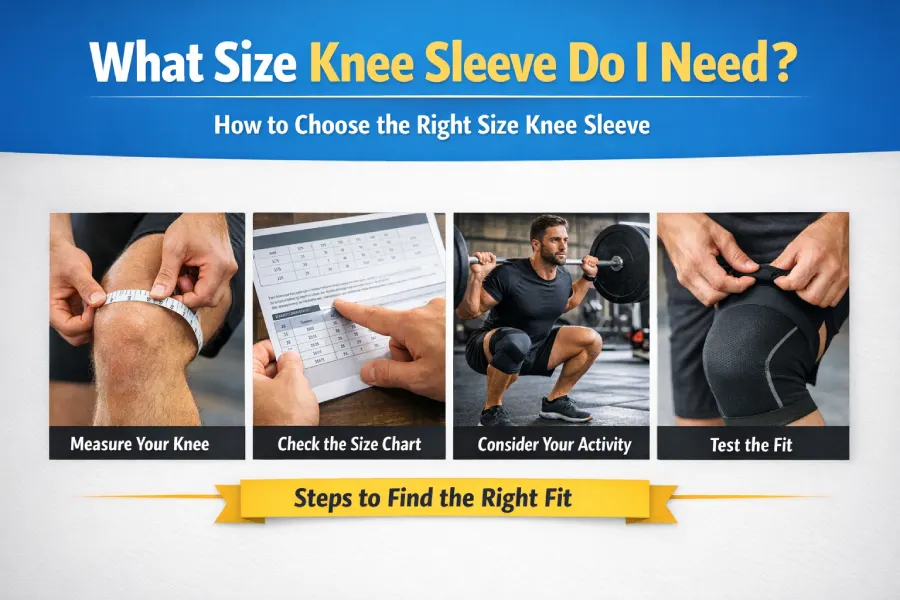
Choosing the right size knee sleeve feels confusing. If you guess, you risk pain, wasted money, or no support. This guide shows a clear way to get your best fit.
To choose the right size knee sleeve, measure your leg, compare it with the brand’s size chart, think about your sport and tightness needs, then test the fit for comfort, support, and safe blood flow.
Buying a knee sleeve is not just about color or price. The size you pick changes how well your knee feels during training, walking, or rehab. If you’re not sure what a knee sleeve actually does, you can start with a complete overview. A sleeve that fits well can add extra support and help you move with more confidence, while a poor fit can cause slipping, pinching, or numbness.
You might be wondering… do you need to measure, or can you just guess your usual clothing size? For knee sleeves, guessing almost always leads to returns and frustration. This simple guide walks you step by step through measuring, reading size charts, choosing between two sizes, and checking the actual feeling on your knee so you can order once and get it right.
Why does choosing the right size knee sleeve matter?
If you treat size as an afterthought, your knee sleeve might feel fine for five minutes and then start to hurt or slide. That leads to less training time and more irritation. A right-size sleeve supports the joint, helps blood flow, and stays in place.
The right size knee sleeve should give steady compression, keep the joint warm, and stay in place without cutting off circulation. A wrong size either squeezes so hard it causes pain and numbness, or sits so loose it offers almost no support.
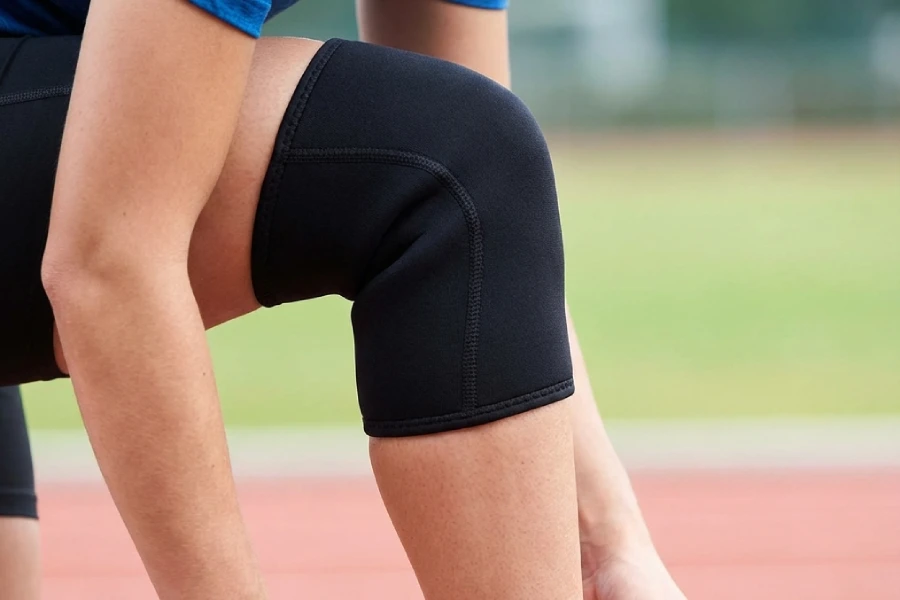
A knee sleeve that fits well does three simple jobs: it supports, it stabilizes, and it comforts. Research and expert guides suggest that a properly fitted sleeve can add noticeable support for the joint, especially during dynamic movements such as squats, running, or jumping. If you’re worried that long-term use might make your knee weaker, you’re not alone. By hugging the knee, the sleeve improves your awareness of joint position, which can help you keep better form and reduce stress on the ligaments and tendons. On the other hand, a sleeve that is too tight can restrict blood flow, produce tingling, and even change skin color below the cuff. Too loose, and it will bunch behind the knee, slide down the calf, and distract you every few minutes. With the right size, you should be able to bend, walk, and train with a steady “hug” feeling, not a hard squeeze or a baggy sock. Getting that balance starts with good measurements. If you’re not sure whether you need a sleeve, a brace, or pads, check our detailed comparison first.
How do you measure your leg for a knee sleeve?
Guessing based on height or body weight leaves a lot of room for error. Your thighs and calves might not match “average” charts. The most reliable way is to measure the leg at set points and use those numbers.
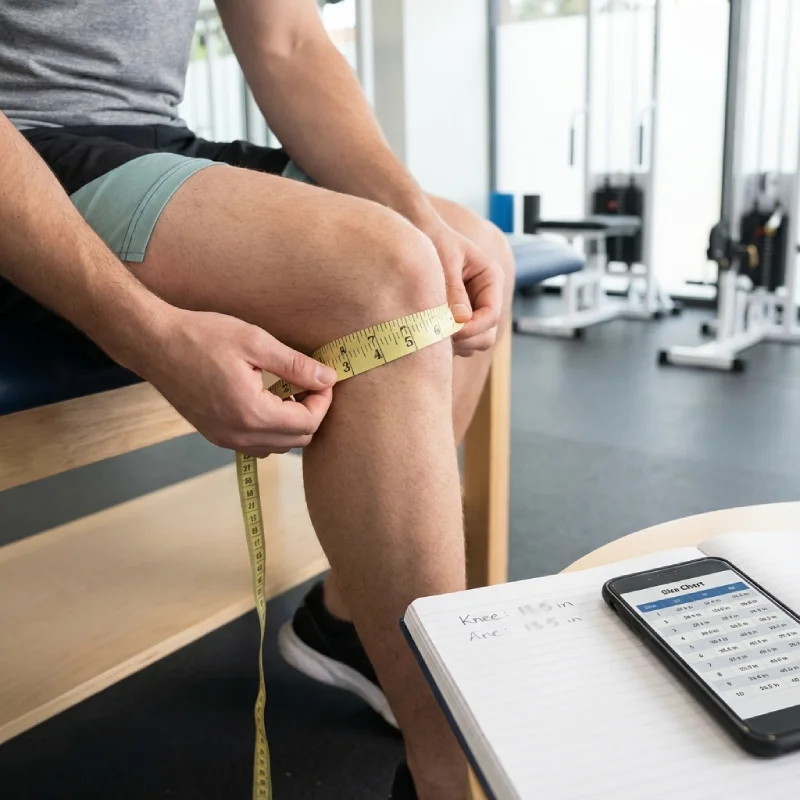
To measure for a knee sleeve, use a soft tape around the middle of your kneecap with the leg slightly bent, then measure a few centimeters above and below. Write the numbers down and match them to the brand’s size chart.
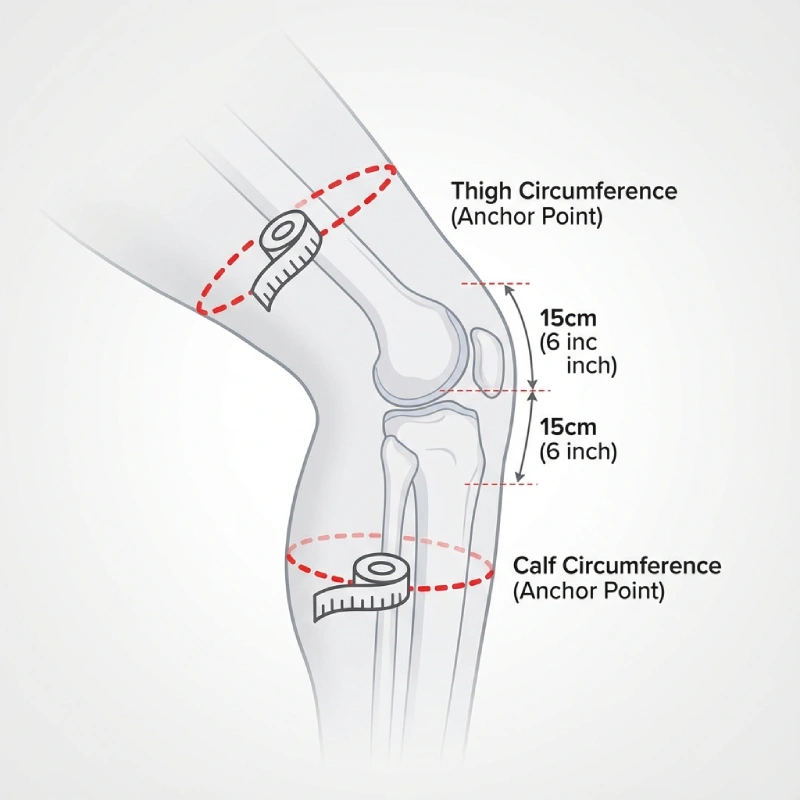
Here’s the deal… if you rush this step, every other choice becomes guesswork. Follow this simple process:
- Prepare tools
Use a flexible tape measure. If you do not have one, use a string and a ruler. Keep your leg bare; do not measure over thick clothing. Measuring over pants can add extra centimeters and push you into the wrong size range. - Bend your knee slightly
Stand or sit with your knee bent about 30 degrees, like you are on a low step. Many sizing guides use this position because it reflects how the sleeve sits while you move. - Measure knee circumference
Wrap the tape around the center of your kneecap (patella). Make sure the tape is flat, snug, and level, not cutting into the skin. This number is the main reference for most knee sleeve charts. - Measure above and below the knee (if required)
Some brands ask for thigh and calf measurements. Common points are about 10 cm (4 in) above and below the knee center. Wrap the tape at those points in the same snug-but-not-tight way. - Repeat and confirm
Take each measurement two or three times. If the numbers differ, use the average. Accuracy here saves you from returns later.
By writing these numbers down and keeping them in your phone, you can compare different brands quickly. This is especially helpful if you order for a whole team or customer group that needs consistent sizing.
How do knee sleeve size charts work?
Even with perfect measurements, many buyers still feel lost when they see the size chart. Each brand uses its own ranges, and two “Medium” sleeves can fit very differently. Understanding how charts work helps you read them with more confidence.
A knee sleeve size chart matches knee (and sometimes thigh/calf) measurements to sizes like S, M, L. Because brands are not standardized, always start from your measurements, then choose the size whose range you sit in the middle of, not just the label.
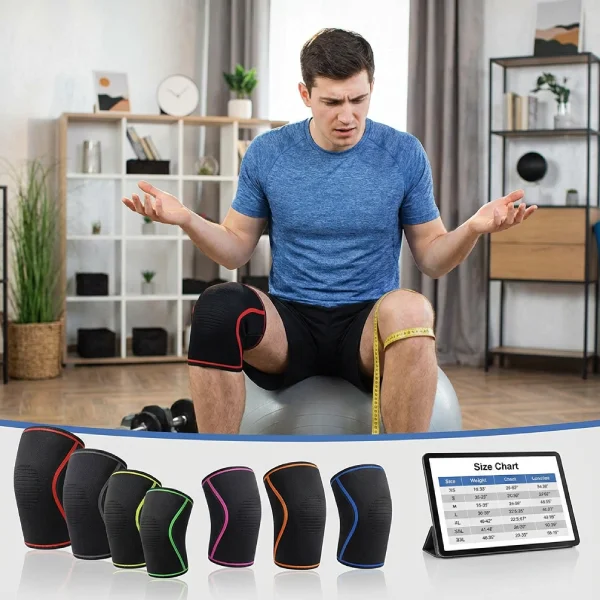
Most charts list knee circumference first, then may add thigh or calf guidance. For example, some guides say to measure the knee, then check whether your calf is more than about 4 cm (1.6 in) larger than the knee; in that case, sizing up can give a better fit. Brands like Nike and others also mention that if you are between two sizes, you can go smaller for a tighter fit or larger for a more relaxed feel.
Here is a simple sample size chart (for illustration only; always follow the chart for the brand you buy):
| Suggested size | Knee circumference (inches) | Typical user notes |
| XS | 11–12 | Very small knees, youth, petite users |
| S | 12–13 | Smaller adult knees |
| M | 13–14 | Average adult knees |
| L | 14–15 | Larger knees or strong lifters |
| XL | 15–16 | Very muscular or plus-size knees |
| 2XL | 16–17 | Strong power athletes, big thighs and calves |
This table shows how size bands work, but your actual sleeve size may use different numbers. Here’s what most people miss… charts are not only about matching the knee. If your calf is much bigger than your knee, that can change how the sleeve slides on. Some makers tell you to use the calf number instead if it is larger.
When you compare brands, always ask two questions: “Which size range is my measurement in the middle of?” and “Does this brand suggest sizing up or down for my sport?” This stops you from choosing only by small, medium, or large and pushing your sleeve outside its intended range.
Should you size up or size down for your knee sleeve?
Many buyers measure, see they fall between sizes, and then freeze. A smaller sleeve sounds secure but scary; a bigger sleeve sounds safe but maybe too loose. The answer depends on how you use the sleeve.
If you are new to knee sleeves or want all-day comfort, choose the recommended size or slightly larger. If you are a strength athlete chasing maximum support for heavy lifts, you can consider going one size down after some experience.
Guides from strength brands often suggest a “regular” fit and a “tight competition” fit. For general gym training, CrossFit, running, or daily wear, a regular fit is the safer choice. A regular fit gives even compression without fighting to pull the sleeve on and off. If you are new to sleeves, many experts recommend sticking with the recommended size instead of sizing down, especially in smaller sizes where fabric stretch is limited.
For serious powerlifters or weightlifters, a tighter sleeve can feel more stable at max loads, but it comes with trade-offs: more time to put on, higher pressure, and less comfort between sets. That level of tightness needs care. Our cluster article “How tight should a knee sleeve be/fit?” goes deeper into the fine line between helpful pressure and over-compression, and when to back off.
The bottom line? If you train lightly to moderately, walk, or stand for long hours, lean toward the regular or slightly looser side. If you are an advanced lifter with short, heavy sets and no circulation problems, a slightly tighter size can make sense, as long as you know the warning signs of “too tight,” which we cover below.
How should a knee sleeve feel when the fit is right?
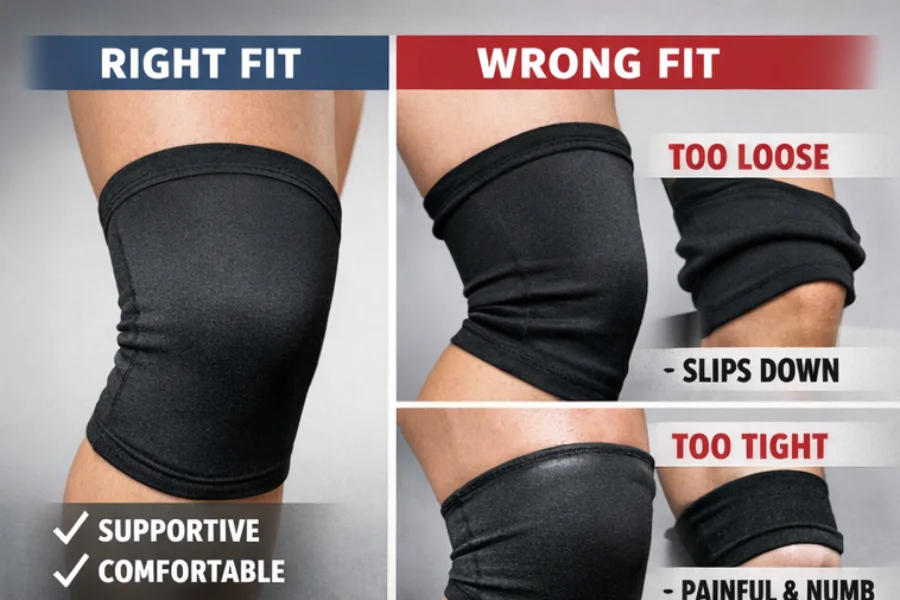
Even with the right number on the chart, you still need to trust how the sleeve feels on your leg. The right size has a clear “feel profile” you can check at home.
A correctly sized knee sleeve should feel snug like a firm hug around the joint, stay in place while you move, allow a full squat without sharp pain, and never cause numbness, tingling, or color changes in your lower leg.
When you first put it on, you should be aware of the pressure, but still be able to slide a couple of fingers under the edge of the sleeve. Walk, lunge, and sit down for a few minutes: the sleeve shouldn’t roll, pinch behind the knee, or cut into your skin. After you take it off, light imprint lines are normal, but deep grooves, redness that lasts more than 20–30 minutes, or any numbness in your foot usually mean the sleeve is too tight or the size is wrong.
Conclusion
Choosing the right size knee sleeve begins by measuring the thigh and calf, then matching the larger of the two measurements to the corresponding chart. Between sizes, choose comfort for longer wear and a tighter fit for short sessions.
FAQs
Q: Can I wear a knee sleeve if I’m between sizes?
A: Yes. Choose the larger size for comfort and longer wear. Choose the smaller size only if circulation stays normal and the use time is short.
Q: How do I know if my knee sleeve is too small?
A: Warning signs include numbness, tingling, cold foot, color changes, deep edge marks, or sharp pressure around the knee.
Q: Can you measure for a knee sleeve without a soft tape measure?
A: Yes, but accuracy drops. Use a string, mark the overlap, then measure it flat with a ruler.
Q: Do I need to measure both legs?
A: Yes, if they differ. Always size based on the larger leg. A sleeve that fits the smaller leg may pinch the other.
Q: Is it okay to size down for more support?
A: Sometimes. Size down only if your measurements fit the range and you pass a circulation check after 10–15 minutes of movement.
Q: Why does my knee sleeve roll down even though I chose my size?
A: Rolling often means the sleeve is too large, too short, or mismatched to your thigh-to-calf shape. Re-check thigh measurement and consider a different cut.
Q: Can I wear a knee sleeve all day at work?
A: Many people can, if comfort and circulation remain normal. If swelling increases during the day, sizing up usually works better.
Q: Do thicker knee sleeves need a different size?
A: Often, yes. Thicker sleeves stretch less and feel tighter. Re-measure and re-check the chart instead of reordering the same size. If you’re comparing different thicknesses, our guide to the 3mm vs 5mm vs 7mm neoprene knee sleeve explains how thickness affects fit and performance.