
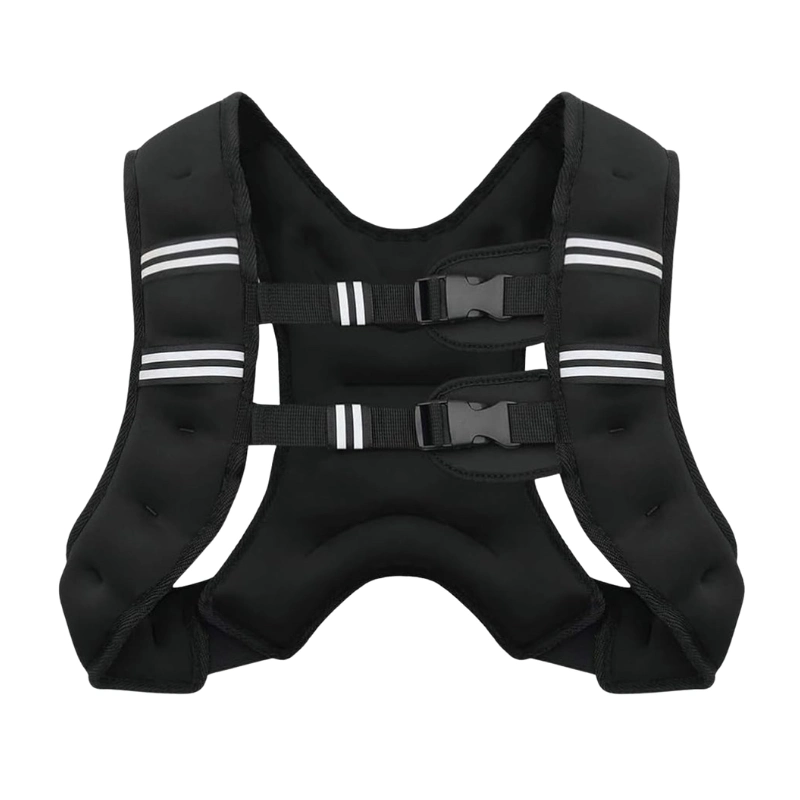
Low-Profile Weighted Vest
Sewn-In Fixed WeightThe weight is sealed inside the shell and sewn shut — no pockets, nothing to take out.
- Gel, steel sand or iron sand inside — you choose the fill.
- The gel version is moulded solid under a TPE water-barrier: no rust, rinses clean.
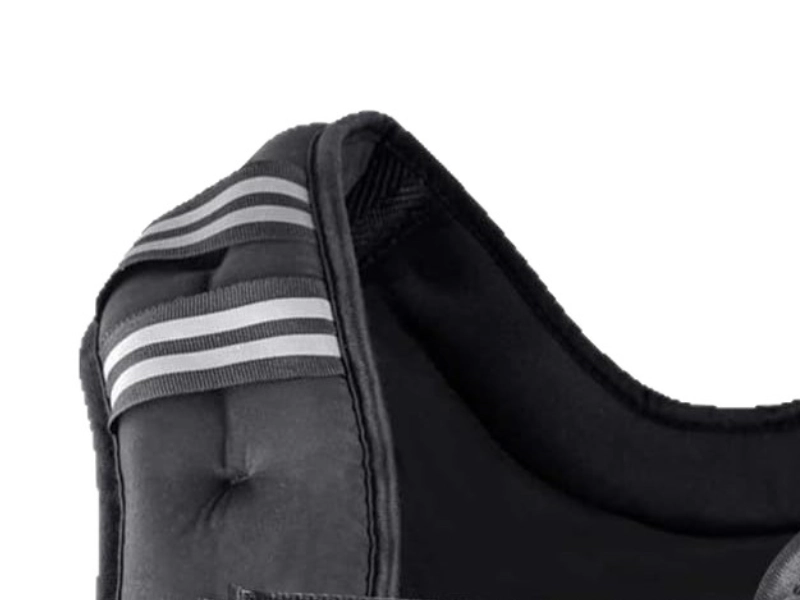
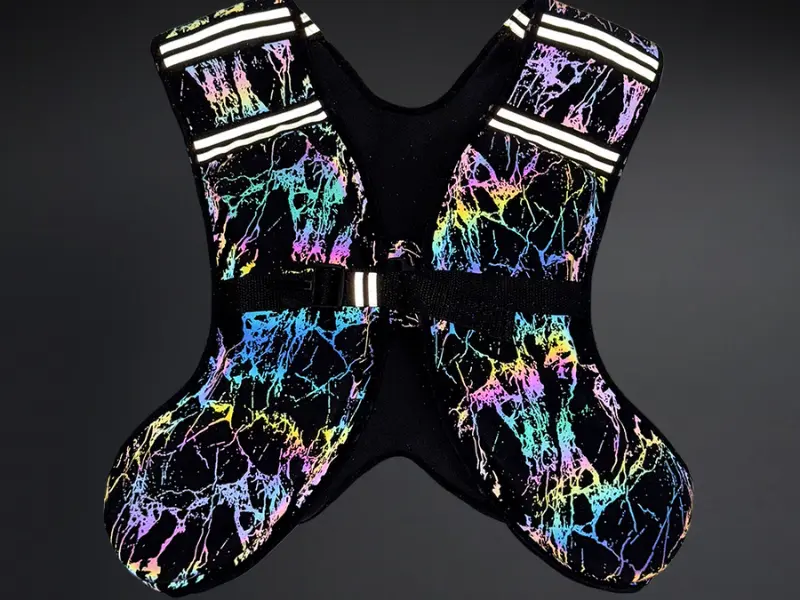
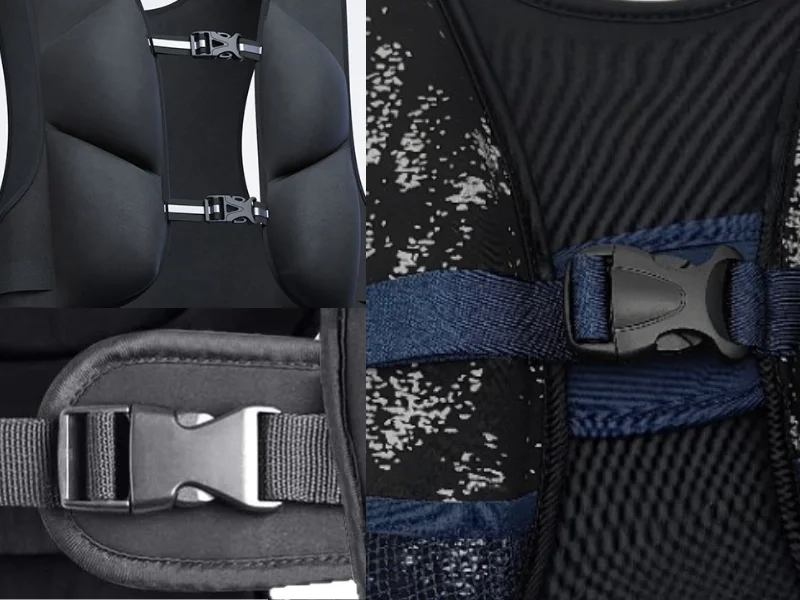
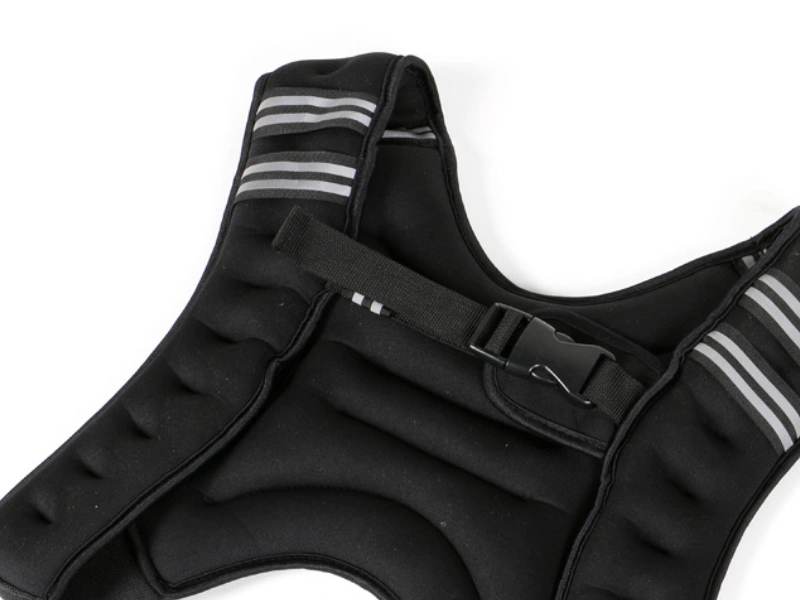
- Sits close to the torso like a soft brace; adjustable buckles, reflective and camo prints.
- Weight is set at the factory — you define the tiers for your line, for example 8 / 12 / 16 lb.
- Shell
- Soft SBR + fabric
- Fill options
- Gel · Steel sand · Iron sand
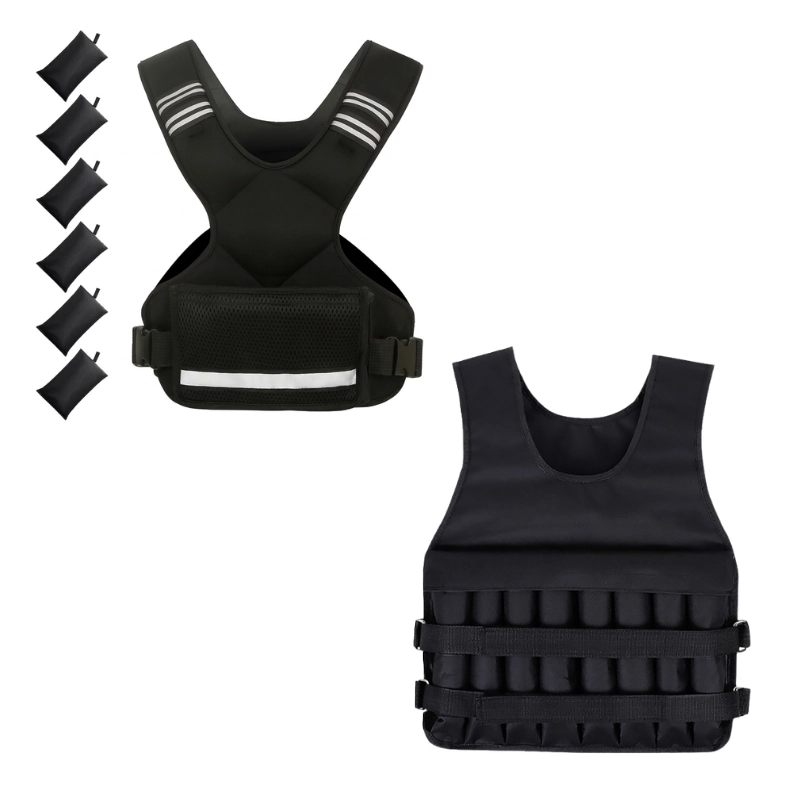
Adjustable Weighted Vest
Pocket-Insert · Removable WeightsOne vest, many weights — end users add or remove the load as they train.
- Iron-sand pods, steel-sand pods, thin steel plates or 1 kg cast-iron blocks.
- Pockets are cut to fit the weight you choose, in the increment your program needs.
- From light starter loads to heavy 20–40 lb gym builds, reinforced at every load point.
- Spare pods and blocks can be stocked as their own SKU.
- Shell
- Polyester
- Works with
- Iron-sand pods · Steel-sand pods · Thin steel plates · Cast-iron blocks
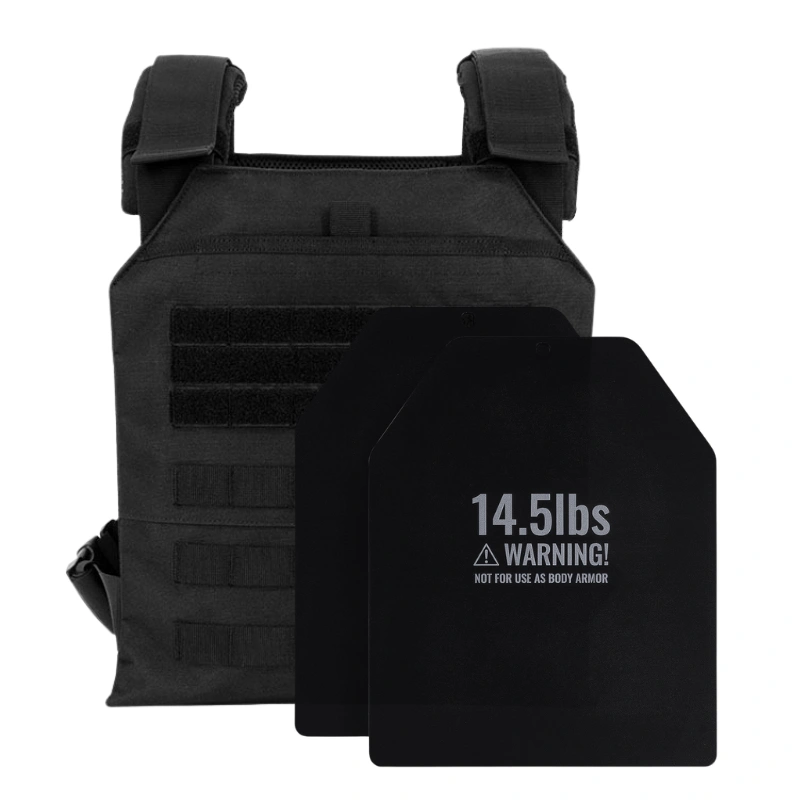
Tactical Weighted Vest
Plate-CompatibleTakes standard fitness plates, flat or curved — ordered loaded, or shell-only.
- Shell-only ships at roughly 1.2 kg instead of 10.5 kg loaded.
- Waist cummerbund and retention straps hold the plate flat and locked.
- Camo and solid colorways, with a patch panel if your brand wants one.
- For training use — not body armour.
- Shell
- Polyester + waist cummerbund
- Works with
- Standard fitness plates, flat or curved
Choose the structure
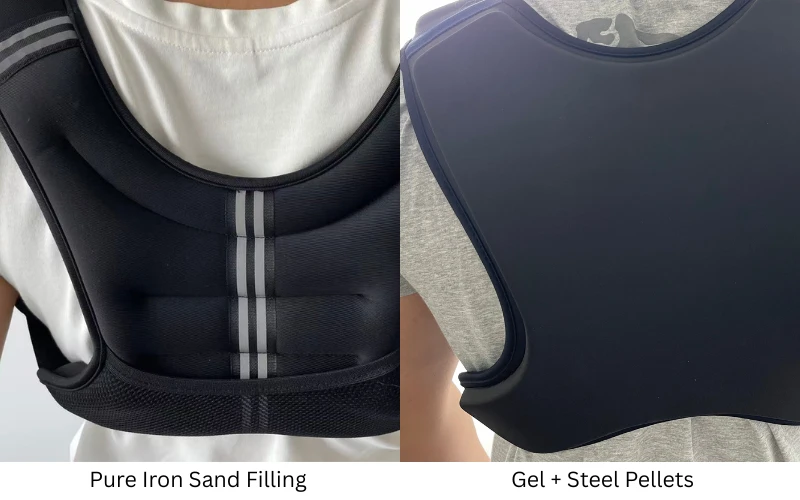
Sewn-in — fixed weight
The weight is sealed inside the shell and sewn shut. The gel version is moulded solid; sand is sealed into compartments.
- What loads it
- Gel · steel sand · iron sand
- Shell
- Soft shell (SBR + fabric), moulds to the body
- Weight
- Weight and placement fixed at the factory — you pick the tiers for your line
- Feels like
- A soft, low-profile layer that hugs the torso
- Best for
- Running, walking and all-day wear lines
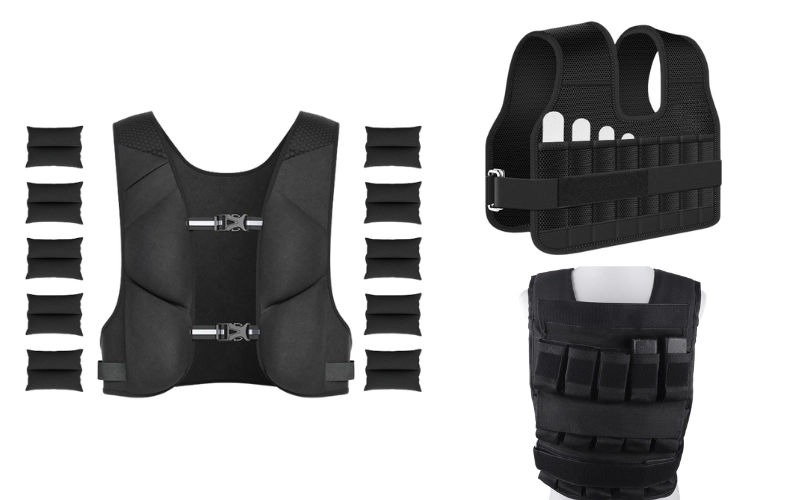
Pocket-insert — adjustable
A fabric vest with pockets. The weights slide in and out, so one vest covers a range of loads.
- What loads it
- Iron-sand pods · steel-sand pods · thin steel plates · cast-iron blocks · standard plates
- Shell
- Polyester shell, or neoprene soft shell on sand-pod builds
- Weight
- Adjustable — the end user adds or removes weight
- Feels like
- A classic training vest
- Best for
- Progressive training, gyms and heavy loads
Choose the weight system
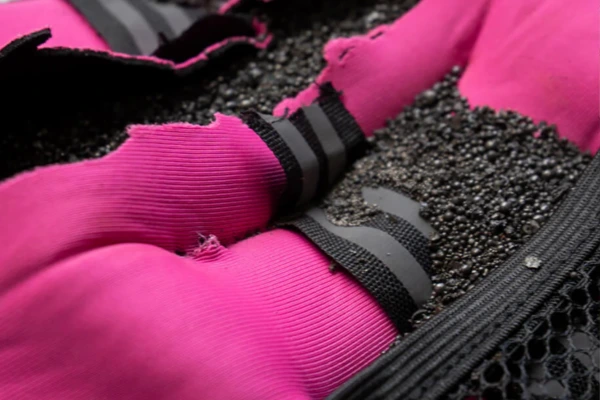
Iron sand
Sealed sand fill — the classic budget option, and the fill most weighted vests on the market use.
- Works in
- Sewn-in (fixed) or pods (adjustable)
- Shell
- Polyester, or neoprene soft shell
- Adjustable
- Either — your call
- Relative cost
- $
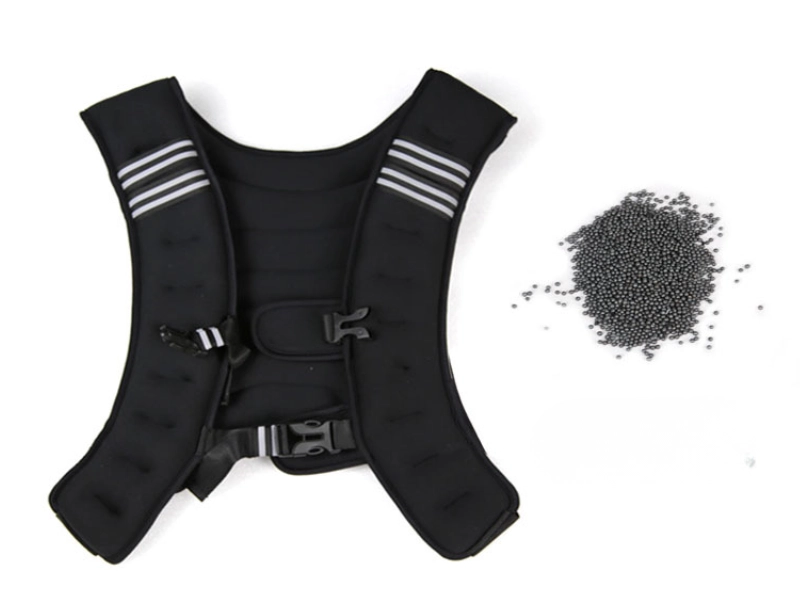
Steel sand
The upgrade over iron sand — denser, so the same weight fits in a lower-profile vest. Noticeably pricier.
- Works in
- Sewn-in (fixed) or pods (adjustable)
- Shell
- Polyester, or neoprene soft shell
- Adjustable
- Either — your call
- Relative cost
- $$
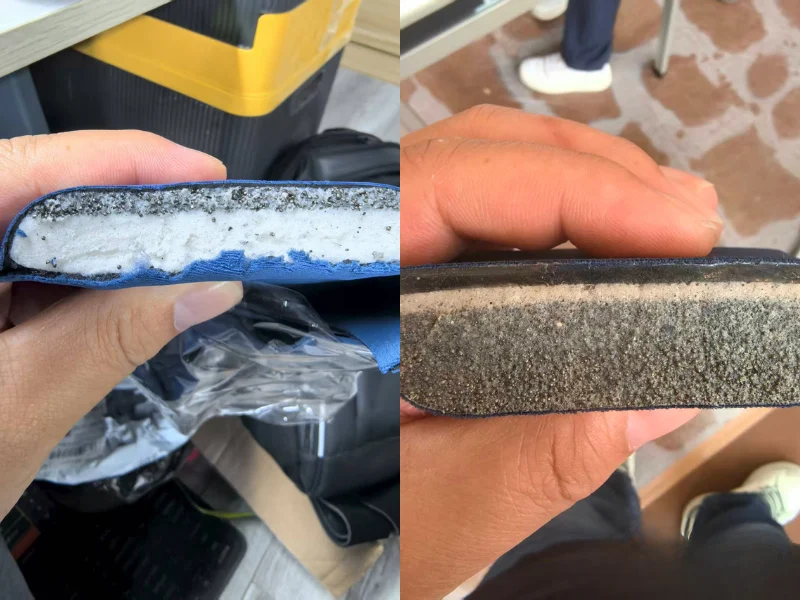
Gel
Moulded solid under a TPE water-barrier — no loose fill, no rust, and the only build that can be washed.
- Works in
- Sewn-in vests only
- Shell
- SBR + fabric
- Adjustable
- Fixed at the factory
- Relative cost
- $$$
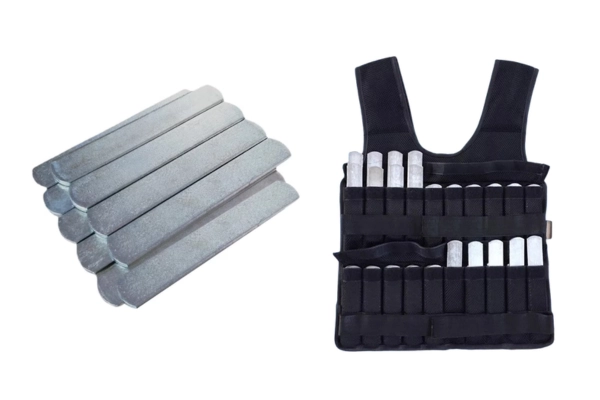
Thin steel plates
Slim plates that sit close to the body in 60–70 g steps — the finest increment we make, and it barely moves when you run.
- Works in
- Pocket-insert vests (running and HIIT builds)
- Shell
- Polyester
- Adjustable
- Per plate
- Relative cost
- $$
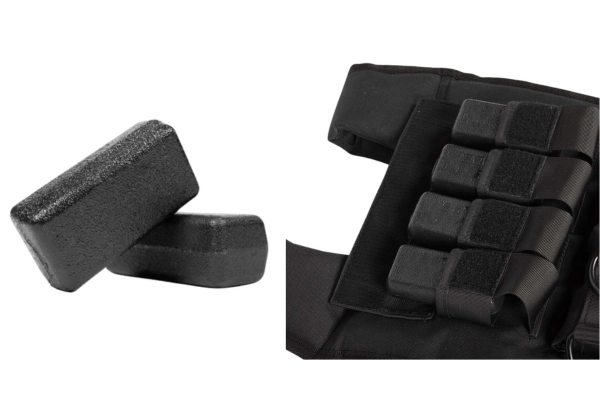
Cast-iron blocks
1 kg blocks in and out — simple, tough, and the usual answer for gym and 20–40 lb builds.
- Works in
- Pocket-insert vests (heavy 20–40 lb builds)
- Shell
- Polyester
- Adjustable
- Per block
- Relative cost
- $$
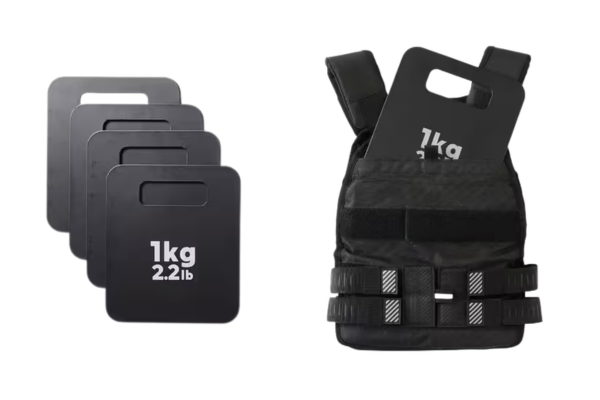
Standard fitness plates
The vest takes standard gym plates, flat or curved — so it can ship loaded, or shell-only at roughly 1.2 kg.
- Works in
- Plate carriers
- Shell
- Polyester + waist cummerbund
- Adjustable
- Per plate
- Relative cost
- $–$$$
Not sure which fits your line? Tell us your market and retail price — we'll recommend one in the quote.
Weighted vests ship by actual weight, so sea freight is the economical default — plan lead times around it. Ways buyers keep freight in check: start your first order with lighter weight tiers and add heavy tiers once the line proves out; keep packaging sized to your FBA weight tier, because one tier over eats the margin; combine the vests with supports or sleeves in one container to balance the load and cut cost per unit; and on plate-compatible lines, shell-only orders ship at roughly 1.2 kg per unit instead of 10.5 kg loaded.
Add your options
Small add-ons, small cost — the MOQ stays the same.
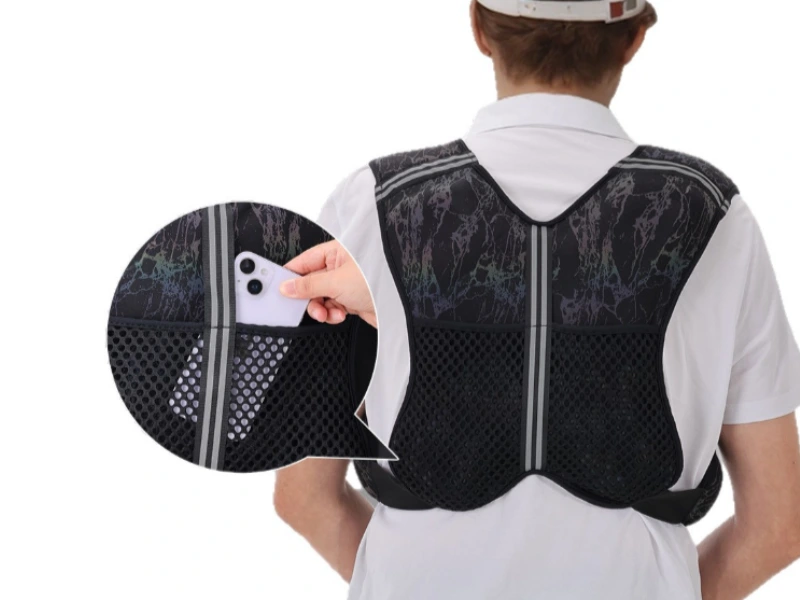
Need a shape nobody else has? A fully new design needs its own tooling — send us a sketch and we'll quote it.

FAILURE 01
Odor
11.2%
OF ALL REVIEW MENTIONS
80.4%
OF THEM NEGATIVE
Odor is the only theme in this category where negative sentiment outweighs positive. The source is rarely the shell. It is the fill, the sealing adhesive and the print ink.
HOW WE ENGINEER IT OUT
Adhesives and inks are screened before the line, sealed pods aired out before packing, and every unit is checked before it ships.

FAILURE 02
Leaking Fill
A pod that leaks turns one product into a warranty claim and a floor to vacuum. It is the failure your customer photographs. Single-containment pods pass the factory and fail the fourth month.
HOW WE ENGINEER IT OUT
Two independent containments: a sealed inner pod inside a stitched outer pocket. Drop, compression, sweat-heat and transport-vibration cycles run before the pod is approved.

FAILURE 03
Bounce & Shoulder Load
"Stays in place" and "no shoulder pressure" are the highest-frequency praise in this category. "Shifts around" and "straps rub" are the same sentence, inverted. Both are decided at the pattern table, not at final QC.
HOW WE ENGINEER IT OUT
Front-to-back weight deviation held within ±3%, load placed high and close to the torso on run-oriented builds, shoulder lines padded on any structure above 9 kg / 20 lb.

FAILURE 04
Seam Failure
A 20 kg vest drives every gram through pocket mouths, shoulder joins and the front closure. These seams do not fail statically. They fail on rep 4,000 — which is why a static pull test tells you almost nothing.
HOW WE ENGINEER IT OUT
Box-X plus bartack at 6–8 SPI with 2–4 backstitch passes at every load path, then fatigue-cycled under load rather than pulled once.
Load the torso, protect the joints — both ship on the same PO, to the same QC standard.