Private labeling a gaming arm sleeve means a manufacturer produces the sleeve to your spec — fabric, seam construction, compression level, and branding — and you sell it under your own name. Before committing, verify glide/friction consistency across a sample batch, seam construction method, compression pressure repeatability, and whether the factory can hold spec from sample to bulk. Most private label programs start at a fixed per-color, per-size minimum; timelines and exact minimums vary by factory and should be confirmed in writing before you sample.
What “private label” actually means for a gaming sleeve
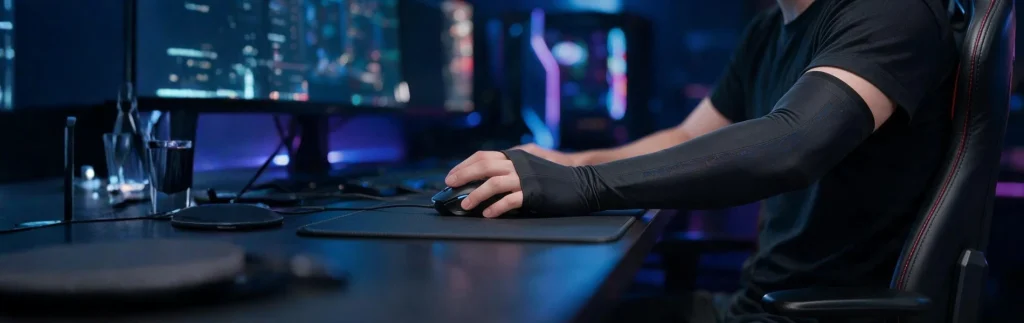
Private label means you’re not reselling an existing product with your logo slapped on — you’re commissioning a sleeve built to a spec you control: fabric blend, seam type, compression band, hand coverage, and packaging. That’s different from a reseller arrangement, where the factory’s existing SKU just gets your branding.
The distinction matters because it changes what you’re actually vetting. A reseller deal is mostly a branding negotiation. A private label deal is a manufacturing partnership — you’re trusting a factory to hit the same friction, glide, and compression numbers on unit 5,000 that they hit on the sample.
4 things to verify before you commit to a manufacturer
Most brand failures in this category trace back to one of these four checks getting skipped.
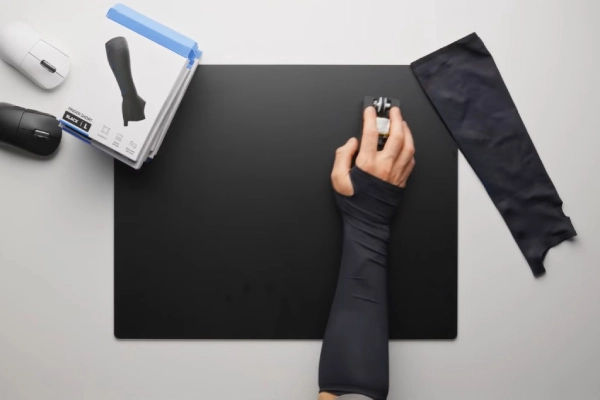
1. Glide and friction consistency across the sample batch
Ask for 3–5 samples from the same production run, not one hero sample. Test them on both a glass-style pad and a cloth pad — friction feel is surface-dependent, and a factory that only validates on one surface type will hand you a sleeve that performs inconsistently once your customers are on different setups. If you haven’t compared surface behavior yet, the mechanics are covered in [glass vs. cloth mousepad sleeve fabric].
2. Seam construction, not just seam count
“Flatlock” and “seamless” aren’t interchangeable marketing terms — they’re different construction methods with different glide and durability outcomes, and seam placement on the forearm band matters as much as the method. Ask the factory which method they default to and why, not just whether the sleeve “has flatlock seams.” Full breakdown of what to ask here: [flatlock vs. seamless seam construction].
3. Compression pressure repeatability
If your line includes a compression variant, ask for the mmHg range and whether it’s tested per batch or per design. A factory that can quote a pressure range but can’t explain how they verify it batch-to-batch is telling you the number is a design target, not a QC checkpoint. Where compression actually matters for feel vs. where it doesn’t: [compression vs. non-compression gaming sleeves](https://www.zzsupports.com/compression-vs-non-compression-gaming-sleeve-guide/).
4. Sample-to-bulk consistency, in writing
The sample is made by hand, or close to it. Bulk is made on a line. Ask specifically: does the factory re-test glide and compression on the first bulk run before shipping, or only at sampling stage? Get this in writing as an inspection checkpoint, not a verbal assurance — it’s the single most common gap between “the sample felt great” and “the first 1,000 units felt different.”
What MOQ and timeline realistically look like
| Item | What to expect | Status |
|---|---|---|
| Minimum order | 1,000 pieces per color / per size | Confirmed |
| Sample lead time | 5–7 days after design confirmation | Confirmed |
| Bulk lead time | 15–25 days after sample approval and deposit | Confirmed |
| Customization | Fabric blend, compression level, hand coverage (open palm / thumb-hole / full-hand), logo method, packaging | Confirmed — see gaming sleeve customization options |
| Compliance | BSCI factory audit applies across the line; OEKO-TEX Standard 100 testing can be arranged per order | BSCI confirmed · OEKO-TEX on request |
For the material, packaging, and cost-breakdown side of sourcing that applies across our whole support-gear range (not gaming-specific), see the [complete OEM/ODM sourcing guide].
Common mistakes brands make when private labeling gaming gear
Approving a single sample, not a batch. One sleeve tells you what’s possible. Five tells you what’s repeatable.
Skipping the surface test. A sleeve validated only on cloth can drag or grab on glass — see the mechanics in why a gaming sleeve can feel slow on some mousepads.
Not specifying hand coverage as a real SKU decision. Open palm, thumb-hole, and full-hand aren’t cosmetic variants — they change the fit and glide profile enough to need separate specs. Comparison here: [open palm vs. thumb-hole vs. full-hand].
Treating certifications as a checkbox instead of a scope question.BSCI applies broadly and OEKO-TEX testing can be arranged. A factory that applies one certification claim across your whole line without qualifying it is a red flag, not a selling point — see how OEKO-TEX Standard 100 and ISO quality management standards actually scope their claims before you repeat them on your own packaging.
For Brands and Procurement Teams: Sourcing a Private Label Gaming Sleeve
| Item | Details |
|---|---|
| MOQ | 1,000 pieces per color / per size |
| Sample lead time | 5–7 days after design confirmation |
| Bulk lead time | 15–25 days after sample approval and deposit |
| Customization | Fabric blend, compression level, hand coverage, logo method, packaging |
| Materials | Nylon / polyester / spandex blends, ratio adjustable |
| Compliance | BSCI audit confirmed (all SKUs); OEKO-TEX Standard 100 testing can be arranged per order |
| Shipping | Express (DHL/UPS), air freight, or sea freight (FCL/LCL); DDP available to major destinations |
Request a Custom Sourcing Brief →
FAQs
The sourcing process is similar, but the QC checkpoints are different — glide/friction consistency and seam placement matter more for a gaming sleeve than for most compression sportswear, because the product’s entire value proposition is surface interaction, not just fit.
1,000 pieces per color / per size. Some factories will sample below their bulk MOQ, others won’t — confirm before sampling.
Yes — this is a common two-SKU strategy (see [how compression and non-compression sleeves differ], but each variant should be spec’d and tested separately rather than treated as one product with a pressure toggle.
If your customer base spans both, yes — see [glass vs. cloth mousepad sleeve guide] for how factories typically spec two SKUs rather than one compromise fabric.