As a manufacturer that designs and produces knee compression sleeves for athletes, workers, and patients, we receive the same question from distributors, clinics, and end users:
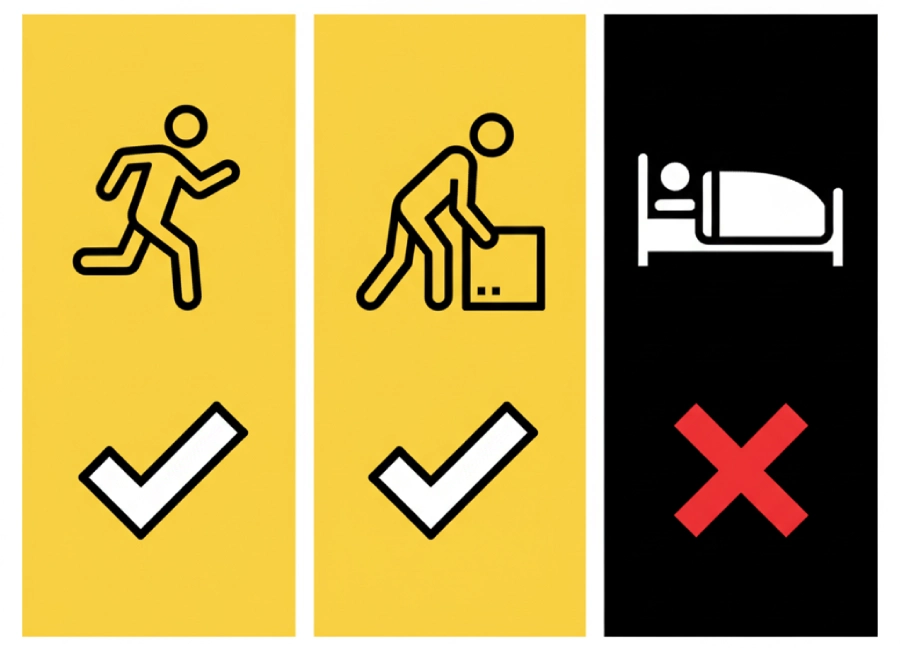
Is it OK to wear a knee brace or knee compression sleeve to bed?
From a product and design point of view, the short answer is:
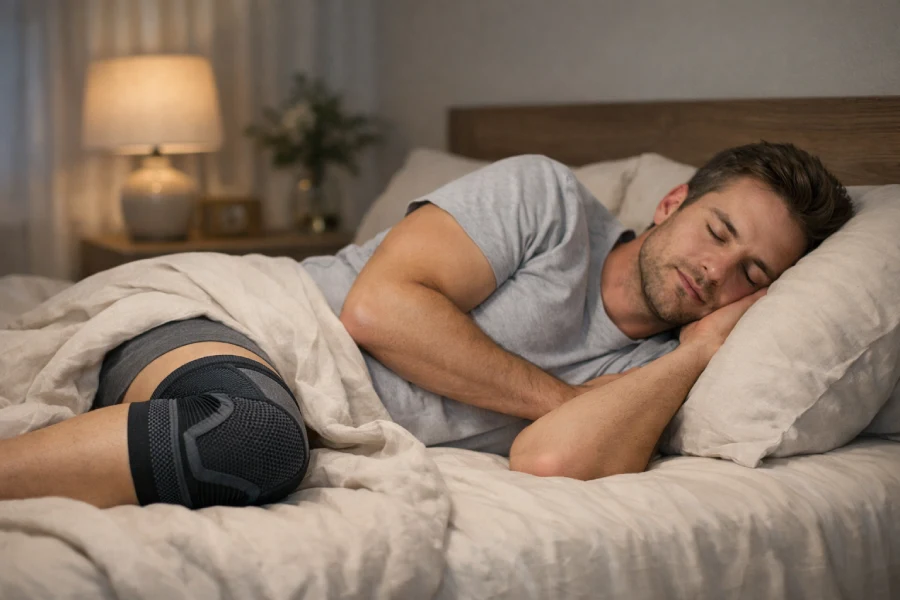
For many otherwise healthy adults, it can be acceptable to sleep with a knee compression sleeve on, as long as the sleeve fits correctly, is not too tight, and the user does not have medical conditions that make nighttime compression risky.
Whether it is a good idea in your specific case depends on how the sleeve is built, how it fits your leg, and how your knee and circulation respond to long, static wear. Below, we explain this topic from a manufacturer’s perspective, focusing on design, user profiles, and safe usage patterns.
If you are still deciding between sleeves, braces and pads for your customers or your own use, our knee support gear buyer’s guide compares the main options side by side.
What does a knee compression sleeve do while you sleep?
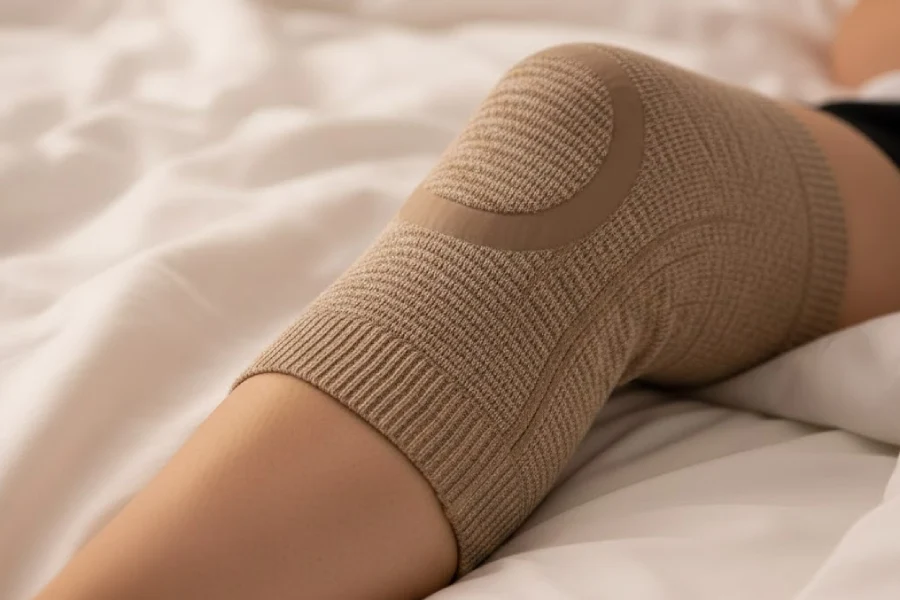
A knee compression sleeve is typically a circular-knitted engineered product designed to apply controlled pressure around the knee joint.
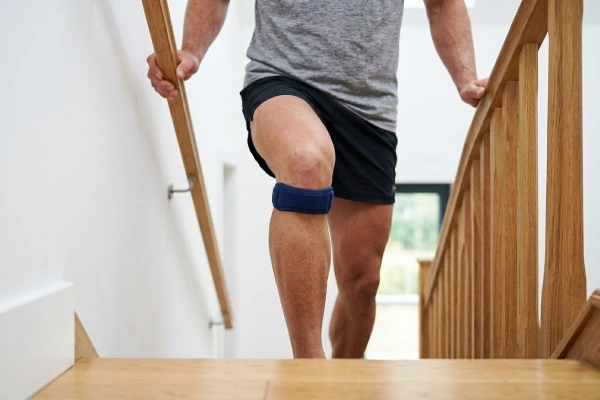
During the day, this helps limit swelling, improve proprioception (joint awareness), and support the knee during dynamic movements. At night, you are not moving as much, but the sleeve can still play a role:
- Gentle, even compression
Helps limit excessive fluid build-up around the joint while you sleep. - Light sense of stability
Makes some people feel more secure when turning or pivoting in bed. - Warmth and comfort
Keeping tissues slightly warmer can reduce the feeling of stiffness in the morning.
From a manufacturing standpoint, this means the sleeve used at night should have:
- A moderate compression profile, without extreme pressure peaks
- Soft edges and seams that do not dig into the skin when the leg stays bent or straight for hours
- Stable elastic recovery, so compression stays consistent instead of tightening as the fabric shifts
The same product that performs well in the gym does not automatically perform well through an entire night of sleep. Design details matter. If you want a full overview of what a knee sleeve does in sports and daily use, see our complete guide to what a knee sleeve does.
Is it safe to sleep with a knee compression sleeve on?
When customers ask, “can you sleep with a knee sleeve on” or “can you sleep with a knee compression sleeve on”, they are mainly asking about safety.
Based on our experience supplying knee sleeves to different markets:
For generally healthy adults, a well-sized knee sleeve with light to moderate compression is usually safe to wear during sleep. Problems arise when the sleeve is too tight, poorly designed, or used by people with circulation or nerve issues.
To keep this practical, we look at three things: compression level, construction, and user profile.
| Situation | Can you sleep with a knee compression sleeve? | Practical recommendation |
|---|---|---|
| Healthy adult, mild knee discomfort | Often yes Low-risk users with mild symptoms. | Use light–moderate compression; avoid very tight top bands that can cut into the thigh or calf. |
| Mild–moderate osteoarthritis or old sports injury | Often yes Can support comfort and morning stability. | Prefer a breathable knit sleeve and inspect the skin each morning for irritation or pressure marks. |
| Heavy training day or standing work | Selected nights Occasional recovery use. | Use a softer recovery-type sleeve rather than your tightest performance model, and reassess swelling the next day. |
| Recent surgery or fresh injury | Doctor only Follow post-op instructions. | Only wear a sleeve or brace at night if your surgeon or healthcare provider has specifically prescribed it. |
| Diabetes, vascular disease, nerve damage | Medical clearance Higher circulation risk. | Do not start night compression without professional medical advice, as warning signs may be harder to notice. |
| Open wounds, infection, or very fragile skin | No Compression over damaged skin is unsafe. | Keep the area clean, dry, and completely pressure-free until the skin has fully healed and a professional has cleared compression. |
The right sleeve design can improve comfort, but it cannot remove medical risk. For high-risk users, the decision must come from a healthcare professional, not from the product label.
Who may benefit from sleeping with a knee sleeve?
We often see the same user groups asking whether they can sleep with a knee brace or compression sleeve on their knee. Feedback from long-term customers shows that the following groups may benefit from night-time compression when used correctly:
- People with mild to moderate osteoarthritis
They often report less morning stiffness and more confidence when standing up if they use a soft, breathable sleeve overnight. - Users with chronic soft-tissue irritation or tendinitis
Gentle night-time compression can help keep swelling under control after busy days. - Individuals with previous ligament or meniscus injuries
A sleeve that provides light compression and proprioceptive feedback can make the knee feel more stable during turning or pivoting in bed. - Workers and athletes after high-load days
Some choose a lighter “recovery” sleeve at night to reduce the feeling of fullness or fatigue around the knee.
From a factory perspective, these user groups drive the demand for specific “recovery / night-friendly” designs: softer yarns, moderate compression levels, and smoother hems that can be tolerated for longer wear.
Who should avoid wearing a knee sleeve to bed?
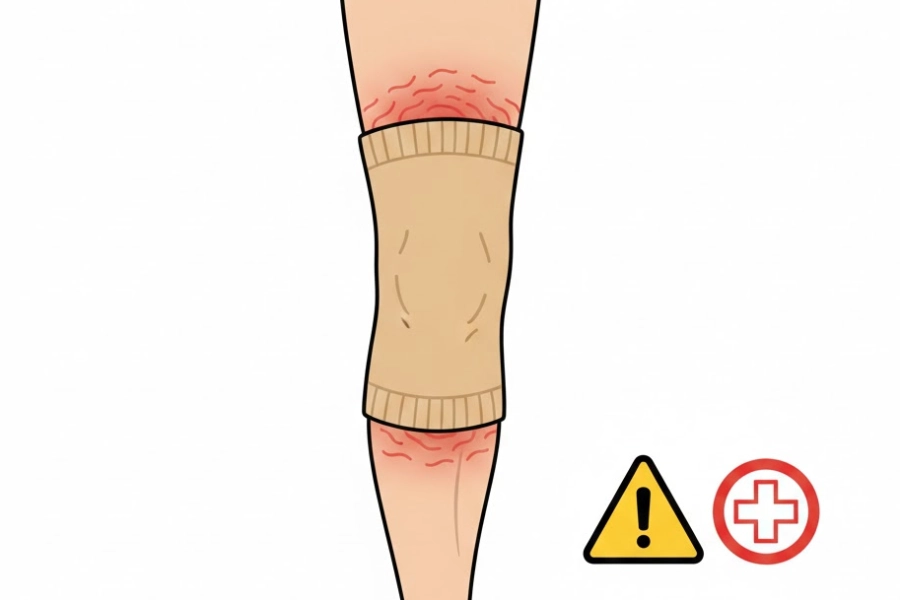
Even with a well-designed knee brace or knee compression sleeve, some users are not suitable for night-time compression.
You should avoid sleeping with a knee compression sleeve if:
- You have known circulation problems in your legs (e.g. peripheral artery disease)
- You have diabetic neuropathy or other nerve damage and cannot reliably feel pressure or numbness
- You have open wounds, skin infections, or very fragile skin in the area covered by the sleeve
- Your knee is acutely red, hot, and swollen without a clear diagnosis
- You have had recent surgery and your surgeon has not specifically approved this type of product
For these profiles, the safest choice is to follow individual medical advice. No design change can turn a general-purpose sleeve into a medical solution for complex conditions.
How tight should a knee compression sleeve be at night?
Compression is one of the most important questions in night use. A sleeve that feels “supportive” during sports can be too aggressive for eight hours of static wear.
At night, a knee compression sleeve should feel snug but not restrictive. You should be able to slide two fingers under the top edge, keep full movement in your toes, and wake up without numbness, burning, or unusual color changes in the leg.
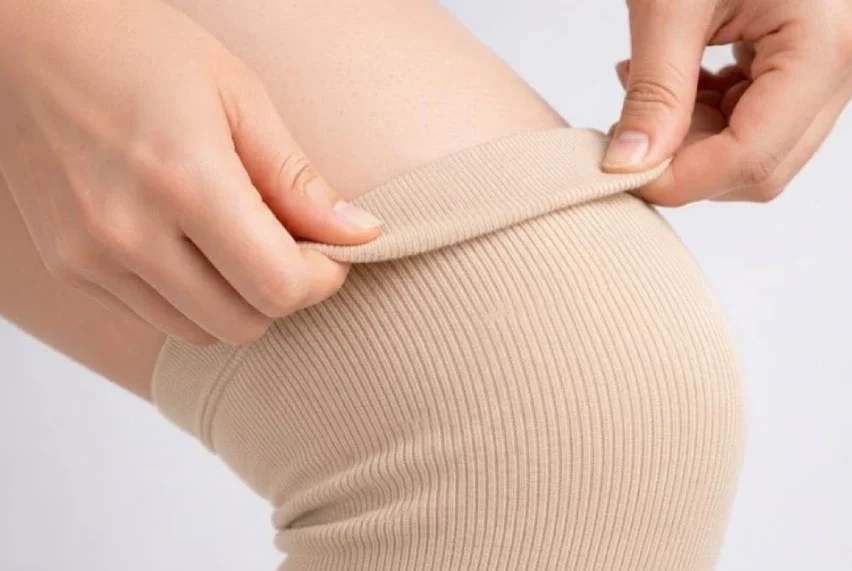
From a manufacturing and fitting point of view:
- Edge design
Wider, softer hems distribute pressure better than narrow, hard bands. This reduces the risk of “cutting in” at the thigh or calf. - Even compression
The sleeve should not create a sharp pressure peak at the top edge. Compression should be relatively smooth through the length of the sleeve. - Reliable sizing
A clear size chart (usually measuring above and below the knee) helps users avoid sizing down for “extra tightness,” which is not recommended for night use.
For everyday use, simple checks work well:
- Slide two fingers under the top and bottom edges
- Compare foot color and temperature with the other leg
- Check for deep, painful marks or grooves after removing the sleeve
If any of these checks fail, the sleeve is too tight for nighttime wear. For step-by-step sizing instructions, including where to measure above and below the knee, read our guide on how to choose the right size knee sleeve.
How to wear a knee compression sleeve to bed safely
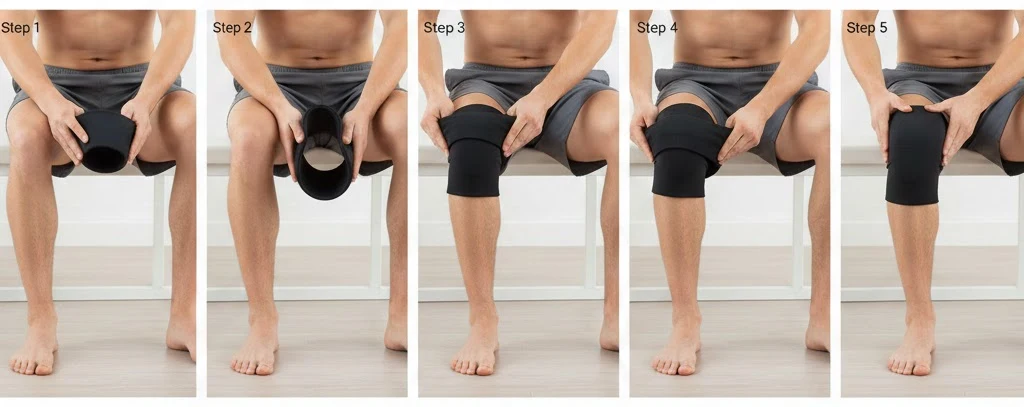
Product quality is only half of the equation. How the sleeve is worn also decides comfort and safety.
To use a knee compression sleeve safely at night:
- Choose an appropriate model
Prefer a soft, breathable knit with moderate compression. Avoid rigid hinges and bulky straps in bed. - Measure and select the correct size
Use the manufacturer’s size chart. Do not size down to increase compression for sleeping. - Check the skin before use
Do not wear the sleeve over rashes, cuts, or irritated areas. - Apply to clean, dry skin
Avoid thick creams or oils under the sleeve immediately before sleep to reduce friction and moisture buildup. - Align and smooth the sleeve
Make sure any patella zone or pattern is centered over the kneecap, and remove wrinkles to prevent pressure points. - Start with shorter trials
Try the sleeve for part of the night first. If you wake up comfortable and your skin looks normal, you can gradually increase the time.
These steps are simple, but they significantly reduce the chance of problems when combined with a well-designed product. For a full step-by-step tutorial on putting on and adjusting a sleeve, see how to wear a knee sleeve correctly.
Night vs daytime: how is the situation different?
For daytime use, including work and training scenarios, our article on when to wear a knee compression sleeve explains typical use cases and limits. Users often mix two questions:
- “Can you sleep in a knee sleeve?”
- “How long should you wear a compression sleeve on the knee during the day?”
From a design and testing perspective, daytime and nighttime are different use cases.
During the day:
- The sleeve must handle movement, sweat, and repeated stretching
- Compression supports the joint against gravity and dynamic loads
- Friction around the edges and behind the knee is the main comfort issue
At night:
- The leg stays in fewer positions for longer periods
- Muscles are more relaxed and blood flow patterns change
- Heat and moisture can build up under the fabric if it is not breathable enough
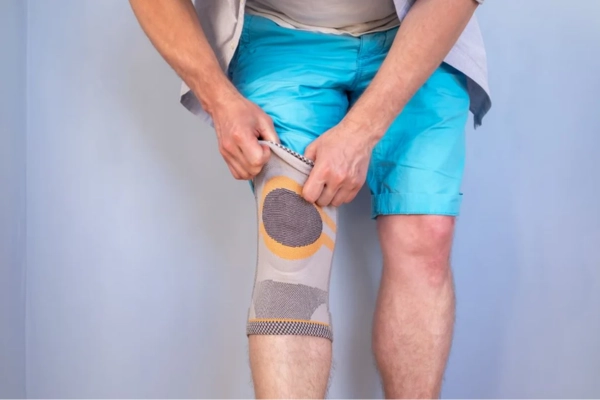
Because of this, many product ranges are separate:
- Performance/daytime models
Higher compression, more structure, sometimes additional straps - Recovery / night-compatible models
Softer yarns, more breathable knitting, smoother hems, moderate compression
In practice, a rigid knee brace is usually less comfortable for sleeping than a soft compression sleeve, because it restricts movement more and creates higher local pressure when you roll in bed. For most users, if any support is used at night, a lightweight knee compression sleeve is more appropriate than a full knee brace.
A dedicated supporting article can look in detail at how long to wear a knee compression sleeve at night vs daytime, but the key idea is: the same person may need different models or compression levels for activity and for recovery.
How long can you sleep with a knee compression sleeve on?
From both a technical and practical standpoint:
Most users who tolerate compression well can wear a knee sleeve through a typical 6–8 hour night, as long as the sleeve is well-designed, correctly sized, and the skin and circulation remain normal. Continuous 24-hour wear without breaks is not recommended.
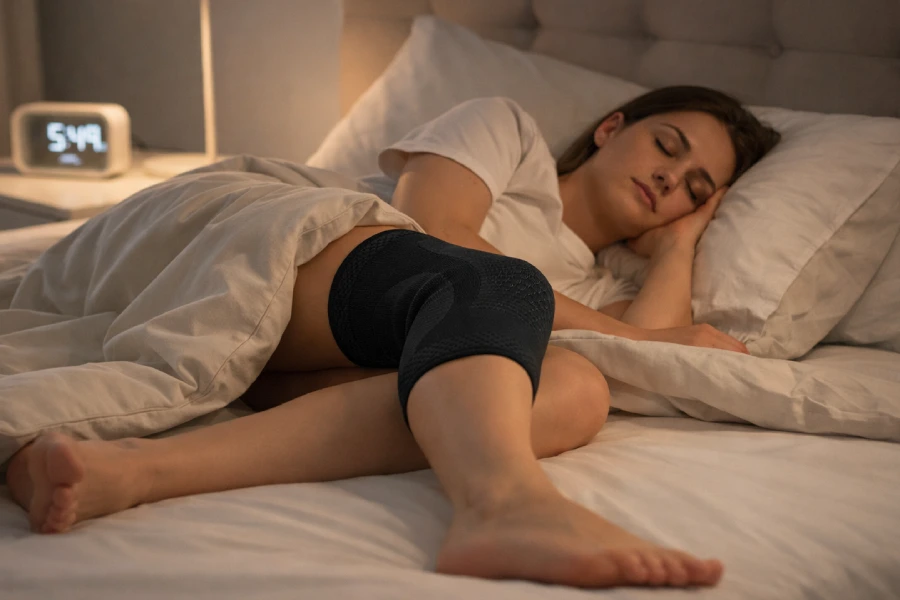
Good practice includes:
- Limit use to the night only
Remove the sleeve in the morning, wash and dry the skin, and give the leg several hours without compression. - Observe your knee over several days
If swelling, discomfort, or stiffness increase instead of improve, adjust the model, fit, or stop night use. - Respect post-operative protocols
After surgery or severe injury, the duration of compression is not a product choice; it must follow medical instructions.
A separate time-focused article can break down recommended ranges for day vs night, and link back to this pillar page for overall context.
What type of knee compression sleeve is better for sleeping?
Not every knee sleeve in the market is equally suitable for sleeping, even if the label simply says “knee compression sleeve.” For night use, the best knee sleeve for sleeping that many users prefer is a lightweight, thin one that still provides moderate support without trapping too much heat.
If you need this type of design for your brand or clinic, you can check our lightweight knee compression sleeve model, built specifically for longer wear and better breathability at night. Thickness also matters: for day-time training, you can compare 3mm, 5mm and 7mm options in our guide what mm knee sleeve should I get?
For night use, look for:
- Light to moderate compression, not the tightest performance level
- Breathable fabric, to control heat and moisture
- Soft, wide edges, without sharp silicone bands or thick seams
- Low-profile construction, with no rigid hinges or hard components around the joint
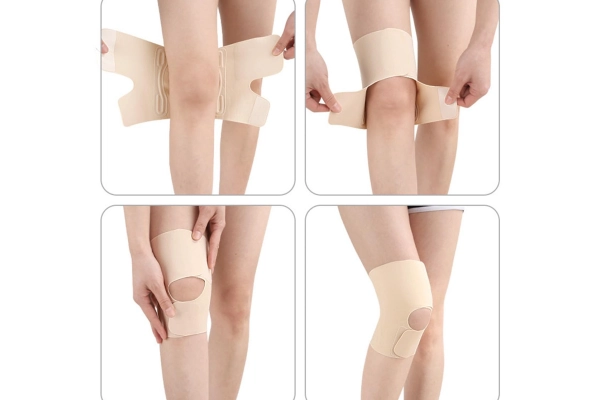
From a manufacturing perspective, this usually means:
- Choosing yarn blends that combine elasticity, softness, and moisture management
- Using knitting patterns that support the knee without creating pressure peaks
- Designing hems that hold the sleeve in place while spreading pressure over a wider area
For brands, retailers, and clinics, it often makes sense to develop or source a specific “recovery” or “night-friendly” model, instead of relying only on high-compression sports sleeves. This allows more accurate positioning and clearer usage recommendations for your customers.
If you need custom-made knee compression sleeves designed for day and night use, explore our custom compression knee sleeve range or contact us as a custom knee sleeve manufacturer to discuss OEM/ODM sports support manufacture options.
FAQ
Can you sleep with a knee sleeve on?
Yes, many healthy adults can sleep with a knee sleeve on if it has light to moderate compression, fits correctly, and does not cause numbness, pain, or unusual color changes.
Can you sleep with a compression sleeve on your knee every night?
Some people do, but it is important to monitor skin condition, swelling, and overall comfort, and to discuss daily night use with a healthcare professional if you have ongoing knee problems.
Should you wear a knee compression sleeve to bed after surgery?
Only if your surgeon or healthcare provider has clearly recommended it, post-operative compression is a medical decision and often involves specific products and time schedules.
Is it OK to sleep in a knee compression sleeve on both knees?
If you are otherwise healthy and use moderate compression, some users wear sleeves on both knees at night. Watch carefully for signs of overheating, numbness, or circulation issues in either leg.
Can you wear a knee sleeve day and night without breaks?
Continuous 24-hour use is not recommended. Even with a well-made sleeve, your skin and soft tissues need time each day without compression.